
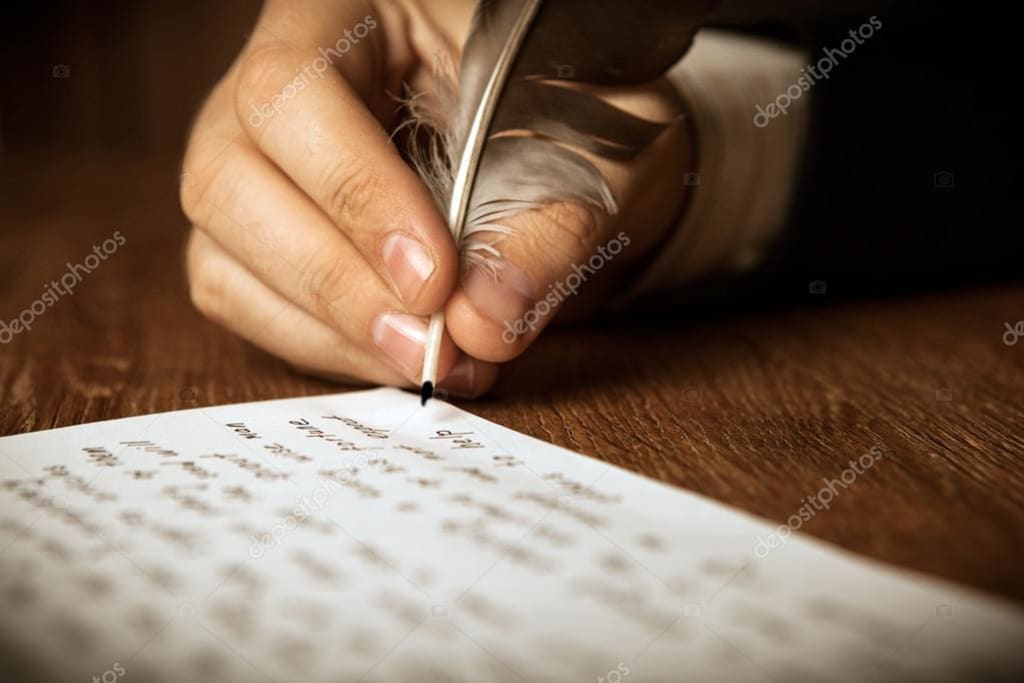
Throughout human history, poets have stood as interpreters of the soul, architects of language, and chroniclers of collective memory. They do not simply arrange words into neat patterns — they craft experiences, distill feelings, and reveal truths that often elude direct expression. From ancient oral traditions to modern spoken word performances, poetry has served as a bridge between thought and emotion, intellect and instinct, individual voice and shared humanity.
---
The Timeless Role of Poets
Poets have existed for as long as people have told stories. In ancient societies, before written language became widespread, poets were keepers of history and tradition. They memorized epic tales, myths, and cultural laws, passing them down orally through generations. The Homeric epics of ancient Greece — The Iliad and The Odyssey — are prime examples. These works were not merely entertainment; they preserved cultural values, heroic archetypes, and communal identity.
In many indigenous cultures, poets and storytellers performed a similar role. The West African griots, for instance, were living libraries, reciting genealogies and historical events in rhythmic, musical form. Such oral poetry ensured that knowledge survived, even without written records.
As writing developed, poetry evolved into a literary art. Ancient Chinese poets like Li Bai and Du Fu explored philosophical themes, nature’s beauty, and the complexities of political life. In Persia, poets such as Rumi and Hafez blended mysticism, love, and spiritual longing into verses that continue to resonate worldwide.
---
The Poet’s Craft
At its core, poetry is defined not just by what is said but how it is said. Poets use rhythm, metaphor, imagery, and sound to shape language into something that transcends ordinary speech. This craft involves several key elements:
1. Imagery – Poets paint pictures with words, appealing to the senses to evoke feelings or convey abstract ideas.
Example: In William Wordsworth’s works, the depiction of daffodils swaying in the breeze becomes a metaphor for joy and memory.
2. Sound and Rhythm – Through rhyme, meter, and alliteration, poets give language a musical quality. Even free verse, which rejects strict meter, often uses patterns of sound to create flow and emphasis.
3. Metaphor and Symbolism – Poets frequently convey complex ideas through figurative language. A rose may symbolize love; a storm, inner turmoil.
4. Conciseness – Unlike prose, poetry often compresses meaning into fewer words, requiring each line and syllable to carry significant weight.
This careful attention to form transforms poetry into an art of precision and resonance.
---
Poets as Social Voices
Poets have historically been more than entertainers — they have been moral and political voices, challenging injustices and inspiring change. During the Harlem Renaissance, poets like Langston Hughes gave voice to African American experiences, blending lyrical beauty with social commentary. His poem “I, Too” directly challenged the racial inequalities of America, asserting the dignity and belonging of Black citizens.
Similarly, in Latin America, Pablo Neruda used poetry both to explore love and to protest political oppression. In times of war and unrest, poetry has often become a form of resistance — accessible, memorable, and emotionally charged.
In the modern era, poets like Maya Angelou carried forward this tradition, weaving together personal narrative, historical awareness, and calls for unity. Her famous refrain, “Still I rise,” stands as both an affirmation of individual strength and a collective anthem for resilience.
---
The Changing Landscape of Poetry
While the image of a poet sitting at a desk with pen and paper still exists, the digital age has expanded the ways poetry is written, shared, and experienced. Social media platforms like Instagram and TikTok have popularized short-form, highly visual poetry. Writers such as Rupi Kaur have built massive followings by combining minimalist verse with striking imagery.
Spoken word and slam poetry have also surged in popularity, emphasizing performance, voice, and audience engagement. These formats often bring poetry to spaces beyond traditional literary circles, making it accessible to diverse communities and younger generations.
The internet has democratized poetry — anyone with an internet connection can share their work with a global audience. This has led to an explosion of styles, voices, and cultural perspectives.
---
The Personal Impact of Poetry
For many, poetry serves a deeply personal purpose. Writing a poem can be a way of processing grief, celebrating love, or making sense of confusion. Reading poetry can offer comfort, perspective, or even catharsis. Because poetry often condenses complex emotions into a small space, it allows readers to feel understood in ways prose sometimes cannot.
Poetry’s ambiguity is also part of its power. A single poem can hold multiple interpretations, inviting readers to bring their own experiences into the meaning-making process. In this way, poetry is both a mirror and a window — reflecting the reader’s inner world while offering a glimpse into someone else’s.
---
Famous Poets Across Time
While it’s impossible to capture the full spectrum of poetic voices, here are a few notable poets whose influence has been profound:
Homer (Ancient Greece) – Epic poet whose works laid the foundation for Western literature.
Rumi (13th-century Persia) – Mystical poet whose spiritual insights transcend religious and cultural boundaries.
William Shakespeare (16th-century England) – Playwright and poet whose sonnets remain some of the most celebrated in English literature.
Emily Dickinson (19th-century America) – Reclusive poet whose short, enigmatic poems challenged literary norms.
Rabindranath Tagore (India) – Nobel Prize-winning poet who blended spirituality, nationalism, and lyrical beauty.
Langston Hughes (20th-century America) – Central figure in the Harlem Renaissance and advocate for Black cultural expression.
Pablo Neruda (20th-century Chile) – Poet of passion, politics, and human rights.
Maya Angelou (20th–21st century America) – Poet and memoirist whose work celebrated resilience, identity, and justice.
---
Why Poets Matter Today
In a world saturated with rapid information, poetry offers something rare: a pause. It asks us to slow down, to listen, and to engage with language in a more deliberate way. Poetry challenges us to see the familiar in new ways and to recognize the beauty, pain, and complexity of life.
Moreover, poets today are as vital as ever in speaking truth to power, amplifying marginalized voices, and helping people process collective crises — whether climate change, social injustice, or personal loss. The emotional clarity and empathy poetry can cultivate make it an essential part of cultural and civic life.
---
Conclusion
Poets are not relics of the past, nor are they confined to academia or literary salons. They live among us — on stages, in classrooms, in community centers, on social media feeds. They are teenagers writing in notebooks, elders reciting by heart, and performers commanding crowds with their voices. Across all times and cultures, poets have shaped the way we think, feel, and remember.
To engage with poetry is to engage with the essence of human expression. Whether through the ancient verses of Homer, the revolutionary cries of Hughes, or the intimate Instagram posts of contemporary poets, the craft remains a testament to the enduring power of language. Poets remind us that in the right hands, words can do more than communicate — they can transform.
About the Creator
Unbalanced life
The word unbalanced may sound straightforward, but its meaning extends far beyond the idea of simply losing one’s footing. Being unbalanced can refer to physical instability, emotional turbulence, social inequality, or even environmental disharmony. It is a condition that can occur in individuals, communities, and entire ecosystems. Understanding what causes imbalance, how it manifests, and how to restore equilibrium is essential to both personal well-being and collective progress.
By Samiullah 7 months ago in Unbalanced
📢 Raise Your Voice Thread: 03/05/2026
Our “Raise Your Voice Threads” are hosted most alternating Thursdays at 12PM ET to offer creators more avenues to uncover exceptional stories on Vocal. As we are continuously searching for fresh creators and inspiring stories, this thread provides an opportunity to exchange and discuss the stories that have moved and motivated us on Vocal.
By Raise Your Voice by Vocal4 days ago in Resources


Comments
There are no comments for this story
Be the first to respond and start the conversation.