

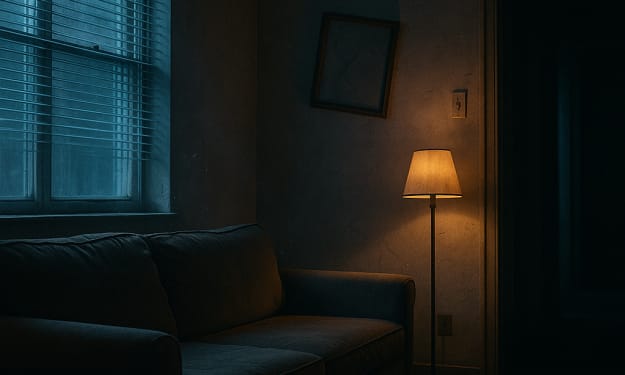
Photo by Martina Reichmanova on Unsplash
When opposing views are in dispute on the basis of belief.
When lines of thought are resolute and take no light relief.
Who's to grow the compromise, on a patch of common ground?
Who's to weld and galvanise a deal that's honour bound?
Who's to set aside these differences, and work to common cause?
Who's to emphasise the linkages that life itself implores?
. In the earthly world opposites attract.
. In a world of make believe such is not a fact.
© Tim Grace, 21 February 2010 (Revised: 24 July 2020)
About the Creator
Tim Grace
A first impression has a lasting effect - it makes a notable difference. In a subtle way that’s who I am as a poet. A ‘first impression’ looking for the gentle ‘twist’ that draws attention to a novel observation.



Comments (2)
This was very deep and thought provoking! Awesome poem!
To the reader: The hardest part about living a belief is that reality often confronts the assumptions of those who believe. Acceptance of dual realities requires the insertion of an uncertainty clause into any belief system. This insertion doesn't necessarily come easy or sit comfortably with believers who have invested heavily in the creation of a particular world view. If compromise and adaptation are the keys to survival, what's the attraction of an inflexible belief? To the poet: The simple symmetry of the first two couplets makes an easy entry into this sonnet. The next eight lines ponder the traits of who might offer a solution to the fragility of belief. The use of 'who' suggests a singular being; a wise sage. Regardless of the entity's wisdom, the final couplet contrasts the difference between a natural and synthetic solution. The lines in the last couplet are long (fourteen syllables each) but they have a rhythmical emphasis that rounds off the sonnet with a neat conclusion.