
Ocean Vuong: A Poetic Voice of Intimacy, Loss, and Resilience
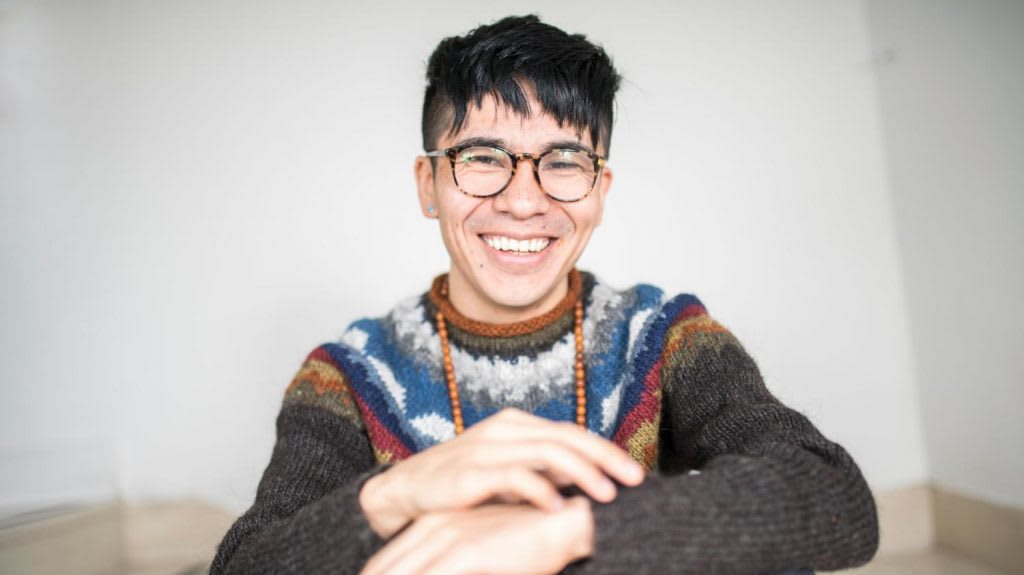
Ocean Vuong is one of the most distinctive contemporary poets, celebrated for his ability to weave together personal history, collective trauma, and deeply lyrical language. His work transcends traditional poetic boundaries, incorporating elements of narrative, memory, and emotion to create an intimate and powerful reading experience. Vuong's poetry is often deeply personal, drawing from his experiences as a Vietnamese American, a queer writer, and a son raised by an immigrant mother. Through his work, he explores themes of love, war, family, identity, and the nature of language itself.
Early Life and Influences
Born in Ho Chi Minh City, Vietnam, in 1988, Vuong immigrated to the United States with his family as a child. His upbringing in a working-class immigrant household in Hartford, Connecticut, played a crucial role in shaping his literary voice. Growing up, he was drawn to storytelling, especially as a way to bridge the cultural and linguistic gaps between himself and the world around him. He learned English at a later age, and this delayed acquisition of language informs much of his work, particularly his fascination with words, their meanings, and their limitations.
Vuong was influenced by various literary traditions, including the works of poets like Walt Whitman, Anne Carson, and Sylvia Plath. The poetic intensity of these writers, combined with Vuong’s own lived experience, helped him develop a voice that is both personal and universal.
Major Works and Their Themes
Vuong gained widespread recognition with his 2016 poetry collection, Night Sky with Exit Wounds, which won the T.S. Eliot Prize and the Whiting Award. The collection is a meditation on the inheritance of trauma, the complexities of love, and the struggles of identity. It explores the impact of war, particularly the Vietnam War, on future generations, as well as the poet’s own journey of self-discovery as a queer person navigating the intersections of culture, memory, and belonging.
One of the most striking aspects of Night Sky with Exit Wounds is its ability to blend historical narratives with deeply personal moments. Poems like Aubade with Burning City juxtapose the fall of Saigon with an intimate love story, creating a haunting interplay between past and present. The use of fragmented storytelling and evocative imagery gives the collection a dreamlike quality, making the reader feel as though they are moving through both memory and history simultaneously.
Vuong’s 2019 novel On Earth We’re Briefly Gorgeous, though written in prose, maintains the lyrical intensity of his poetry. Structured as a letter from a son to his illiterate mother, the novel explores many of the same themes found in his poetry: intergenerational trauma, queerness, the immigrant experience, and the weight of language. The book received widespread acclaim for its poetic prose and raw emotional depth, cementing Vuong’s reputation as one of the most important contemporary literary voices.
In 2022, Vuong returned to poetry with Time Is a Mother, a collection that grapples with grief following the death of his mother. This work is more introspective and fragmented, reflecting the ways in which loss reshapes time and memory. The collection delves into themes of mortality, the fluidity of identity, and the tension between presence and absence. His poems in this collection often challenge conventional syntax and form, mirroring the ways grief disrupts and distorts reality.
Style and Language
Ocean Vuong’s poetry is known for its musicality, vulnerability, and innovative use of form. His lines often break in unexpected places, creating pauses that force the reader to reconsider meaning and rhythm. He frequently employs enjambment, metaphor, and stark imagery to create a visceral reading experience.
His language is both precise and expansive, with a tendency to turn the ordinary into the extraordinary. For example, in Night Sky with Exit Wounds, he transforms everyday moments—such as a mother’s touch or the act of walking through a city—into something luminous and transcendent. His writing often carries a sense of longing, as if reaching for something just beyond the grasp of words.
Vuong also plays with white space and fragmentation, using the visual structure of his poems to reinforce their emotional and thematic weight. In some pieces, he incorporates unconventional punctuation or spacing, inviting the reader to engage with the poem in a non-linear way. This experimentation with form echoes the themes of displacement and identity that permeate his work.
Themes of War, Love, and Queerness
One of the most persistent themes in Vuong’s poetry is the lasting impact of war. As the son of a mother who fled Vietnam, Vuong inherited the trauma of conflict, and his work frequently examines how war extends beyond the battlefield, affecting generations to come. He does not merely recount historical events but instead focuses on their emotional and psychological aftermath. His poetry suggests that the body itself becomes a battlefield, carrying wounds that are both literal and metaphorical.
Love, particularly queer love, is another central theme in Vuong’s work. His poetry often explores desire, intimacy, and the vulnerability of being seen. He writes about queer relationships with tenderness and urgency, challenging the erasure and marginalization of LGBTQ+ voices in literature. His depictions of love are never simple; they are entwined with fear, shame, and the struggle for self-acceptance.
Moreover, Vuong frequently examines the power and limitations of language. As someone who learned English as a second language, he is deeply aware of how words shape identity and perception. His poetry often questions whether language can fully capture experience, especially experiences of trauma and love. In doing so, he highlights both the beauty and the inadequacy of words.
Impact and Legacy
Ocean Vuong’s influence extends beyond poetry; he is a literary figure who bridges gaps between cultures, identities, and artistic forms. His work speaks to immigrants, LGBTQ+ individuals, and anyone who has ever felt like an outsider. His ability to merge personal and historical narratives allows his poetry to resonate on multiple levels, making it both deeply intimate and universally relevant.
His rise to prominence has also paved the way for greater representation of Asian American and queer voices in literature. Vuong’s success demonstrates that poetry can still be a vital and necessary force in contemporary culture, offering readers new ways of understanding themselves and the world around them.
As he continues to write and evolve, Vuong’s poetry will likely remain a touchstone for those seeking meaning in memory, love, and loss. His work reminds us that beauty can be found in the most unexpected places, and that even in pain, there is the potential for transformation and grace.
In the words of Ocean Vuong himself: “The most beautiful part of your body is where it’s headed.” His poetry, like his philosophy, is an act of movement—toward understanding, toward healing, and toward a future where words continue to shape and reshape our existence.
About the Creator
Mr Ali
Hello EveryOne..!!


Comments
There are no comments for this story
Be the first to respond and start the conversation.