
Moonlit Mischief: A Dance with Destiny
A Woman’s Journey Through Laughter, Love, and Lunar Whimsy

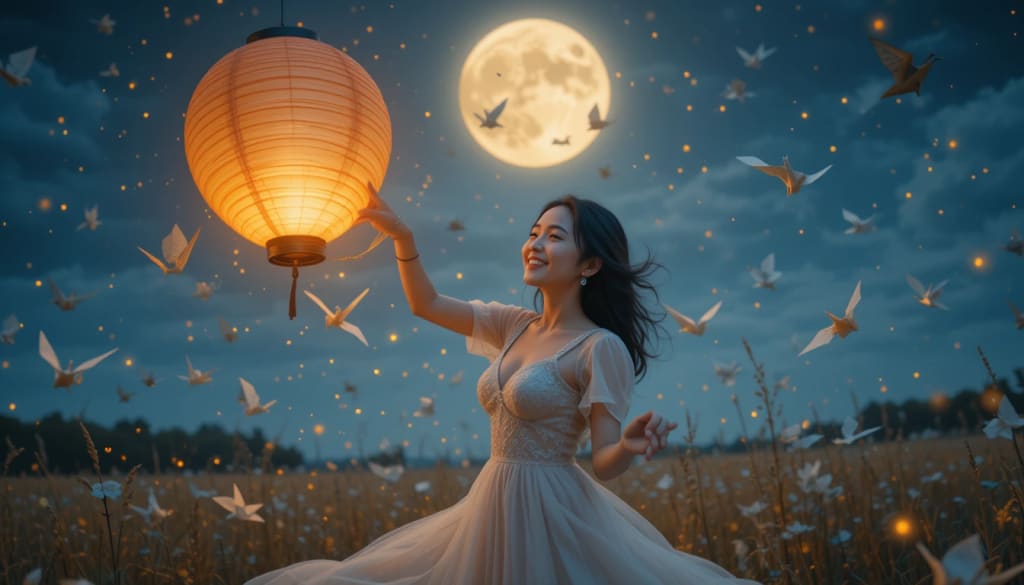
In the sleepy town of Bendigo, Victoria, where the night sky stretches wide and wild, Zara Bennett stumbled into love under a moonlit sky, armed with nothing but a lantern and a knack for mischief. At 32, Zara was a florist with a heart as vibrant as her bouquets, yet she’d kept love at bay, her days spent arranging roses and her nights lost in the quiet of her garden. Her journey, sparked by a quirky lunar festival and a partner who matched her silliness, became a dance of destiny where goofiness unlocked a love as bright as the moon itself. This is Zara’s story—a tale of laughter, vulnerability, and the magic of embracing the unexpected.
The Garden of Solitude
Zara’s life was a bloom of routine. Her flower shop, Petals & Dreams, was a haven of color and scent, her hands deft at crafting arrangements for weddings and funerals alike. But beneath her cheerful exterior, she carried a solitude born from a childhood of moving towns, leaving her wary of roots—or romance. “I loved my flowers because they didn’t judge,” she says with a wry smile. “People, on the other hand…” Her attempts at dating had fizzled, her quirks—talking to plants, dancing alone to old vinyl records—making her feel like an outsider.
Her world shifted with the Bendigo Lunar Festival, an annual event celebrating the full moon with lanterns, music, and quirky traditions. Zara, roped in by a friend to sell flowers, decided to join the lantern parade, crafting one shaped like a paper crane. As she wandered the festival’s glow, her lantern flickering, she tripped over a root—and into Theo, a 34-year-old astronomer with a telescope slung over his shoulder and a laugh that rang like a bell. “Caught a falling star—or a clumsy florist!” he quipped, steadying her. Their shared giggle under the moonlit trees was the first note of a song neither knew they’d sing.
Psychologists like Dr. Robert Provine highlight that laughter sparks connection by signaling safety, and for Zara, Theo’s humor was an invitation to let her guard down. That night, they traded silly moon facts—Zara claiming it was made of cheese, Theo countering with a tale of lunar cows—setting the stage for a love built on whimsy.
The Dance of Goofiness
Their bond grew through playful escapades. Theo, an avid stargazer, invited Zara to his backyard observatory, where they turned stargazing into a game of “Constellation Charades.” Zara mimed a wobbly Orion, her arms flailing as Theo guessed, “A drunk hunter?” Their laughter echoed, scattering fireflies. “It was like we were kids inventing our own world,” Zara says. These moments, as sociologist Robin Dunbar suggests, mimic social bonding rituals, strengthening their tie through shared joy.
Goofiness became their rhythm. They’d dance in Zara’s garden under the moon, her lantern swinging as Theo twirled her to a hummed tune, both stepping on flowers in their clumsy glee. One night, they built a “moon fort” from blankets and fairy lights, declaring it a base for their “Lunar Love Mission.” For Zara, shaped by a need to be practical, this silliness was a rebellion—a chance to be her unfiltered self. Yet, she hid her deepening feelings, fearing Theo’s warmth might fade if he saw her fully.
Theo, too, wore a mask, his cheerful facade hiding a recent loss—his mentor’s passing had left him questioning his path. Their love was a heartbeat, muffled by the rib cages of their pasts, waiting for the right moment to break free.
Unlocking the Heart
That moment came during the next Lunar Festival, six months later. Zara, now a regular participant, led a lantern-making workshop, her paper cranes a hit. Theo surprised her with a lantern of his own—a lopsided heart with a telescope etched on it. “For the florist who stole my stars,” he said, his voice soft. Moved, Zara confessed, “I’ve been tripping over you since that night—literally and in my heart.” They laughed, the crowd’s cheers blending with their joy, and danced a wobbly waltz under the moon, paper cranes fluttering around them.
This vulnerability, wrapped in goofiness, shattered their cages. They sealed it with a mock “moon marriage,” exchanging flower crowns and a vow to “always be weird together.” As poet Rumi wrote, “Lovers don’t finally meet somewhere. They’re in each other all along.” For Zara and Theo, that meeting was a dance of destiny, their laughter the key.
Zara’s dreams reflected this shift. Once filled with uprooted gardens, they now featured Theo and her sailing paper cranes across a lunar sea or building a flower castle. Dream researcher Dr. Deirdre Barrett notes that dreams process emotional growth, and for Zara, they were a playground where love rewrote her fears. “It felt like the moon was cheering us on,” she says.
The Community’s Glow
Bendigo’s tight-knit community lit their path. The Lunar Festival, with its mix of locals and tourists, embraced their quirks. They joined a “Moonlight Parade,” where Zara tossed flower petals and Theo played a kazoo, their antics earning applause. This sense of belonging mirrored queer culture’s chosen families, where authenticity thrives. As a bisexual woman, Zara found freedom in spaces that celebrated her identity, and Theo, a supportive ally, fit seamlessly into this world. Research from the Greater Good Science Center shows shared laughter fosters community, and their goofiness drew others in—kids mimicking their dance, elders sharing moon tales.Their playfulness extended to advocacy. Inspired by the festival’s spirit, they started a “Lunar Laughter Club,” encouraging residents to share silly stories under the moon. These gatherings became a heartbeat, connecting a town through joy. For Zara, it was a reminder that love wasn’t just personal—it was a pulse that linked her to others.
Navigating the Shadows
Love faced challenges. When Zara’s family questioned her “frivolous” relationship, calling Theo a dreamer, she faltered. Theo countered with a “Flower Fort Defense,” building a goofy barricade of blooms at her shop, turning her relatives’ visit into a laugh-filled truce. “He showed me love could be a shield,” Zara says. This resilience echoed Dr. John Gottman’s findings that humor de-escalates conflict, strengthening bonds.External pressures tested them too. A drought threatened Zara’s flowers, and Theo’s grant for his observatory was denied. They leaned into their goofiness, staging a “Rain Dance Protest” with paper cranes, drawing media attention that led to community donations. “We turned our mess into magic,” Zara laughs. Their shared laughter turned setbacks into steps forward.
A Lunar Legacy
Two years later, Zara and Theo run Petals & Stars, a shop blending flowers and astronomy, their “moon fort” a cozy nook. They’re planning a “Lunar Vow Renewal,” with lanterns and a kazoo band. Zara’s dreams now pulse with visions of them planting a lunar garden or dancing with fireflies. “I’m still learning to trust this love,” she admits, “but with Theo, it feels like home under the moon.”
Zara’s journey shows that love, for women navigating solitude and expectation, can bloom in mischief and moonlight. In Bendigo’s warm glow, she found a partner whose heartbeat matched her own, a love that dances through laughter. As Rumi penned, “The moon stays bright when it doesn’t avoid the night.” For Zara and Theo, that brightness is their forever dance.
About the Creator
Shohel Rana
As a professional article writer for Vocal Media, I craft engaging, high-quality content tailored to diverse audiences. My expertise ensures well-researched, compelling articles that inform, inspire, and captivate readers effectively.
Keep reading
More stories from Shohel Rana and writers in Poets and other communities.
Weirdos in Love: A Tale of Heartbeats and Rib Cages
In the quirky sprawl of Austin, Texas, where live music echoes through neon-lit streets and oddballs thrive, Tessa Monroe discovered that love could be as strange and beautiful as a heartbeat trapped in a rib cage. At 31, Tessa was a pottery artist with a penchant for chaos—her studio a mess of clay and half-finished mugs, her heart a fortress of self-doubt. Her journey, fueled by goofiness and an unexpected connection, became a tale of two weirdos finding solace in each other’s quirks. This is the story of how Tessa, through laughter and vulnerability, learned that love isn’t about fitting in—it’s about embracing the oddities that make us whole.
By Shohel Rana8 months ago in Poets




Comments (1)
This story of Zara finding love at the lunar festival is charming. It makes me think about how unexpected encounters can change everything. Have you ever had a similar experience where a random event led to something special? Also, I wonder how Zara's past feelings of solitude will blend with this new relationship.