
Margaret Atwood: A Poetic Visionary
Margaret Atwood is widely recognized for her fiction, particularly The Handmaid’s Tale, but her contributions to poetry are equally significant. As one of the most influential literary figures of the 20th and 21st centuries, Atwood's poetry is deeply introspective, politically charged, and stylistically versatile. Her work explores themes of feminism, environmentalism, mythology, power, and the human condition, often employing rich imagery and a sharp, almost surgical wit.
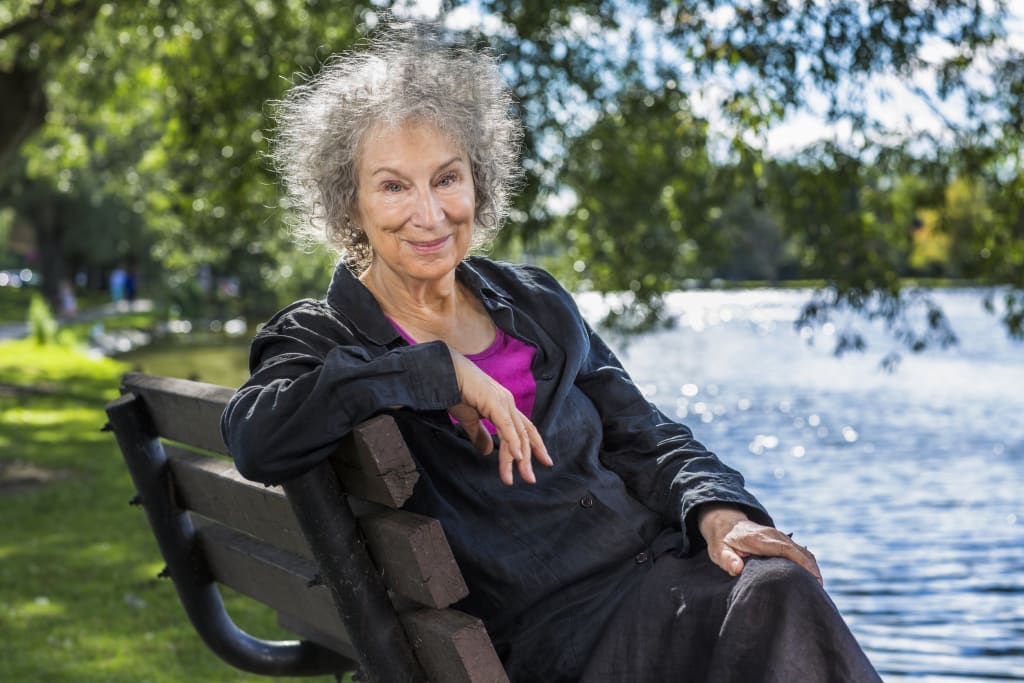
Early Life and Introduction to Poetry
Born in 1939 in Ottawa, Canada, Atwood developed a love for literature from an early age. She began writing poetry in high school and pursued English literature at the University of Toronto. Her early works, including Double Persephone (1961), set the stage for a poetic career that would span decades. Even as her prose works gained international acclaim, poetry remained a vital part of her artistic expression.
Key Themes in Atwood’s Poetry
Atwood’s poetry is notable for its exploration of various recurring themes:
Feminism and Gender Dynamics
Atwood has long been a voice for feminist perspectives, critiquing the societal roles imposed on women. In Power Politics (1971), she dissects the tensions and inequalities in relationships, using stark and sometimes unsettling imagery. Poems like Spelling reflect on the oppression of women and the power of language as a means of resistance.
Environmentalism and Nature
Atwood has consistently expressed her concern for environmental degradation. In The Animals in That Country (1968), she uses nature as both a setting and a symbol for human behavior. Her eco-conscious themes intensified over the decades, mirroring the urgency of climate change discussions today.
Myth and History
Atwood often reimagines mythological and historical narratives, providing fresh perspectives on classical stories. The Journals of Susanna Moodie (1970) explores the life of a historical Canadian pioneer, using poetic monologues to reframe historical narratives with a modern feminist lens.
Power and Oppression
Her poetry frequently scrutinizes power structures, whether in personal relationships or sociopolitical systems. In Morning in the Burned House (1995), Atwood grapples with loss and transformation, weaving personal grief with broader societal concerns.
Style and Techniques
Atwood’s poetic style is marked by its clarity, irony, and conciseness. She often employs:
Imagery: Her poems are rich with vivid, sometimes surreal imagery that creates a lasting impact.
Economy of Language: Atwood is known for her precise word choice, often conveying deep emotion in few words.
Satire and Wit: Even in her darkest poems, she maintains a sharp wit that exposes hypocrisy and absurdity.
Free Verse and Experimentation: While she occasionally uses traditional forms, most of her poetry is free verse, allowing her to experiment with rhythm and structure.
Major Poetry Collections
Double Persephone (1961) – Her debut collection, blending mythology and existential themes.
The Circle Game (1964) – Won the Governor General’s Award for Poetry, cementing her as a major literary voice.
Power Politics (1971) – A feminist critique of relationships and power structures.
The Journals of Susanna Moodie (1970) – A historical and psychological exploration of Canadian identity.
Morning in the Burned House (1995) – A deeply personal and haunting collection dealing with grief and transformation.
Dearly (2020) – Her first poetry collection in over a decade, reflecting on aging, memory, and environmental concerns.
Legacy and Influence
Margaret Atwood’s poetry has had a profound impact on literature and culture. Her ability to blend personal reflection with broader societal critique has made her work timeless. She has influenced generations of writers and continues to be an active literary figure, proving that poetry remains a powerful tool for change and reflection.
Though she is best known for her novels, Atwood's poetry reveals the depth of her literary prowess. Her verse, often spare yet deeply evocative, continues to resonate with readers, proving that she is as much a poet as she is a novelist. Whether exploring the natural world, gender politics, or personal loss, Atwood’s poetry remains a compelling force in contemporary literature.
About the Creator
Mr Ali
Hello EveryOne..!!



Comments (1)
Hello, just wanna let you know that if we use AI, then we have to choose the AI-Generated tag before publishing 😊