
Healing in Verse: The Power of Psychological Poetry
How Words Shape the Mind, Mend the Heart, and Awaken the Soul
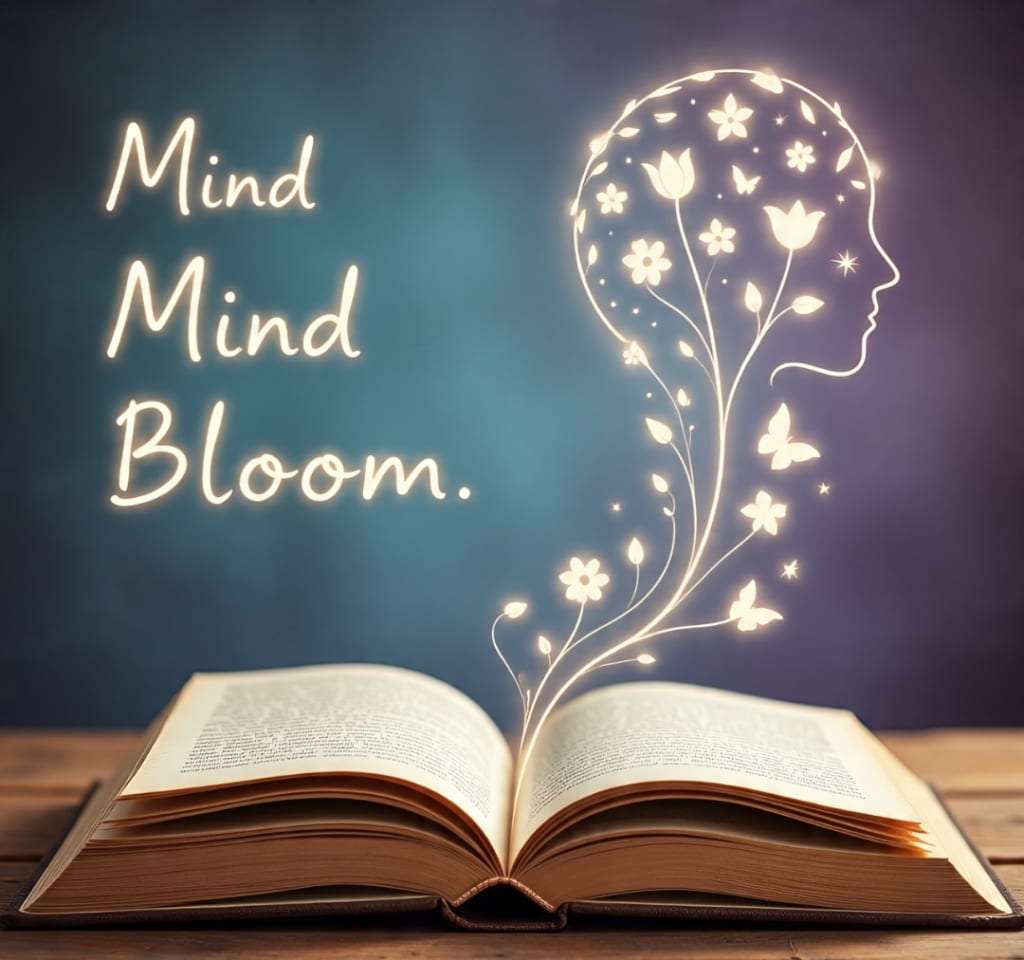
Healing in Verse: The Power of Psychological Poetry
For as long as she could remember, Mara had lived with a storm inside her. It wasn’t always loud or violent—sometimes it was a quiet gray that followed her into every room, like a shadow she couldn't shake. Friends called her "the deep thinker," teachers praised her essays, and her voice carried calm in conversation. But inside, she was always swimming in thoughts too big to name.
At seventeen, after a long season of silence, Mara’s therapist gave her a simple suggestion:
“Try writing what you feel. Don’t worry about sense—just sound.”
So that night, Mara opened a notebook and wrote:
> “My mind is a house where windows blink,
Walls whisper, and silence sings.”
It didn’t make perfect sense, but it felt true.
That was the night poetry found her.
Over the weeks that followed, Mara poured her quiet chaos into verse. She wrote about feeling invisible, about dreams that spoke in symbols, about the strange comfort of being alone. Her words didn't rhyme, and her lines didn’t follow rules—but something inside her began to shift.
With every poem, she wasn’t just venting emotion—she was decoding it. The act of writing made the unnamed parts of her pain visible, and once visible, they became livable.
---
The Psychology Behind the Pen
What Mara didn’t know yet was that she had stumbled into an age-old practice now being explored by modern psychologists: poetry therapy.
Psychological poetry—sometimes called therapeutic or expressive poetry—is the use of poetic language and structure to explore, understand, and even heal the mind. Research has shown that writing poetry can reduce anxiety, increase emotional resilience, and improve self-awareness.
According to Dr. James Pennebaker, a leading psychologist in expressive writing, the process of putting feelings into words changes how the brain processes trauma. It's as if the act of writing allows the mind to reorganize painful memories, giving the author both distance and control.
Unlike clinical talk therapy, poetry doesn’t demand clarity or explanation. Instead, it welcomes metaphor, ambiguity, and emotion. For many, that makes it safer—more intuitive.
In Mara’s case, poetry became the bridge between her inner world and outer reality. It gave her a voice when she didn’t know how to speak plainly.
---
A Blooming Mind
One morning in early spring, Mara stood in front of her English class and read one of her poems aloud. It wasn’t about depression or trauma—it was about a tree that forgot how to bloom, and the wind that sang it back to life.
> “And so the branches shook with song,
Until one petal dared to wake.”
When she finished, the room was silent. Not the awkward kind—the holy kind.
One classmate had tears in their eyes. Another came up after class and whispered,
"That poem felt like me."
It was then Mara understood: poetry doesn’t just heal the writer—it heals the reader, too.
---
Why Psychological Poetry Matters
In a world full of fast communication and emotional noise, poetry invites depth, slowness, and reflection. It lets people:
Name the unnamable (grief, fear, longing)
Find meaning in pain
Transform wounds into art
Connect with others in silent understanding
And it’s not just for “poets.” Anyone—with or without experience—can benefit from writing or reading psychologically rooted poetry.
Whether it’s a journal scribbled in at midnight, a spoken word shared on stage, or a single verse taped to a mirror, poetry reminds us:
You are not alone in how you feel.
---
The Final Line
Years later, Mara became a counselor. On the shelf behind her desk sat a stack of empty notebooks, free for any client who needed them.
When one young boy asked, “What if I don’t know what to write?”
She smiled and said,
“Start with how it sounds inside your head.”
And so the healing continued—line by line, soul by soul.
About the Creator
Keep reading
More stories from Muhammad Saad and writers in Poets and other communities.
The Mind's Melody: Exploring the Psychological Game of Poetry
In a quiet town nestled between hills and sky, lived a teacher named Liana. She was known not just for her love of words, but for the way she made them come alive. Her classroom was filled with sunlight, old books, and laughter—a space where poetry wasn’t just studied, but felt. One autumn morning, she gave her students an unusual assignment: “Write a poem that shows how you feel without saying exactly what you feel.” The students looked puzzled. “Isn’t that what poetry is supposed to do?” asked a boy named Amir. “Exactly,” Liana smiled. “That’s the game. The psychological game of poetry.” The idea of poetry as a “game” intrigued the class. They were used to rhyme schemes and metaphors, but this was different. This was about decoding the self, one word at a time. Over the next few weeks, something incredible happened. One quiet student, Elena, who often sat alone, wrote about a “bird trapped under glass.” It wasn’t until she read it aloud that the class understood: the bird was her anxiety. Her words didn’t name the feeling—but everyone felt it. Amir wrote a poem using only colors—describing a storm as “deep maroon” and laughter as “sunbeam yellow.” Liana pointed out how his mind connected emotions with sensory detail, and how powerful that was. They weren’t just writing poetry—they were unlocking themselves. Liana explained that poetry is one of the oldest forms of human expression. Long before psychology was a science, poetry was already mapping the mind. In haiku, in odes, in ballads—humans poured their fears, hopes, and questions into verse. But more than that, poetry let people process their emotions without always having to explain them directly. “It’s like playing chess with your own thoughts,” she said. “A strategy to understand yourself without overwhelming yourself.” Studies have shown that writing poetry activates areas in the brain related to memory, emotion regulation, and language. It helps people reframe negative thoughts, and in doing so, heal. Poetry is a mirror, a translator, and sometimes—a silent therapist. What makes poetry especially unique, Liana told them, is how it builds bridges between people. A poet in Nigeria can write about longing, and someone in Norway can read it and feel less alone. It’s a universal code—wrapped in rhythm and metaphor—that binds humanity. One day, the class wrote a collaborative poem. Each student added one line, continuing where the last left off. The poem danced between joy, grief, hope, and dreams. In just 18 lines, they had told a collective story—without planning or overthinking. It was honest. Raw. Beautiful. By the end of the semester, even the shyest students were writing poems with confidence. Their grammar improved, yes—but more importantly, they felt heard. Seen. Validated. That winter, the class held a poetry night called The Mind’s Melody. Parents came. Grandparents came. Strangers came. One by one, the students stood at the microphone and read their poems. Some spoke of heartbreak. Others of laughter. One student read a poem about her late grandmother, and half the room cried. But it wasn’t sadness that filled the room—it was connection. Healing. Humanity. Afterward, a parent approached Liana with tears in her eyes. “My son never talks much. But tonight, I feel like I met him for the first time.” Liana smiled. “That’s poetry. It helps us speak in silence.” --- In our fast-paced, digital world, poetry remains a quiet force—simple yet profound. It teaches us to observe, to reflect, and to connect beyond surface-level words. The psychological game of poetry isn’t about winning or losing. It’s about listening—to ourselves, and to others. It’s about decoding the heart’s language when regular speech falls short. So the next time you feel overwhelmed, uncertain, or inspired—pick up a pen. Let the melody of your mind flow. You may just find a poem waiting to be written—and a piece of yourself waiting to be found.
By Muhammad Saad 4 months ago in Poets




Comments
There are no comments for this story
Be the first to respond and start the conversation.