


Introduction
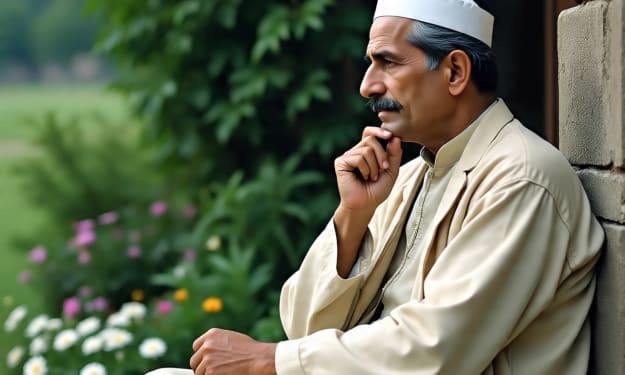
Pashtun culture has gifted the world with many renowned poets who have expressed the feelings, emotions, and thoughts of their people through powerful words. Among them, one of the brightest names is Hamza Baba, a legendary figure in Pashto literature. His real name was Hamza Shinwari, but he became famously known as Hamza Baba. He belonged to the well-known Shinwari tribe of Landi Kotal, in the Khyber region of Pakistan.
Early Life and Education
Hamza Baba was born in 1907 in Landi Kotal, a region famous for its rich traditions and history. Coming from the Shinwari tribe, known for its courage and honor, Hamza Baba grew up with strong cultural roots. His early education was in his hometown, and even as a child, he displayed a deep love for literature and poetry. His sensitive nature and serious temperament naturally pulled him toward the world of poetry.
Beginning of His Literary Journey
In the early days, Hamza Baba wrote poetry in Urdu and Persian, but soon he turned towards his mother tongue — Pashto. His poetry reflected simplicity, love, philosophy, and mysticism. He played a significant role in giving new life and depth to the Pashto Ghazal, introducing a unique style that captured the hearts of many.
Poetic Style and Themes
Hamza Baba’s poetry is known for its Sufi essence. His verses often talk about the deeper meanings of love, life, and the connection between man and the divine. For him, love wasn’t just a worldly emotion but a spiritual force that unites humanity.
Themes of spirituality, humanism, brotherhood, and peace echo through his poetry. He beautifully blended romance and mysticism in Pashto literature, making his work timeless and relatable even today.
Famous Works and Poetry
Hamza Baba’s literary works have been compiled into several collections, and his poetry remains alive in the hearts of Pashto-speaking people. His Ghazals are known for their simplicity and profound depth. One of his famous lines says:
"Za Hamza pa zra ke na sham satli"
(I am Hamza — impossible to be contained in a heart)
Some of his famous collections include:
Da Hamza Ghazalona
Sahar da Zhwandon
Da Baba Shairi
Sufi Thought and Message
For Hamza Baba, poetry was never just a play of words. It was a spiritual experience — a means to connect with the higher self and spread the message of love and unity.
He believed that love brings man closer to the Creator. His poetry promotes peace, harmony, love, and human dignity. The influence of Sufi philosophy is evident in his verses, encouraging readers to rise above worldly affairs and connect with their spiritual essence.
Literary Contributions and Recognition
Hamza Baba is honored as the "Father of Pashto Ghazal." His contributions to Pashto literature were acknowledged not only in Pakistan but also across Afghanistan.
He received several literary awards, including the Tamgha-e-Husn-e-Karkardagi (Medal of Excellence).
Hamza Baba revived Pashto poetry with his unique expression and helped introduce it to the global literary stage. His poetic style influenced many young poets and continues to inspire writers today.
Death Hamza Baba passed away in 1994, leaving behind a rich legacy of poetry, love, and spiritual thought. Yet, even after his death, his words and message remain alive, echoing in the hearts of admirers worldwide.
Conclusion
Hamza Baba stands tall among the great literary figures of Pashto poetry. Through his powerful words, he connected hearts, spread the message of peace, and wrapped his poetry in the colors of love and spirituality.
His works are not just literary treasures but living messages — teaching us that love and harmony are the true essence of humanity.
It would be fair to say:
"Poetry may grow old with time, but Hamza Baba’s message of love remains forever young."
About the Creator
Keep reading
More stories from haider ali and writers in Poets and other communities.
Allama Iqbal
Allama Iqbal — The Visionary Who Awakened a Nation Introduction Allama Muhammad Iqbal, born on November 9, 1877, in Sialkot, British India, is remembered as one of the greatest poets, philosophers, and visionaries of the Muslim world. Known as the "Poet of the East," Iqbal's poetic genius and intellectual depth inspired millions across the subcontinent. His profound thoughts and powerful verses continue to resonate with people worldwide. Beyond poetry, he played a pivotal role in inspiring the idea of a separate homeland for Muslims, which later became Pakistan.
By haider ali8 months ago in Poets
Review of 'Man on the Run'
My wife and I saw Man on the Run, a nearly 2-hour documentary on Amazon Prime, about Wings, Paul McCartney's group that flew around the world from shortly after The Beatles broke up in early 1970 to shortly after John Lennon was murdered at the end of 1980, making a Beatles reunion forever impossible.
By Paul Levinson4 days ago in Beat


Comments (1)
Wow bro Der kha NICE WORK