
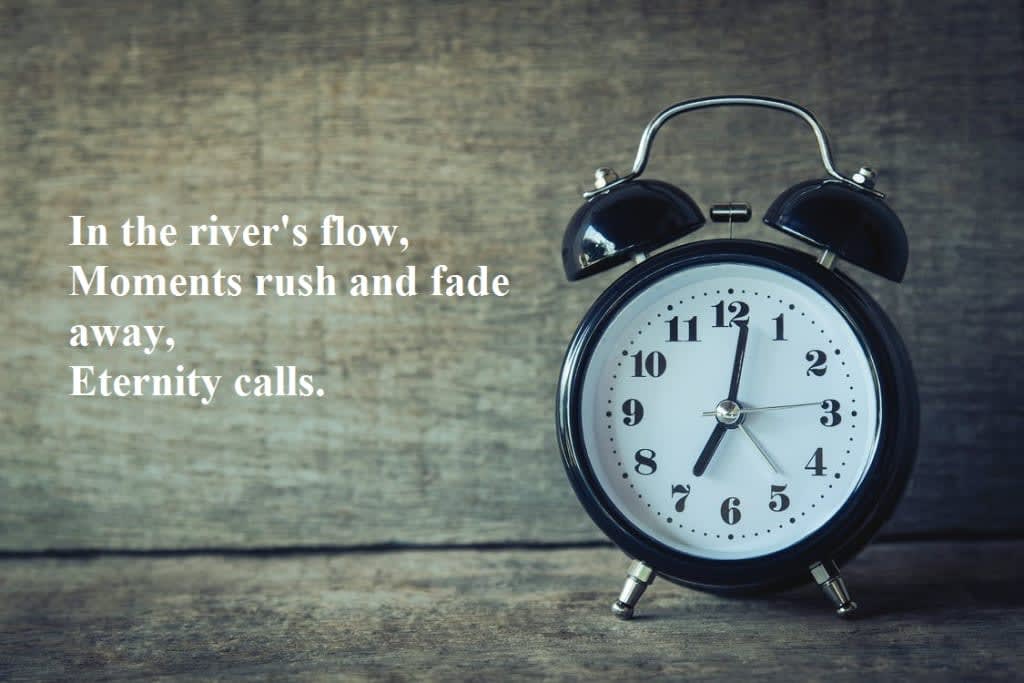
Haiku is a traditional form of Japanese poetry that has gained popularity worldwide due to its simplicity and ability to convey profound emotions and ideas. The haiku is a three-line poem that follows a strict syllable count of 5-7-5. It is a concise form of poetry that requires careful consideration of each word and syllable.
The first line of a haiku typically sets the scene or establishes a setting, while the second line provides a deeper observation or insight into that setting. The final line is usually a conclusion or a contrast that brings the poem to a satisfying close.
Haiku often utilizes the natural world as its subject matter, and the brevity of the form lends itself well to capturing fleeting moments of beauty or reflection. Many haiku also incorporate seasonal references, drawing inspiration from the changing of the seasons and the cycles of nature.
Haiku is often seen as a form of mindfulness or meditation, encouraging the poet to slow down and observe the world around them. Writing haiku can be a powerful tool for self-reflection and self-expression, allowing the poet to distill complex emotions and experiences into a few simple lines.
One of the strengths of haiku is its flexibility within the syllable count. While the traditional form of haiku adheres to the 5-7-5 syllable count, many contemporary haiku writers have embraced a more fluid approach to syllable count. This allows for a greater range of expression and experimentation within the form.
Despite its brevity, haiku can be a challenging form to master. It requires a deep understanding of language and the ability to convey meaning through precise word choice and imagery. However, the rewards of writing haiku are many, as it offers a unique opportunity to capture moments of beauty, insight, and reflection in a few simple lines.
Haiku poems can be deceptively simple, but their brevity and structure require careful consideration of word choice and phrasing. In Japanese haiku, there are often references to seasonal changes, as well as the use of kigo, or seasonal words, to convey a particular time of year. However, in English-language haiku, this tradition is not as strictly followed.
Haiku can be a powerful tool for capturing the essence of a moment or emotion. Its form challenges writers to be concise and to choose their words carefully. Haiku can also inspire readers to reflect on their own experiences and the world around them.
Here are a few examples of haiku:
A quiet pond still,
A frog jumps in, splash echoes,
Ripples dance outward.
The sun sets below,
Colors blend into the sky,
Nighttime now arrives.
Autumn leaves falling,
Crisp breeze dances through the trees,
Nature's final show.
These haiku poems each capture a moment in time, whether it's the movement of a frog in a pond or the changing colors of a sunset. The brevity of the form allows the reader to focus on the imagery and the emotions it evokes.
Cherry blossoms bloom
Soft petals dance in the breeze
Spring awakens earth
This haiku evokes the beauty of spring, with its delicate cherry blossoms and gentle breezes. The syllables flow smoothly, creating a sense of movement and lightness.
Summer sun beats down
Lazy days stretch out before us
Time slows to a crawl
This haiku captures the languid feeling of a summer day, with its slow pace and intense heat. The longer second line allows for a more detailed description, while the third line brings the poem to a satisfying conclusion.
Autumn leaves fall fast
Crisp air whispers through the trees
Winter's chill draws near
This haiku reflects on the changing seasons, as autumn gives way to winter. The imagery of falling leaves and whispering air creates a sense of transition and anticipation, while the final line adds a touch of melancholy.
About the Creator
Keep reading
More stories from writers in Poets and other communities.
Ludacris and Nelly draw backlash over bookings at MAGA-coded music festival
Ludacris and Nelly headlining a mostly right-wing event is good for them. It’s also great for the genre of hip hop. The two rap veterans have showcased their talents on other stages. Why can’t they perform for mostly MAGA folks and grab that bag?
By Skyler Saunders5 days ago in Beat



Comments (1)
Comment what you feel