
Gwendolyn Brooks: A Voice for the People
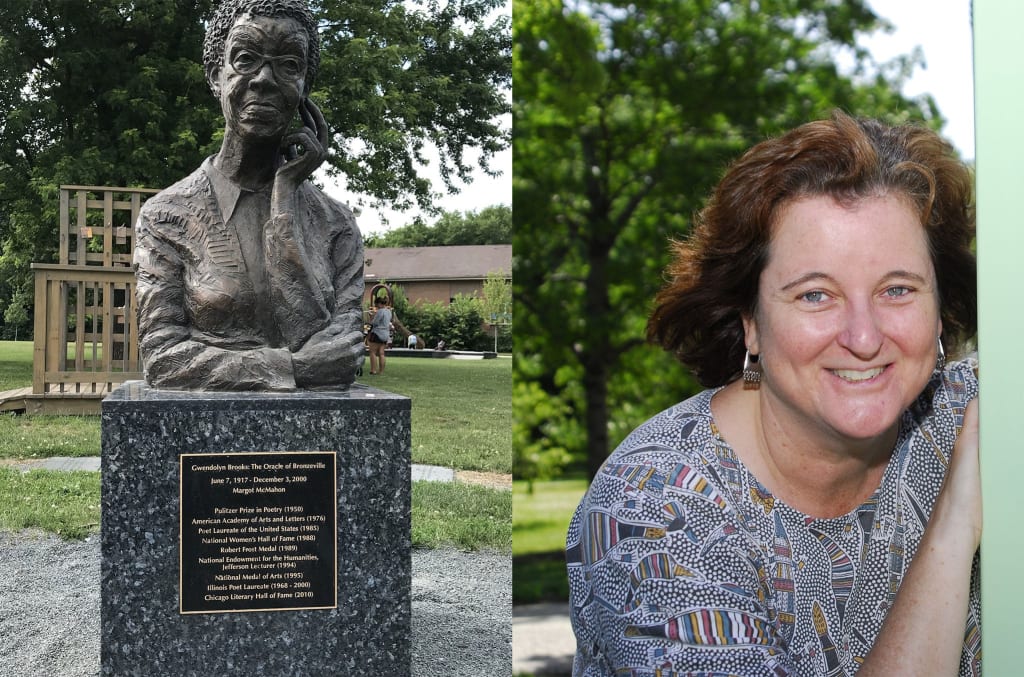
Introduction Gwendolyn Brooks (1917–2000) was one of the most influential poets of the 20th century. Known for her eloquent, vivid, and socially conscious poetry, Brooks was the first African American to win the Pulitzer Prize for Poetry in 1950. Her work captures the complexity of Black life in America, addressing themes of racial identity, social inequality, love, and resilience. Over her long and prolific career, Brooks established herself not just as a poet but as a cultural icon who inspired generations of writers and activists.
Early Life and Influences
Gwendolyn Elizabeth Brooks was born on June 7, 1917, in Topeka, Kansas, but grew up in Chicago, Illinois. Her parents recognized her talent for writing early on and encouraged her creative pursuits. Growing up in the South Side of Chicago, often referred to as "Bronzeville," Brooks was deeply influenced by the vibrant Black community around her. The challenges and triumphs of urban Black life would later become central themes in her poetry.
By the age of 13, Brooks was already publishing poems in local newspapers. She eventually attended Wilson Junior College in Chicago, where she honed her craft. She also connected with writers and intellectuals from the Harlem Renaissance, such as Langston Hughes, who became a mentor to her. These experiences helped shape her poetic voice.
Major Works and Themes
Brooks's poetry is renowned for its accessibility, musicality, and depth. While her early works adhered to traditional poetic forms, she later embraced free verse and experimental styles, reflecting the changing times.
A Street in Bronzeville (1945)
Brooks’s debut collection, A Street in Bronzeville, was published in 1945 to critical acclaim. The book established her as a significant literary voice. Through a series of vignettes, Brooks portrays the lives of African Americans in Chicago’s Bronzeville neighborhood. Poems like "Kitchenette Building" and "The Sundays of Satin-Legs Smith" highlight the struggles and dreams of ordinary people living in cramped urban spaces.
"Kitchenette Building" captures the tension between survival and imagination. Brooks writes:
"We are things of dry hours and the involuntary plan,
Grayed in, and gray. ‘Dream’ makes a giddy sound, not strong
Like ‘rent,’ ‘feeding a wife,’ ‘satisfying a man.’"
Here, she explores how poverty limits aspirations but also hints at the resilience of the human spirit.
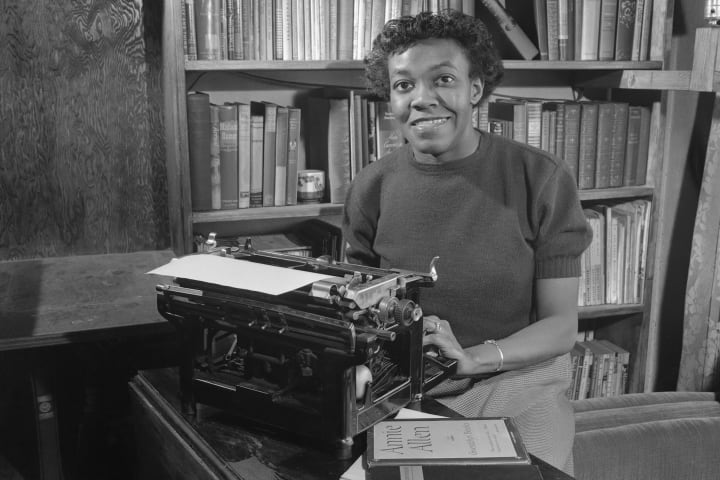
Annie Allen (1949)
Her second collection, Annie Allen, won the Pulitzer Prize, making Brooks the first African American to receive this honor. The book tells the coming-of-age story of a young Black girl, Annie, navigating life’s complexities, from innocence to disillusionment. Through Annie’s journey, Brooks examines identity, love, and societal expectations.
The poem "The Sundays of Satin-Legs Smith" exemplifies Brooks’s ability to balance humor, empathy, and social critique. Satin-Legs Smith is a dandy who spends his Sundays indulging in self-admiration, yet his story reflects deeper issues of class and self-perception.
The Bean Eaters (1960)
In The Bean Eaters, Brooks turns her attention to broader social and political issues. This collection includes some of her most famous works, such as "We Real Cool." This short yet powerful poem portrays the voices of rebellious youth with stark simplicity:
"We real cool. We
Left school. We
Lurk late. We
Strike straight."
The poem’s rhythmic, clipped structure captures the energy and tragedy of marginalized youth while allowing readers to interpret its deeper implications about identity and mortality.
In the Mecca (1968)
In the Mecca marked a turning point in Brooks’s career, both stylistically and thematically. This long narrative poem tells the story of a mother searching for her lost child in a dilapidated apartment building called the Mecca. The work delves into the suffering and resilience of urban Black communities, blending traditional poetic forms with modernist experimentation.
One poignant line reads:
"What was her hope, as she breathed a long and chilly
Breath? What was her wonder?
What was her woe?"
The poem reflects Brooks’s growing engagement with Black consciousness and activism during the civil rights era.
Social and Political Engagement
By the 1960s, Brooks became more deeply involved in the Black Arts Movement, which sought to celebrate Black culture and challenge systemic racism. Inspired by figures like Malcolm X and the rise of Black Power, her work became more direct and politically charged.
During this period, Brooks shifted her publishing to Black-owned presses and began writing poetry that addressed issues of racial injustice, inequality, and empowerment. Poems like "Riot" and "To the Diaspora" reflect this transformation, urging her readers to embrace their identity and fight for change.
Legacy and Influence
Gwendolyn Brooks’s impact on literature and culture is immeasurable. She paved the way for countless Black writers and artists, proving that their voices deserved recognition on a global stage. Her ability to blend traditional forms with innovative techniques set her apart as a masterful storyteller and chronicler of human experience.
In addition to her poetry, Brooks was a dedicated educator, serving as Poet Laureate of Illinois from 1968 until her death in 2000. She used her platform to mentor young poets and support emerging talent, often hosting workshops and readings in underserved communities.
Her honors include the National Book Award, the Robert Frost Medal, and a lifetime achievement award from the National Endowment for the Arts. The Gwendolyn Brooks Center for Black Literature and Creative Writing at Chicago State University continues her legacy of fostering creativity and dialogue.
Conclusion
Gwendolyn Brooks was a poet of extraordinary talent and vision. Her work transcends time, offering a window into the lives of ordinary people while challenging readers to confront societal injustices. Whether she was writing about the joys and sorrows of daily life or the larger struggles for equality and identity, Brooks’s poetry resonates with authenticity and power. Her words remain as relevant today as they were during her lifetime, inspiring us to dream, reflect, and act.
About the Creator
Mr Ali
Hello EveryOne..!!


Comments (1)
What a great voice for the people! Great work!