
"FROM off a hill whose concave womb reworded" by William Shakespeare
This poem intricately weaves themes of love, betrayal, and sorrow, portraying a heartbroken woman's journey through the emotional turmoil of misguided trust and fleeting passions. It reflects on the fragility of innocence, the enduring impact of deception, and the profound tension between love’s allure and reason’s caution.

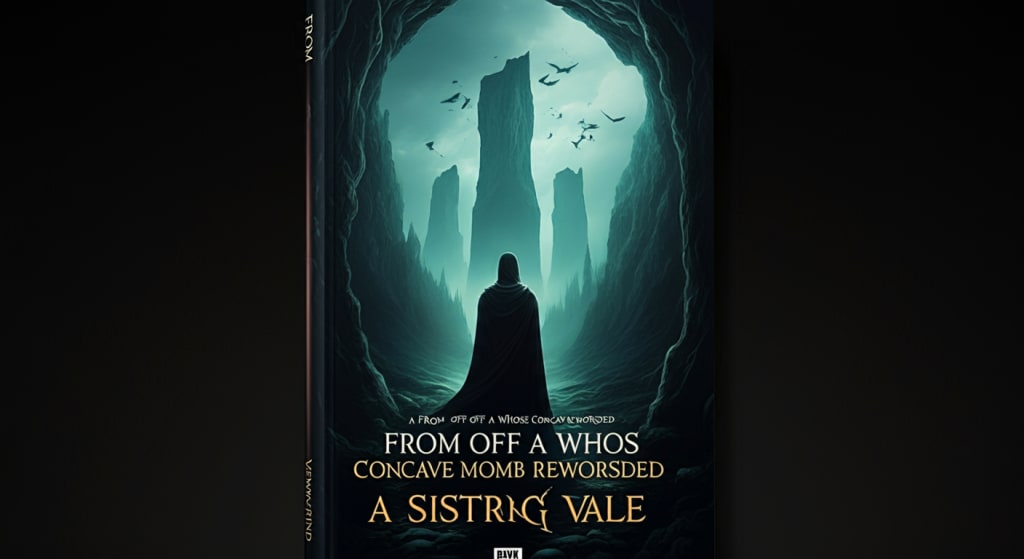
FROM off a hill whose concave womb reworded
A plaintful story from a sistering vale,
My spirits to attend this double voice accorded,
And down I laid to list the sad-tuned tale;
Ere long espied a fickle maid full pale,
Tearing of papers, breaking rings a-twain,
Storming her world with sorrow's wind and rain.
A desolate hill where the echoes of sorrow reverberate between valleys. The "double voice" refers to the interplay of the natural setting and the woman's lament. The "fickle maid," pale and distraught, is consumed by grief, physically manifesting her anguish by tearing papers and breaking tokens of love. Her actions—"storming her world with sorrow’s wind and rain"—metaphorically liken her despair to a tempest, underscoring the depth of her emotional turmoil.
Upon her head a platted hive of straw,
Which fortified her visage from the sun,
Whereon the thought might think sometime it saw
The carcass of beauty spent and done:
Time had not scythed all that youth begun,
Nor youth all quit; but, spite of heaven's fell rage,
Some beauty peep'd through lattice of sear'd age.
Describes the maiden's appearance, emphasizing the duality of her state. The "platted hive of straw" represents a simple, makeshift covering, shielding her from the sun—an emblem of her forsaken vanity. While her beauty is faded, it is not entirely gone; traces of youth remain despite time’s ravages. Shakespeare contrasts the lingering beauty of her face ("some beauty peep'd through lattice of sear'd age") with the metaphorical effects of her suffering, hinting at her inner conflict between resilience and despair.
Oft did she heave her napkin to her eyne,
Which on it had conceited characters,
Laundering the silken figures in the brine
That season'd woe had pelleted in tears,
And often reading what contents it bears;
As often shrieking undistinguish'd woe,
In clamours of all size, both high and low.
The maiden’s grief intensifies as she repeatedly wipes her tears with a cloth marked by symbols or initials ("conceited characters"). The "brine" of her tears serves as a metaphorical cleanser, washing away her dignity while amplifying her sorrow. Her erratic cries—"in clamours of all size"—show the chaotic nature of her despair, oscillating between sorrow and anger.
Sometimes her levell'd eyes their carriage ride,
As they did battery to the spheres intend;
Sometime diverted their poor balls are tied
To the orbed earth; sometimes they do extend
Their view right on; anon their gazes lend
To every place at once, and, nowhere fix'd,
The mind and sight distractedly commix'd.
The woman's shifting gaze reflects her mental anguish. Her "levell'd eyes" seem to confront the heavens, accusing the celestial order of her plight. Yet, her focus also drifts to the earthly realm, signifying her entrapment between spiritual anguish and physical despair. The erratic nature of her gaze mirrors the chaos within her mind, embodying the fragmentation of her emotional state.
Her hair, nor loose nor tied in formal plat,
Proclaim'd in her a careless hand of pride;
For some, untuck'd, descended her sheaved hat,
Hanging her pale and pined cheek beside;
Some in her threaden fillet still did bide,
And true to bondage would not break from thence,
Though slackly braided in loose negligence.
Her disheveled hair symbolizes her internal disarray. Shakespeare contrasts strands of hair that hang loosely with others that remain confined, hinting at her struggle between freedom and restraint. This "careless hand of pride" reveals her apathy toward appearances, signaling how deeply her anguish has eroded her self-worth.
A thousand favours from a maund she drew
Of amber, crystal, and of beaded jet,
Which one by one she in a river threw,
Upon whose weeping margent she was set;
Like usury, applying wet to wet,
Or monarch's hands that let not bounty fall
Where want cries some, but where excess begs all.
The maiden throws gifts—"favours"—into the river, rejecting mementos of her past lover. The river’s "weeping margent" mirrors her own sorrow, while the act of "applying wet to wet" suggests futility. Her disdain for these tokens critiques the imbalance of her lover’s affection: he lavished excess where sincerity was needed.
Of folded schedules had she many a one,
Which she perused, sigh'd, tore, and gave the flood;
Crack'd many a ring of posied gold and bone
Bidding them find their sepulchres in mud;
Found yet moe letters sadly penn'd in blood,
With sleided silk feat and affectedly
Enswathed, and seal'd to curious secrecy.
The "letters sadly penn'd in blood" symbolize passionate yet destructive love, written with the lifeblood of emotion. The act of discarding them into the river suggests her desperate attempt to sever ties with the past. Rings—symbols of eternal love—are cracked and discarded, emphasizing her disillusionment with their promises.
A reverend man that grazed his cattle nigh—
Sometime a blusterer, that the ruffle knew
Of court, of city, and had let go by
The swiftest hours, observed as they flew—
Towards this afflicted fancy fastly drew,
And, privileged by age, desires to know
In brief the grounds and motives of her woe.
The maiden’s plight draws the attention of an elderly man. His experience—evident in his familiarity with both rustic life and courtly intrigue—makes him a compassionate observer. Privileged by age, he gently inquires about the cause of her sorrow, offering a sympathetic ear.
The Maiden’s Tale: Love and Betrayal
The majority of the poem recounts the maiden’s story of falling for a deceitful, charismatic young man. His beauty, charm, and rhetorical skill captivated her, despite warnings and her own better judgment. She describes him as a master manipulator, adept at disguising his true intentions beneath an angelic exterior. Despite recognizing his faults, she was seduced by his passionate appeals and seemingly genuine displays of emotion.
Conclusion
"A Lover's Complaint" is a timeless exploration of love’s complexities, blending lyrical beauty with profound psychological insight. Through the maiden’s lament, Shakespeare critiques the seductive power of beauty and the emotional toll of betrayal. Each stanza weaves a tapestry of sorrow and introspection, inviting readers to reflect on the fragility of trust and the enduring scars of lost love.
About the Creator
Muhammah Hanzalah
Passionate about history and culture. Join me on Vocal Media for captivating insights into hidden historical gems and diverse cultural traditions. Let's explore the rich tapestry of our shared heritage and artistic expressions.
Keep reading
More stories from Muhammah Hanzalah and writers in Poets and other communities.
O mistress mine, where are you roaming? By William Shakespeare
William Shakespeare’s “O Mistress Mine,” a song from his comedy Twelfth Night, has captured hearts for centuries with its profound reflections on love, time, and the fleeting joys of youth. Found in Act II, Scene III, Feste, the fool, sings this song to entertain Sir Toby Belch and Sir Andrew Aguecheek. Beyond its entertainment value, the song offers a rich, lyrical meditation on seizing the moment and cherishing life’s transient pleasures.
By Muhammah Hanzalahabout a year ago in Poets
Review of 'Man on the Run'
My wife and I saw Man on the Run, a nearly 2-hour documentary on Amazon Prime, about Wings, Paul McCartney's group that flew around the world from shortly after The Beatles broke up in early 1970 to shortly after John Lennon was murdered at the end of 1980, making a Beatles reunion forever impossible.
By Paul Levinson5 days ago in Beat



Comments
There are no comments for this story
Be the first to respond and start the conversation.