


We've all been there—reaching that point in writing haiku when we hit a plateau—to put it kindly-- and everything we write seems "weary, stale, flat, and unprofitable." This feeling intensifies if you've been adhering strictly to the form Martin Lucas spoofs in "Haiku as Poetic Spell":
seasonal ref'rence—
then two lines of contrasting
foreground imagery
I hit this plateau a few months ago. My haiku felt lifeless, each one a clone of the last. I'd sit at my desk, pen in hand, writing haiku after haiku, each feeling as stale as the last. The 5-7-5 structure that once guided me now felt like a straitjacket. I was ready to give up on haiku altogether.
Then, during a rainy weekend in June, I stumbled upon a cluster of to-be-read links in a folder on my computer. Little did I know were key to rekindling my passion for haiku. As I downloaded and read the links, they challenged my preconceptions, expanded my understanding of the form, and ultimately allowed me to break through my plateau.
The first was Lee Gurga's exploration of haiku's essence, which freed me from the tyranny of syllable counting. The second, a fascinating study by Michele Root-Bernstein, introduced me to a "bottom-up" approach to haiku appreciation. Finally, Martin Lucas's "Haiku as Poetic Spell" opened my eyes to the potential of this concise poetic form.
But let's begin at the beginning with Gurga's definition of haiku:
- It is a poem.
- It is limited in length, between 15 and 20 syllables in English.
- It presents images rather than ideas.
- It is intuitive rather than intellective.
- It uses nature and seasonal observation as its foundation.
- Its observations are specific rather than general.
As I read and reread these points, I felt a weight lift from my shoulders. Gurga's definition opened up a world of possibilities I hadn't considered before. It wasn't about squeezing my thoughts into a predetermined syllable count but capturing a moment, an image, a feeling.
I spent the rest of the afternoon scribbling in my notebook, experimenting with this new understanding. Structure can be useful, but it shouldn't be a prison. Gurga's words had permitted me to break free and rediscover the essence of haiku.
This doesn't mean I've abandoned syllable counting altogether. Like Emily Dickinson, who used common meter to focus on content, I still use the 5-7-5 format but not as a constraint. I can now focus more on the "haiku moment" and play with form while still incorporating kigo (seasonal word) and kireji (cutting word). For as Clark Strand often reminds us, haiku is "serious play."
The second was "Haiku as Emblem of Creative Discovery: Another Path to Craft" by Michele Root-Bernstein, a former editor of Frogpond who used a bottom-up approach to select poems for the journal. She identified five key elements that make haiku captivating:
1. Imagery
• Definition: Haiku should evoke vivid sensory images that resonate with readers.
• Example: "a bee / staggers out / of the peony"
This haiku by Matsuo Bashō creates a vivid image of a bee emerging from a flower, appealing to the reader's sense of sight and movement.
2. Juxtaposition
• Definition: Placing different images or concepts to create surprising connections and insights.
• Example: "autumn sky / only one of us / deciduous"
Melissa Allen’s haiku juxtaposes the autumn sky with the idea of being deciduous, creating a surprising connection between human emotions and natural cycles.
3. Brevity
• Definition: Using concise language to focus on the poem's essence.
• Example: "cello solo / the owls in my bones"
Tanya McDonald's haiku is concise yet powerful, focusing on the essence of a musical experience and its deep emotional connection.
4. Ambiguity
• Definition: Allowing multiple interpretations to add depth and complexity.
• Example: "assigning my pain / a number of autumn clouds"
Susan Antolin's haiku, reminiscent of Basho's idea of Shiori, uses ambiguity to convey a complex emotional state, leaving room for personal reflection and interpretation.
5. Conceptual Space
• Definition: Creating space for readers to engage with the poem and derive personal meaning.
• Example: "3,000 years old / a drawing / of the girl next door"
Charles Baker's haiku opens up a conceptual space where the reader can ponder the connections between past and present, time and memory.
While Root-Bernstein's approach provided a framework for understanding effective haiku's components, I wondered how these elements work together to create the magical quality that draws us to great haiku. This is where Martin Lucas's 'Haiku as Poetic Spell' took my exploration further. Lucas's work, from which this essay takes its title, offered a fascinating perspective on how these elements combine to create something truly enchanting.
Lucas provided insightful examples demonstrating how rhythm, pauses, and stresses transform haiku into poetic spells or charms. His analysis of haiku by Duro Jaiye, Pamela Brown, Frances Angela, and Stuart Quine reveals how these poems transcend simple descriptions through rhythm, imagery, and ambiguity, becoming akin to spells or charms.
• Duro Jaiye's haiku: "hatless the seeds of winter in the morning sky"
The haiku's driving rhythm creates a spell-like quality. The ambiguity in the syntax and meaning, such as whether "hatless" describes the poet or the seeds, adds depth. The poem's authority and form enhance its impact beyond mere information.
• Pamela Brown's haiku: "torn clouds the horse's black tail trailing"
The haiku's alliteration mimics the tapping of a horse's canter. The imagery of "torn clouds" and "horse's black tail" creates an evocative yet ambiguous scene. This resistance to a clear, reductionist interpretation adds to its poetic charm.
Frances Angela's haiku: "my sister skating here comes her yellow hat."
The combination of two prose sentences creates a "non sequitur" haiku masterpiece. The seemingly irrelevant detail of the yellow hat becomes significant through its unexpected prominence—almost like the plastic bag scene in American Beauty.
Stuart Quine's haiku: "sharpening this night of stars distant dogs"
The opening word "sharpening" sets a distinct tone, eluding a direct prose equivalent. The imagery evokes a sharp, cold feeling, far removed from sentimental poetry. The haiku's power lies in its rhythmic and evocative words, making it unforgettable.
Unlike predictable haiku, these examples defy easy interpretation, emphasizing the unity of form and content. They show that haiku should evoke strong, resonant images and feelings, functioning as poetic spells that engage and transform the reader's perception.
Here is Lucas’s breakdown of formula versus poetic spell:

This approach to haiku as a "poetic spell" connects directly to the form's basics and origins. To appreciate this connection, we must understand, as Lucas points out, that English Language Haiku (ELH) was developed from translations focused on content accuracy, sacrificing formal effects like rhythm and alliteration. This historical consequence led poets to focus on what is said rather than how it is said.
Gurga, Root-Bernstein, and Lucas's insights have changed my haiku practice. Gurga's definition freed me from rigid syllable counting, allowing me to focus on capturing moments with precision and intuition. Root-Bernstein's five elements became a checklist of sorts; I now consciously consider imagery, juxtaposition, brevity, ambiguity, and conceptual space in each haiku I write. Lucas's 'poetic spell' concept has perhaps been the most transformative. I've started paying more attention to the musicality of my haiku, experimenting with rhythm, pauses, and word choice to create that spell-like quality.
Gurga, Root-Bernstein, and Lucas's insights have changed my approach and led me to reconsider my other poetic forms. This reflection is particularly significant in my context as a Caribbean poet, where haiku is a relatively new form. Unlike other haijin who might be steeped in traditional Japanese aesthetics, I find myself in a unique position to blend haiku principles with Caribbean sensibilities.
In the Caribbean—and I include Miami in this cultural sphere—we appreciate the music of language and the power of a well-turned phrase. These elements are the hallmarks of good poetry in our tradition. This is a stark contrast to the haiku of Northern Haijin, whose sole focus seems to be brevity, which has led to this one-word haiku, “tundra” by Cor Van Den Heuvel. As I apply the concepts of 'poetic spell' and creative discovery to haiku, I'm also exploring how these principles can enrich our local poetic forms to meet the exigencies of climate change and perhaps create our own Caribbean saijiki.
Focusing on precise observation in haiku challenges me to look at our tropical environment with fresh eyes. It pushes me to notice and articulate the subtle shifts in our landscape that might otherwise go unremarked. The concept of kigo (season word) invites reconsidering how we mark time and change in our region. Rather than relying on northern seasonal markers, we might find our rhythm in the ebb and flow of cycles of crop harvests, where subtle seasonal changes might be marked by the flowering of a particular tree or the start of the hurricane season.
We cast our spells with words and silences, inviting readers into a shared moment of discovery. In this way, each haiku becomes a small act of magic, a spell cast into the world, waiting for the right reader to complete it.
Notes:
Gurga, Lee. “Toward an Aesthetic for English-Language Haiku.” Modern Haiku, vol. 31, no. 3, Fall 2000. Presented at the Global Haiku Festival, Millikin University, Decatur, Illinois, 15 Apr., 2000.
Lucas, Martin. “Haiku as Poetic Spell.” Blithe Spirit, vol. 19, no. 4, 2009.
Root-Bernstein, Michele. “Haiku as Emblem of Creative Discovery: Another Path to Craft.” Modern Haiku, vol. 41, no. 3, 2010.
Shirane, Haruo. Traces of Dreams: Landscape, Cultural Memory, and the Poetry of Basho. Stanford University Press, 1998.
Strand, Clark. “Haiku and the Art of Play.” Center Post, Rowe Center, 12 Feb. 2021, centerpost.rowecenter.org/haiku-and-the-art-of-play-clark-strand/.
Van den Heuvel, Cor, editor. The Haiku Anthology. W. W. Norton & Company, 1999.
About the Creator
Geoffrey Philp
I'm a Jamaican writer. I write poems, stories & essays about climate change, Marcus Garvey, Bob Marley, haiku & haibun. I've published a graphic novel for children, "My Name is Marcus." For more info, visit: https://www.geoffreyphilp.com/
Reader insights
Outstanding
Excellent work. Looking forward to reading more!
Top insights
On-point and relevant
Writing reflected the title & theme
Easy to read and follow
Well-structured & engaging content
Excellent storytelling
Original narrative & well developed characters
Compelling and original writing
Creative use of language & vocab
Eye opening
Niche topic & fresh perspectives
Masterful proofreading
Zero grammar & spelling mistakes
Expert insights and opinions
Arguments were carefully researched and presented
Keep reading
More stories from Geoffrey Philp and writers in Poets and other communities.
me, me, me
when i read back my poetry it screams “me, me, me” on my screen in bold letters and i can’t shut it up — most days, i cannot make any other words out; i want to throttle a thousand versions of the me gone by, i want to throw myself from a figurative balcony, i want to sink a sword into every pen i’ve held
By angela hepworth4 days ago in Poets
A Planetary Alignment will coincide with Mercury Retrograde
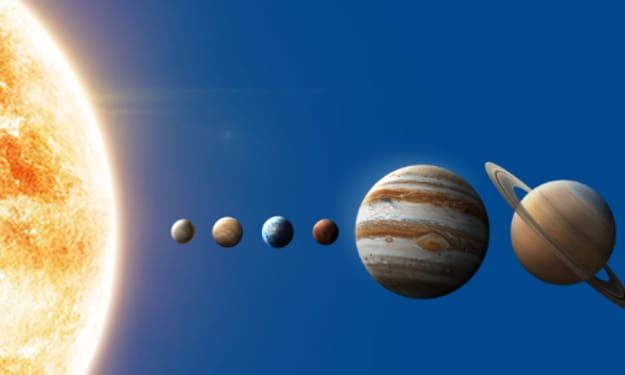
Double phenomena in the heavens Some people say in jest that the planets have aligned in their favor when life works the way they desire. Were you aware that there are seasons when things do line up in the heavens? There will be a planetary alignment AKA a planet parade, on February 28, 2026.
By Cheryl E Preston4 days ago in FYI

Comments (6)
I'm so happy to know that it helped you!
Thank you for writing this. It has definitely rekindled my haiku writing hopes! 💚🌞💜
Thanks for the well detailed analysis
Thanks for sharing that.
Excellent advice here, it helped me
This is fantastic, informative, and well written. Thank you for sharing.