
Allama Iqbal – The No.1 Poet of Pakistan
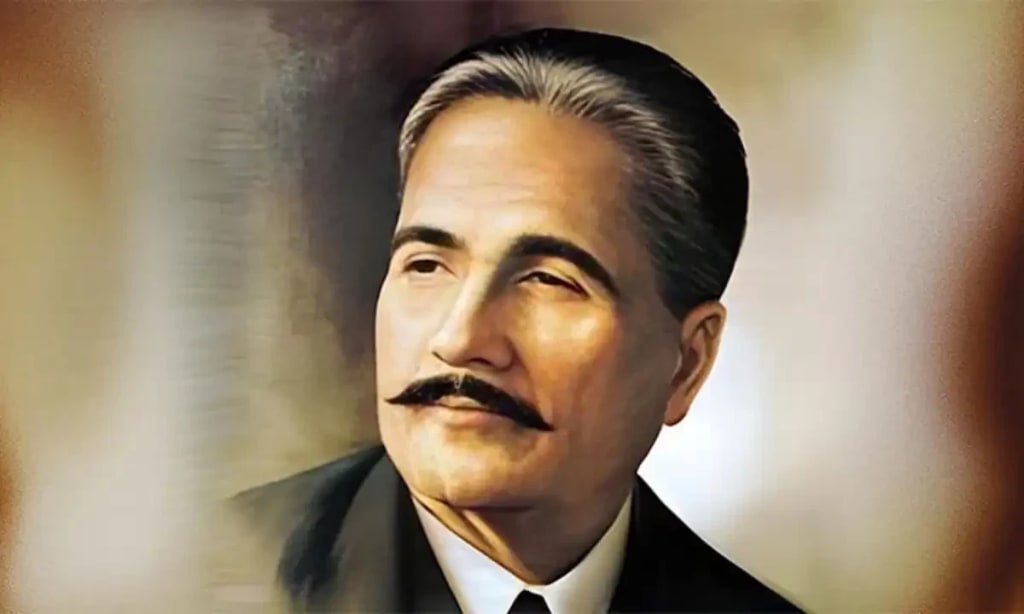
When we talk about the most influential and revered poet in Pakistan, one name echoes louder than any other—Dr. Allama Muhammad Iqbal. Known as the "Poet of the East" and the "Spiritual Father of Pakistan", Iqbal is not just a literary icon but also a philosophical force who helped shape the ideological foundation of Pakistan. His poetry transcends generations, his thoughts inspire revolutions, and his message continues to ignite the flame of self-realization and national pride in the hearts of millions. In this blog, we’ll explore why Iqbal is considered Pakistan’s No.1 poet, his major works, the essence of his philosophy, and how his poetry still resonates in modern times.
Early Life and Education
Born on November 9, 1877, in Sialkot, Punjab (then part of British India), Allama Iqbal belonged to a devout Muslim family. He showed early signs of intellectual brilliance and poetic talent. He received his initial education in Sialkot and then moved to Lahore, where he attended Government College. Under the mentorship of Sir Thomas Arnold, Iqbal developed a deep interest in Western philosophy.
His academic journey took him to Europe, where he studied at the University of Cambridge and later earned a doctorate in philosophy from the University of Munich. It was during his stay in the West that he critically examined the values of Western civilization, which greatly influenced his poetic and philosophical outlook.
The Fusion of East and West
Iqbal’s poetry stands out for its unique blend of Eastern mysticism and Western philosophical thought. He was deeply inspired by Rumi, the great Persian Sufi poet, whom he considered his spiritual guide. At the same time, he was influenced by Western thinkers like Nietzsche, Goethe, and Bergson.
His poetry addresses universal themes—selfhood, freedom, spirituality, and the destiny of nations. Iqbal believed that Muslims had strayed from the true path of Islam and needed a spiritual revival. Through his verse, he urged Muslims to rediscover their identity, awaken their potential, and rise as a united Ummah.
Major Works of Allama Iqbal
Iqbal wrote in both Persian and Urdu, and his poetry collections are considered masterpieces. Some of his most significant works include:
1. Bang-e-Dra (Call of the Marching Bell)
This Urdu collection includes some of his earliest poems and serves as a bridge between his romantic beginnings and his later revolutionary tone. It includes the famous poem "Lab Pe Aati Hai Dua Ban Ke Tamanna Meri".
2. Asrar-e-Khudi (Secrets of the Self)
Written in Persian, this philosophical poem presents Iqbal’s concept of Khudi (selfhood). He emphasized that self-realization and self-respect are essential for individual and national success.
3. Rumuz-e-Bekhudi (The Secrets of Selflessness)
A continuation of Asrar-e-Khudi, this book discusses the responsibilities of individuals toward their community and society.
4. Payam-e-Mashriq (Message of the East)
Iqbal’s response to Goethe’s West-östlicher Divan, this collection bridges the cultural and intellectual gap between the East and the West.
5. Bal-e-Jibril (Gabriel’s Wing)
Considered one of his greatest Urdu works, this collection reflects his mature thoughts on politics, spirituality, and philosophy.
6. Zarb-e-Kalim (The Rod of Moses)
A poetic declaration of war against the socio-political injustice of the time. This work showcases Iqbal’s call for action and change.
Iqbal and the Concept of Khudi
Central to Iqbal’s philosophy is the idea of Khudi, or the self. But it’s not mere ego or selfishness—it’s about realizing one's inner potential, purpose, and divine connection. Iqbal believed that when an individual awakens their Khudi, they become capable of reshaping the world.
In his words:
“Khudi ko kar buland itna ke har taqdeer se pehle
Khuda bande se khud poochhe, bata teri raza kya hai?”
Translation:
“Raise yourself to such heights, that before every destiny,
God Himself will ask you: What is it that you wish?”
This concept was revolutionary, especially for a colonized Muslim population under British rule. It encouraged confidence, self-belief, and a proactive mindset.
Political Vision and Pakistan Movement
Iqbal was not just a poet—he was a visionary. In his historic Allahabad Address in 1930, he was the first to propose the idea of a separate homeland for Muslims in India. He believed that Muslims, with their distinct culture and religion, needed a separate state to thrive spiritually, politically, and economically.
Though he passed away in 1938, nearly a decade before Pakistan was formed, his ideas laid the intellectual foundation for the creation of Pakistan. His dream was turned into reality by Muhammad Ali Jinnah, who often referred to Iqbal as the spiritual architect of the nation.
Legacy and Influence
Allama Iqbal’s poetry is deeply embedded in Pakistan’s cultural and educational fabric. His birthday, Iqbal Day, is celebrated every year on November 9th with great respect. His ideas are taught in schools, his poems are recited in public gatherings, and his verses are etched on monuments.
Iqbal’s influence is not limited to Pakistan. His works are admired across the Muslim world, particularly in Iran, Turkey, and Central Asia. In Iran, he is even given the title of Iqbal-e-Lahori (Iqbal of Lahore), and streets and institutions bear his name.
Iqbal’s Relevance Today
Even in today’s world, marked by identity crises, mental health struggles, and societal injustices, Iqbal’s poetry offers hope and direction. His emphasis on self-respect, unity, and spiritual awakening is as relevant now as it was a century ago.
His call for youth to rise, dream big, and reshape the future echoes in schools, universities, and beyond:
“Sitaron se aage jahan aur bhi hain
Abhi ishq ke imtihan aur bhi hain”
Translation:
“There are worlds beyond the stars yet to be explored,
There are still more tests for love to be endured.”
Conclusion
Allama Iqbal was more than just a poet; he was a thinker, philosopher, and reformer whose words awakened a nation. His message continues to guide generations toward self-discovery, empowerment, and faith. His timeless verses, rich with meaning and emotion, have secured his place as the No. 1 poet in Pakistan—and rightly so.
To read Iqbal is to understand the soul of Pakistan.
About the Creator
Mr Ali
Hello EveryOne..!!


Comments
There are no comments for this story
Be the first to respond and start the conversation.