
Why Raw, Real Photos Are Winning in the Age of AI Imagery
Candid & Authentic Photography Trends Shaping Visual Storytelling in 2026

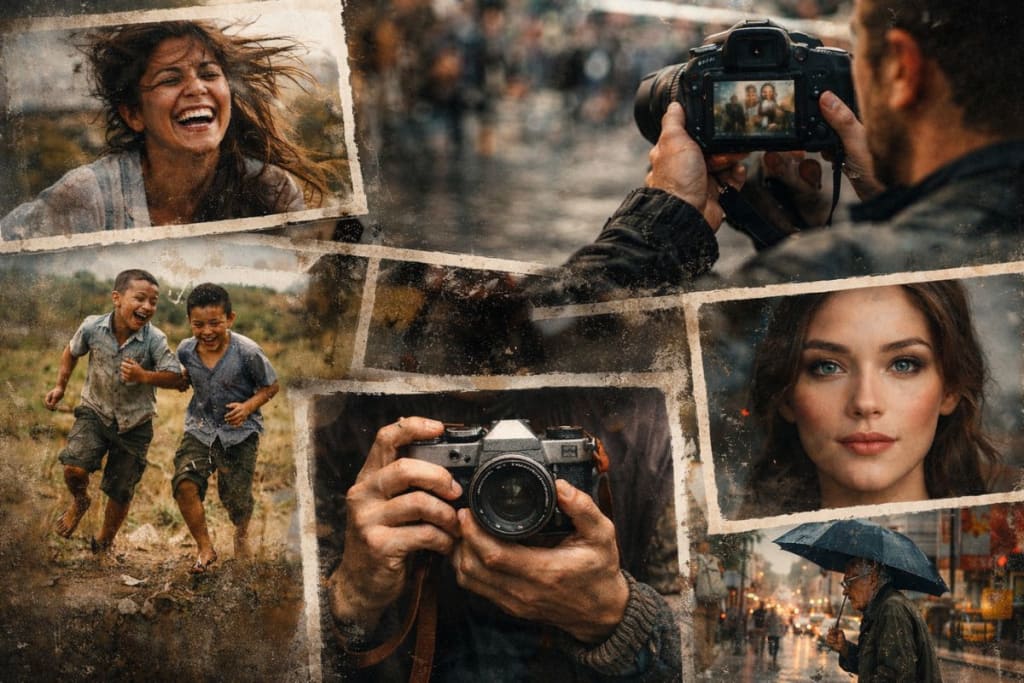
In 2026, candid and authentic photography isn’t just a style — it’s shaping the way we understand visual storytelling. After years of highly polished imagery dominating social feeds and photo galleries, the tide has shifted. Today’s photographers — from professionals shooting weddings and brands to street and documentary practitioners — are embracing imperfection, emotion, and real moments as core creative values. This evolution reflects broader cultural currents: people now crave honesty, connection, and human presence in images more than ever before
The Rise of Imperfect and Real Moments
One of the most defining movements of 2026 is the celebration of imperfect imagery — photographs that feel raw, spontaneous, and alive. Where once perfection (technical sharpness, flawless lighting, polished skin) was the gold standard, today’s audiences gravitate toward images that feel genuine. Slight motion blur, visible grain, natural lighting, and unposed expressions are no longer seen as flaws but as emotional currency that binds viewers to the scene.
Photography trend reports now show that images with natural imperfections often create stronger emotional resonance because they feel like memories rather than staged productions. With feeds saturated by hyper-edited content, raw, unfiltered moments stand out — engaging audiences precisely because they mirror real life.
This shift isn’t just aesthetic. It’s cultural: in an era where AI can fabricate near-perfect visuals, authenticity has become a scarce and valuable quality. Industry voices, including leaders in social media platforms, now emphasize that genuine content — not artificial perfection — will define meaningful imagery in the years ahead.
What Does Candid & Authentic Photography Look Like in Practice?
At its core, candid photography captures moments that unfold naturally: laughter shared between friends, unexpected glances, children playing, artists at work, or unguarded gestures that reveal deeper narratives. It’s less about directing and more about observing.
Here are some of the ways candid and authentic photography shows up across genres in 2026:
1. Documentary-Driven Weddings
In wedding photography — historically dominated by posed portraits — documentary approaches are taking center stage. Stories today are shaped by photographers who prioritize spontaneous reactions: the groom’s expression when he sees the bride, guests lost in dance, or quiet moments of familial connection. These are captured with natural light and minimal intervention, creating galleries that feel like storybooks rather than staged displays.
2. Brand Storytelling with Humanity
Brands have also adopted candid aesthetics to connect more authentically with audiences. Instead of clinical product shots, visual content now shows products in real contexts: a customer naturally using a product at home, the behind-the-scenes ritual of making it, or a team collaborating in an unscripted moment. This “lifestyle” style invites viewers into a world that feels lived-in and relatable.
3. Street and Travel Photography that Feels Alive
Authentic photography thrives in travel and street genres where life unfolds unplanned. Photographers capture scenes of everyday humanity — street markets, weathered faces, urban rhythms — without commanding the moment. These images reflect story and context, often conveying deep cultural narratives that staged scenes cannot replicate.
Techniques to Capture Authenticity
To create candid, authentic images, photographers are focusing less on control and more on attunement — being present, perceptive, and responsive. Here are key techniques gaining traction:
- Natural & Ambient Light: Using available light — especially golden hour or soft window light — helps preserve the mood and emotional tone of moments without artificial manipulation.
- Motion & Blur as Expression: Instead of freezing every movement with ultra-fast shutter speeds, photographers sometimes embrace motion blur to convey energy and atmosphere.
- Minimal Editing: Post-production has moved away from heavy retouching toward subtle adjustments that enhance but do not fabricate reality.
- Environmental Storytelling: Including elements of the environment (backgrounds, weather, everyday settings) contextualizes subjects and enriches the narrative of the image.
Balancing Technology and Realism
While authenticity trends prioritize rawness, technology still plays a role — just not in the way it once did. AI tools now assist with workflow efficiency (like sorting, tagging, and basic corrections) but do not replace the creative intuition of the photographer. The current ethos sees technology as a support, not a substitute, for the human eye.
Moreover, immersive technologies such as AR and 360º photography are expanding how audiences experience candid moments, offering interactive narratives that feel even more connected to reality.
Why This Matters in 2026
The emphasis on candid and authentic photography in 2026 reflects a broader shift in visual culture. People are seeking trust, connection, and truth in images — a reflection perhaps of a world saturated with synthetic content and digitized experiences. Authentic photography is more than a trend; it’s a response to a cultural need for imagery that feels human, expressive, and real.
As photographers and visual storytellers, embracing candid aesthetics doesn’t mean abandoning craft — it means redefining success not by perfection, but by resonance. In 2026, the photos that endure will be the ones that make viewers feel seen, understood, and connected. That is the power of authentic photography.
About the Creator
Stories Today
Stories Today is a place where real people share real stories, and that’s it. We believe every person has an incredible story to tell.
Visit us:https://storiestoday.co.uk/
Keep reading
More stories from Stories Today and writers in Photography and other communities.
Smartphone Photography Tips for Stunning Shots in 2026
Smartphone cameras have evolved at lightning speed. What once were simple point-and-shoot tools have become powerful imaging devices capable of rivaling dedicated cameras. Whether you’re capturing landscapes, portraits, street scenes, food, or low-light moments, mastering smartphone photography, as highlighted by Stories Today, means understanding both creative fundamentals and modern techniques that take advantage of current technology.
By Stories Today22 days ago in Photography
How an AI Photo Enhancer Helped Me Rescue My Childhood Memories
You know that feeling when you stumble upon something you forgot existed? That happened to me last weekend. I was digging through an old drawer when I found a stack of childhood photos — you know, the ones you haven’t looked at in decades. Most were a disaster: faded, scratched, some even curling at the edges. And there, in the middle, was a photo of my old dog, Buster. My heart sank.
By Verity Graya day ago in Photography
I Tried Simplifying My Image Editing Workflow — Here's What Changed
I used to spend too much time editing images. Re-doing the same adjustments over and over, and constantly second-guessing my edits, what should've taken 10 minutes would somehow take one hour for me.
By Dinesh Crest4 days ago in Photography
Diaries to Nietzsche
Quotation from Friedrich Nietzsche "He who wrestles long with monsters should beware lest he himself become a monster. And if you gaze long into an abyss, the abyss also gazes into you. Man is not destroyed by suffering, but by the meaning he makes of it."
By LUCCIAN LAYTHa day ago in Critique



Comments
There are no comments for this story
Be the first to respond and start the conversation.