
When AI Stops Feeling Technical and Starts Feeling Creative
How Mixboard, Nano Banana Pro, and Nano Banana 2 quietly reshape the way ideas begin.
A few years ago, if someone had told me that artificial intelligence would become part of my creative routine, I probably would’ve laughed it off. AI always felt distant—useful for automation or data, maybe, but not for something as human as design. Creativity, after all, was supposed to be personal, instinctive, and shaped by imperfect moments of inspiration.
But something subtle has shifted. Not in a dramatic, sci-fi way, but in the small corners of real workflows where stress usually lives. These days, tools like Google Mixboard and Nano Banana Pro quietly show up not as replacements for creativity, but as companions that help ideas take shape faster and with a little less friction.
No one announced this shift. It simply happened through experiments, shared stories, and a growing number of creators who realized that AI wasn’t competing with them—it was finally working with them.
The Steady Logic of Google Mixboard
Every creative process has messy stages—the back-and-forth of revising layouts, reworking spacing, and trying to find a visual balance that “just feels right.” Mixboard steps into that gap, not with flashy features, but with calm, predictable reasoning.
A designer I know once described the tool as “the coworker who always notices what’s slightly off.” She had been working on a flyer for a local café and felt stuck between two layout ideas that were both “almost right.” Mixboard didn’t magically solve the design, but it offered structured variations she hadn’t considered. The edits were subtle—shifts in hierarchy, small palette tweaks, cleaner spacing—but enough to unlock momentum.
That’s how Mixboard typically works. It doesn’t shout ideas at you. It nudges, adjusts, refines. It lightens the load during the tedious parts of creation, allowing you to stay focused on the emotional core of the work.
Over time, it feels less like a tool and more like a quiet collaborator who understands rhythm, balance, and repetition better than any human has the patience for.
Nano Banana Pro: When Imagination Finally Gets a Visual Starting Point
If Mixboard provides structure, Nano Banana Pro gives you the spark—the moment when an idea stops living in your head and becomes something you can actually look at.
Unlike traditional image tools where you already need a clear concept, Nano Banana Pro thrives when your ideas are messy or half-formed. You can describe a mood or a feeling, even if the details are vague, and it will turn that into a visual seed you can build from.
One illustrator shared how she uses Nano Banana Pro to warm up before painting. Instead of searching hours for reference photos, she types a mood—“quiet morning light,” “old street smells like rain,” “childhood memory, slightly surreal”—and the tool generates starting points that guide her composition. She still paints the final work by hand. But she no longer begins at zero, staring at a blank screen.
That’s the charm of Nano Banana Pro. It catches the emotional energy of an idea before you know how to describe it properly.
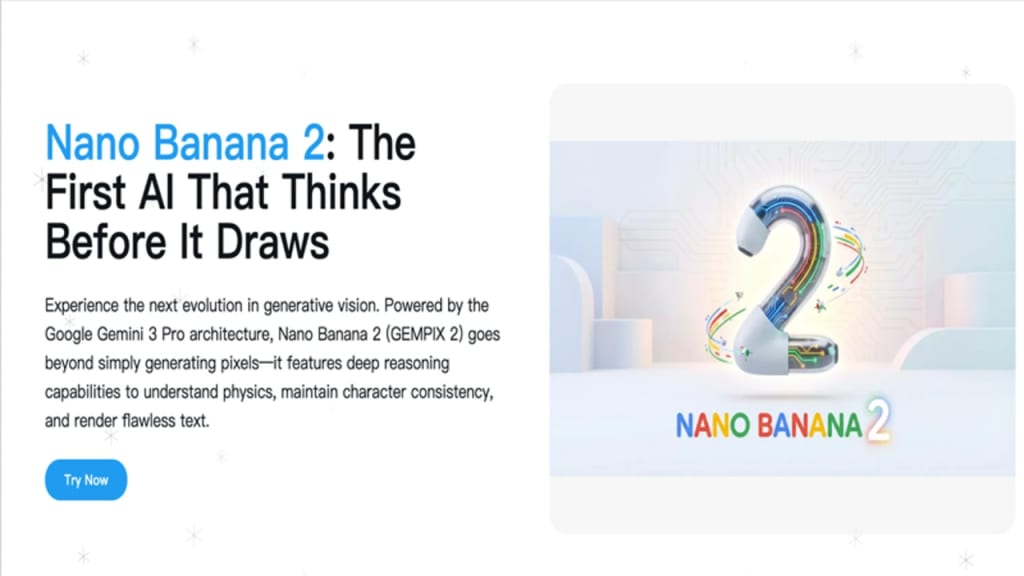
And with Nano Banana 2, the experience becomes even more grounded. It understands perspective, consistency, even motion, producing visuals that feel more intentional than experimental. It's not just image generation—it feels like early-stage world-building.
The Rise of Playful AI Figures
Another interesting shift has come from AI figure generation—the creation of small, stylized, expressive characters. People use these not as final artwork, but as placeholders for composition, storytelling, or animation planning.
A creative team in Manila once explained that AI figures helped them prototype a storyboard for a commercial in a single afternoon. Instead of waiting days for reference shots, they quickly generated figures that captured posture, lighting direction, and emotional tone. Then they refined everything manually.
None of this replaced their artistic decisions. It simply sped up the “thinking” phase—the part that’s usually invisible but time-consuming.
Where Mixboard and Nano Banana 2 Meet
On the surface, Mixboard and Nano Banana 2 seem like they come from different planets—one analytical, one imaginative. But in practice, they complement each other in unexpected ways.
Mixboard acts like the skeleton of a project.
Nano Banana 2 brings the muscles, skin, and light.
Together, they form a creative flow where:
Mixboard identifies balance
Nano Banana 2 explores emotion
And the designer shapes the final vision
A small agency in Singapore shared how they began combining the two tools. Their designers used Mixboard for early layout planning, fed those ideas into Nano Banana 2 to visualize mood and texture, then refined everything manually. What once took days now unfolded in two or three focused sessions.
Importantly, the final designs didn’t look like AI outputs. They looked like polished human work—only c
About the Creator
Keep reading
More stories from Yy Lee and writers in Photography and other communities.
AI Face Editing: A Fun, Easy Way to Upgrade Your Photos
Artificial intelligence has quietly woven itself into our daily creative routines. From enhancing old photos to generating incredible video effects, AI tools are giving individuals—creators and non-creators alike—new ways to express imagination. Among these emerging technologies, AI-powered face editing has become one of the most fascinating and accessible trends. It’s simple, fun, and surprisingly powerful, offering anyone the ability to transform images with minimal effort.
By Yy Lee3 months ago in Photography
The Two-Setting Walk That Fixed My Photos (Without Buying Anything)
I used to come home from a photo walk with 200 frames and one “maybe.” The problem wasn’t my camera. It was my brain—spinning through menus, second-guessing every choice, and turning a simple moment into a technical debate.
By Puryear Pebley16 days ago in Photography



Comments
There are no comments for this story
Be the first to respond and start the conversation.