
Virtual Tours – Six Different Industries
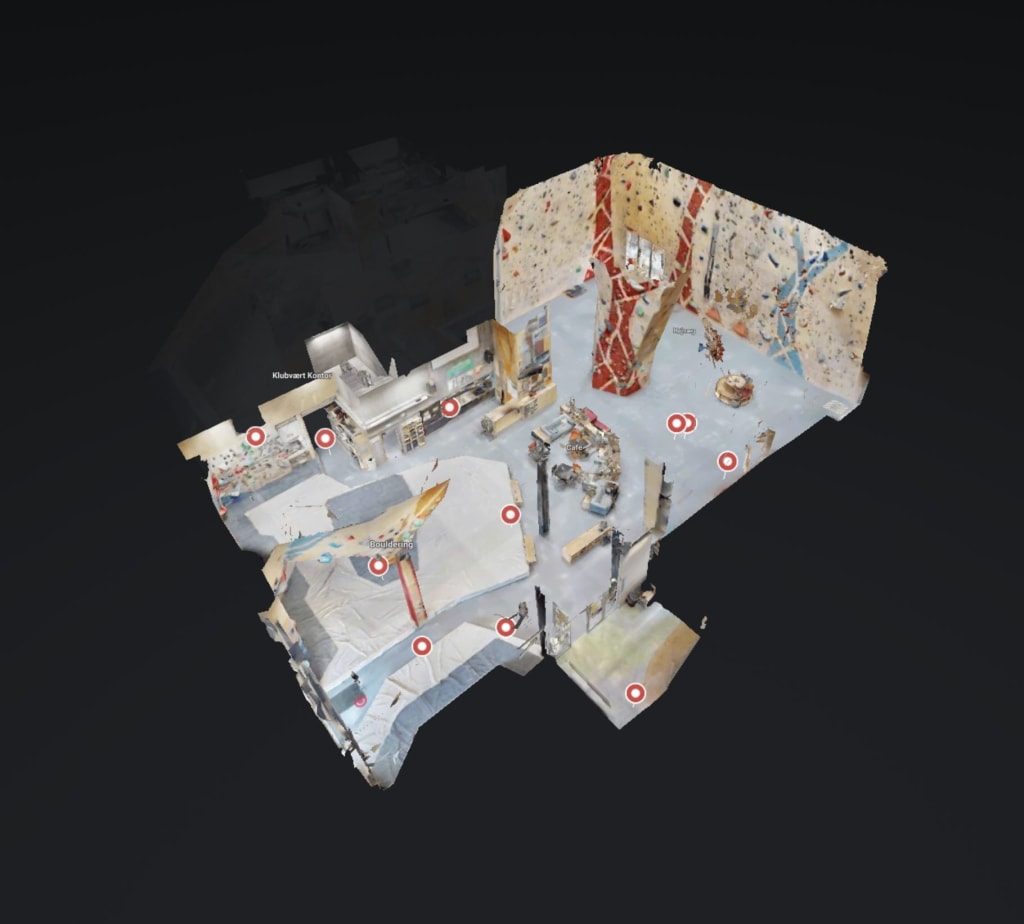
A tool that can contribute to everything from more guests to increased e-commerce sales to happier customer service employees.
Originally posted on: https://rtrosenberg.dk
Virtual Tours: A Powerful Tool Across Industries
Virtual tours have undoubtedly become an effective tool used across a wide range of industries. If you've lost track, here’s a brief overview of how different sectors are leveraging this technology to optimize their businesses and enhance customer experience.
Construction & Inspection: Matterport and Its Many Export Options
In the construction industry, virtual tours are used throughout the entire building process. Matterport not only creates visual walkthroughs but also generates precise 3D models and point clouds that can be exported in various formats—making the technology especially valuable for architects, consulting engineers, and developers.
Matterport can export files such as OBJ, XYZ, and E57, which can be easily imported into professional software like AutoCAD, Revit, and other CAD tools. Additionally, a Matterport tour can also be exported directly as a CAD or BIM file.
Point clouds provide accurate measurements and dimensions, which are crucial for renovations or expansions. BIM coordinators can use this data to ensure precise integration between existing structures and new developments.
Upon project completion, virtual tours serve as exact as-built documentation. 3D models and point clouds are particularly valuable for renovations or remodeling, allowing architects and engineers to work with precise measurements without requiring new on-site surveys. This saves time and reduces the risk of errors during project planning.
Read more about Matterport and see more virtual tours here
Virtual Showrooms: New Opportunities in Retail
More retailers are beginning to explore virtual showrooms. Furniture stores and kitchen manufacturers use the technology to showcase their products in natural settings. Customers can explore items from all angles and see them in context with other elements.
Hotels & Conferences: Easier Planning for Guests and Organizers
Hotels and conference centers use virtual tours to provide guests with an accurate preview of their facilities. For conference bookings, organizers can assess room size, layout, and technical capabilities. They can determine whether the space meets their needs, from table arrangements to projector placement.
For hotel guests, virtual tours offer a clear picture of room layouts, reducing the risk of unmet expectations upon arrival.
Additionally, event planners and customer service staff can send direct links to specific locations in a tour by pressing ‘U’ on the keyboard while inside a Matterport tour. This brings up a small box in the top-right corner with a link to the exact location.
Event Venues: A Better Booking Decision Process
When booking event spaces, virtual tours play a key role. Venue providers can showcase different setup options and highlight the space's full potential. Wedding couples and event organizers especially appreciate the ability to plan their events in detail ahead of time.
They can determine where to place gift tables, dance floors, and other elements, as well as how the venue’s flow will function. This saves time for both venue owners and clients, as many practical questions can be answered through the virtual tour.
Educational Institutions: From Boarding Schools to High Schools
Boarding schools and high schools use virtual tours as a marketing tool to attract potential students. Students and parents can explore school facilities, dorm rooms, common areas, classrooms, and outdoor spaces.
This provides a better sense of the school environment, which is particularly valuable for families living far away. Additionally, after visiting multiple schools, students and parents may struggle to recall details—here, a virtual tour helps refresh their memory.
Museums & Cultural Institutions
Museums and cultural institutions have also embraced virtual tour technology. They use it to allow visitors to explore exhibitions from home or plan their visit in detail.
For school classes, virtual tours serve as a valuable educational tool, enabling students to prepare before a visit or revisit an exhibition digitally afterward. Temporary exhibitions can be preserved digitally, allowing museums to share their collections with a wider audience even after the physical exhibit has ended.
Conclusion: A Practical Tool Across Industries
Virtual tours have proven to be a practical tool across various industries. They save time, provide better decision-making insights, and increase accessibility for end-users. With continuous technological advancements, we are likely to see even more innovative applications in the future.
About the Creator
Rasmus Thor Rosenberg
Rtrosenberg is a photography business based out of Aarhus, Denmark, specializing in photography, drone imaging, and immersive virtual tours. See more at https://rtrosenberg.dk
Keep reading
More stories from Rasmus Thor Rosenberg and writers in Photography and other communities.
Drone Roof Inspection - How It Helps Various Industries in 2025
Story originally posted on: https://rtrosenberg.dk/ While drone roof inspection was previously primarily used by roofers, the technology has now spread to a wide range of industries, creating significant value. Efficient roof inspection with drones has greatly optimized the way professionals handle building maintenance. This brief guide delves into how different industries benefit from the technology and why drone roof inspection has become a valuable tool for professionals across sectors.
By Rasmus Thor Rosenberg12 months ago in Photography
Leavie Scott
ORDER HERE Chicago – A Radiant Urban Masterpiece by Leavie Scott Arts & Culture Review – Feature Story In his striking new work Chicago, photographer Leavie Scott captures the soul of the Windy City with a level of vibrancy and emotional resonance that is impossible to ignore. The image immerses viewers in a dazzling skyline bathed in mesmerizing tones of purple, pink, and gold—a palette rarely seen in traditional urban photography and one that instantly distinguishes Scott’s artistic voice.
By Organic Products 3 days ago in Photography
Curious Photography Tips Every Beginner Should Try
Have you ever wondered why two people using the same camera can produce completely different photos? The answer often lies in how well the photographer understands the camera itself. For beginners, cameras can seem filled with confusing buttons, dials, and settings. But what if those settings are actually the key to better photos?
By Craig Spiesmanabout 15 hours ago in Photography


Comments
There are no comments for this story
Be the first to respond and start the conversation.