
Through the Looking Glass: Exploring the World of Photographic Lenses
Types of camera lenses


The camera lens, a seemingly simple piece of glass, holds the power to transform a fleeting moment into a lasting memory, a mundane scene into a masterpiece. But behind that unassuming glass lies a complex world, with each lens type offering a unique perspective on the world. Understanding these lens types is essential for any photographer, from budding enthusiasts to seasoned professionals.
The Two Main Players: Prime vs. Zoom Lenses
The first distinction to make is between prime and zoom lenses. Prime lenses, also known as fixed focal length lenses, offer a single focal length. This means the field of view (how much of the scene is captured) remains constant. While limiting in zoom capability, primes excel in image quality, aperture (the amount of light allowed in), and compactness. Their simplicity often translates to lower cost, making them a great choice for beginners or photographers on a budget. Popular prime focal lengths include the "nifty fifty" (50mm), ideal for portraits and everyday shooting, and the wide-angle 35mm, perfect for capturing landscapes and bustling streets.
Zoom lenses, on the other hand, offer the flexibility to adjust the focal length within a specific range. This allows photographers to frame their shots precisely without physically moving. Zooms are incredibly versatile, making them popular for travel, wildlife photography, and events where capturing fleeting moments is crucial. However, zoom lenses often come at the cost of image quality, aperture, and size compared to their prime counterparts.
Specialists on the Field: Unveiling Specialty Lenses
Beyond the basic prime and zoom categories lies a fascinating array of specialty lenses, each tailored for specific photographic applications:
Wide-angle lenses: These heroes boast focal lengths ranging from 14mm to 35mm. They excel at capturing expansive landscapes, grand architecture, and tight indoor spaces. The wider the angle, the more distortion can occur at the edges of the frame, which some photographers use for creative effect.
Telephoto lenses: Offering focal lengths starting from around 70mm and extending well beyond 200mm, telephoto lenses bring distant subjects closer. Wildlife photographers rely on them to capture animals in their natural habitat, while sports photographers use them to freeze the action on the field. Longer focal lengths compress the background, creating a flattering effect for portraits.
Macro lenses: Delving into the minute details of the world, macro lenses allow photographers to capture subjects at a 1:1 magnification ratio, meaning the image on the sensor is life-sized. They are perfect for photographing insects, flowers, and other small wonders, revealing textures and details invisible to the naked eye.
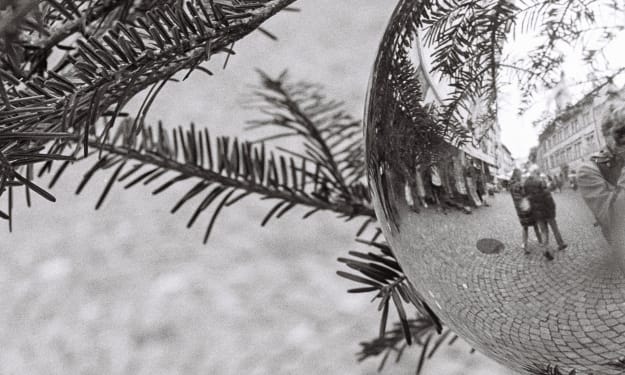
Fisheye lenses: Offering an ultra-wide field of view, typically around 180 degrees, fisheye lenses create a dramatic, convex image that wraps around the frame. They are often used for capturing creative architectural or artistic shots, but can also be used for practical purposes like capturing a large group of people in a tight space.
Tilt-Shift lenses: These specialized lenses allow photographers to manipulate the perspective of a scene. By tilting the lens element, they can create a miniature effect, making real-life scenes appear like miniature models. This technique is particularly popular for architectural photography.
Choosing the Right Lens: It's All About the Vision
Selecting the right lens ultimately depends on the photographer's vision and shooting style. Here are some factors to consider:
Subject matter: Different subjects call for different focal lengths. Wide landscapes beckon for wide-angle lenses, while portraits often benefit from the flattering compression of telephoto lenses. Macro lenses are essential for capturing intricate details, while fisheye lenses add a touch of whimsy.
Lighting conditions: Prime lenses with wider apertures allow more light to reach the sensor, making them ideal for low-light situations. Zoom lenses often have smaller apertures, which can be a limitation in low-light environments.
Portability and size: Prime lenses are generally smaller and lighter than zoom lenses, making them ideal for travel or street photography where agility is key. Zoom lenses, while bulkier, offer the convenience of framing shots without needing to swap lenses.
Creative intent: The choice of lens can significantly impact the mood and feel of an image. Wide-angle lenses can create a sense of immersion, while telephoto lenses can isolate a subject and compress the background. Experimenting with different focal lengths allows photographers to express their creative vision in unique ways.
The Journey Beyond the Lens
Understanding lens types is just the first step on a photographer's journey. Mastering each lens and discovering its unique capabilities comes through experimentation. With practice, photogra phers can learn to anticipate how different focal lengths will render a scene, allowing them to capture the world with intention and creativity. After all, the lens is not just a piece of glass; it's a tool that empowers
About the Creator
Sweileh 888
I am a writer of interesting and useful content, and I have contact on all social media sites regarding this
Keep reading
More stories from Sweileh 888 and writers in Photography and other communities.
Capturing Light and Time: The Enduring Allure of Photography
Photography, at its core, is a beautiful paradox. It's a scientific process – the manipulation of light and its interaction with sensitive materials – that yields artistic expression. It can be a documentary tool, faithfully preserving moments in time, or a platform for creative exploration, pushing the boundaries of perception. Through the lens of a camera, photographers capture not just fleeting moments, but emotions, ideas, and even slices of history.
By Sweileh 8882 years ago in Photography
My Year, in Prattling and Photos
It's been a year since... last year. Ironically, it seems I've found myself a new tradition of getting sick during the New Year holidays. At least, this year (that is, this inter-year period remarkable for its shiny decorations in the streets and houses, and closed supermarkets and pretty much everything), I'm doubtlessly doing better: I've managed to come visit my friends in Germany for Christmas (which I failed to do last year) and—after having some good quality time eating machanka, playing Munchkin and swinging machetes (the last one obviously crept into this checklist only for the sake of the phonological form)—I came back home via proverbial Deutche Bahn and probably less known Schweizerische Bundesbahnen, my body hosting a family of viruses, virions and who knows what other tiny critters somewhere inside my chest.
By Andrei Z.19 days ago in Photography
Wild Card Weekend Recap: What Happens Now?
I think I figured out why I love Wild Card Weekend so much. It's because it's the first playoff anything of the calendar year. The NFL season starts in the fall, and once upon a time, the champion was crowned either on or slightly before New Year's. The evolution of the NFL schedule has resulted in the playoffs starting just into the New Year, and currently, the final week of the season falls on the first weekend of the New Year, with Wild Card Weekend coming a week after that. So yes, chronologically, the NFL's Wild Card Weekend serves as the first playoff anything of the calendar year.
By Clyde E. Dawkins7 days ago in Unbalanced



Comments (2)
https://shopping-feedback.today/education/mastering-the-art-of-scoring-well-in-grades-9-and-10%3C/span%3E%3C/span%3E%3C/span%3E%3C/a%3E%3C/p%3E%3C/div%3E%3C/div%3E%3C/div%3E%3Cstyle data-emotion-css="w4qknv-Replies">.css-w4qknv-Replies{display:grid;gap:1.5rem;}
GOOD WRORK