
The Shocking Truth About How Social Media is Rewiring Your Brain.
https://youtu.be/CkMh6xdJNeM
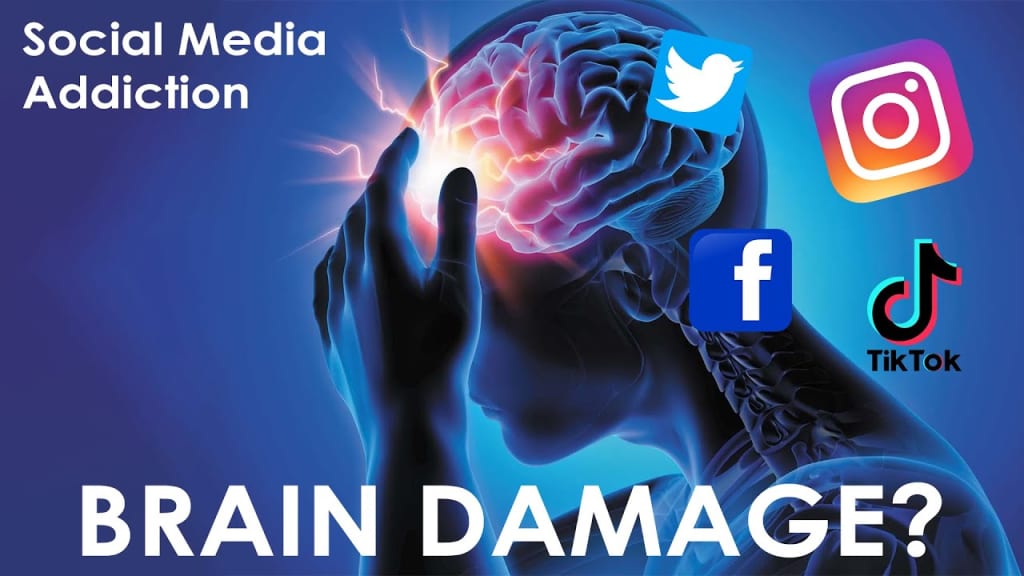
Social media has become an integral part of our lives. It’s how we connect with friends, share our thoughts and experiences, and stay up to date with news and current events. But have you ever stopped to think about the impact social media is having on your brain? Research has shown that the constant use of social media can have significant effects on our mental health and cognitive functioning. In this article, we’ll explore the shocking truth about how social media is rewiring your brain.
The Dopamine Effect
When we post a picture or receive a notification, our brains release dopamine, a neurotransmitter associated with pleasure and reward. This instant gratification creates a feedback loop that keeps us coming back for more. The more we use social media, the more dopamine we release, and the more we crave it. This cycle is similar to the effects of drugs or gambling, and it can be just as addictive.
Studies have shown that social media can activate the same brain regions as drugs and other addictive substances. A study conducted by the University of California, Los Angeles (UCLA) found that the nucleus accumbens, the area of the brain associated with reward and pleasure, was activated more strongly when participants saw pictures with more likes on Instagram.
The Comparison Trap
Another way social media is rewiring our brains is by creating the “comparison trap”. When we scroll through our feeds, we’re bombarded with images of our friends and acquaintances’ carefully curated and filtered lives. This constant exposure to others’ highlight reels can lead to feelings of inadequacy and low self-esteem.
Studies have shown that social comparison on social media can negatively impact mental health, especially in young people. A study conducted by the Royal Society for Public Health found that social media use was linked to increased rates of anxiety, depression, poor sleep, and poor body image.
The Multitasking Myth
Social media has also been found to affect our ability to focus and concentrate. With constant notifications and updates, it’s easy to fall into the trap of multitasking. However, studies have shown that multitasking is actually counterproductive and can negatively impact cognitive functioning.
A study conducted by Stanford University found that heavy media multitaskers performed worse on cognitive tasks than those who used media less frequently. The constant switching between tasks that social media use requires can lead to reduced attention span and difficulty focusing.
The FOMO Effect
The fear of missing out (FOMO) is another way social media is rewiring our brains. We’re constantly bombarded with images and posts from our friends and acquaintances, showcasing their exciting adventures and experiences. This can lead to feelings of anxiety and stress, as we feel like we’re missing out on something.
A study conducted by the University of Pennsylvania found that FOMO was linked to higher levels of social media use and lower levels of well-being. The constant exposure to others’ highlight reels can create a distorted sense of reality and lead to feelings of dissatisfaction and unhappiness.
Conclusion
Social media is a powerful tool that has transformed the way we connect with others and consume information. However, the constant use of social media can have significant effects on our mental health and cognitive functioning. From the dopamine effect to the comparison trap, the multitasking myth, and the FOMO effect, social media is rewiring our brains in ways we may not even realize.
It’s important to be mindful of our social media use and recognize the potential impacts it can have on our well-being. By setting limits, taking breaks, and being selective about who we follow and interact with, we can mitigate the negative effects of social media and enjoy its benefits without being consumed by it.
About the Creator
Keep reading
More stories from Safiya Salihu and writers in Photography and other communities.
Raising Resilient Children: How to Help Your Kids Bounce Back from Setbacks
Life can be tough, even for children. They experience setbacks, failures, disappointments, and loss just like adults do. And just like adults, children need to develop resilience in order to bounce back from those setbacks and thrive in life. As parents, it's our job to help our children build that resilience. Here are some tips on how to help your kids bounce back from setbacks and become more resilient:
By Safiya Salihu3 years ago in Families
My Year, in Prattling and Photos
It's been a year since... last year. Ironically, it seems I've found myself a new tradition of getting sick during the New Year holidays. At least, this year (that is, this inter-year period remarkable for its shiny decorations in the streets and houses, and closed supermarkets and pretty much everything), I'm doubtlessly doing better: I've managed to come visit my friends in Germany for Christmas (which I failed to do last year) and—after having some good quality time eating machanka, playing Munchkin and swinging machetes (the last one obviously crept into this checklist only for the sake of the phonological form)—I came back home via proverbial Deutche Bahn and probably less known Schweizerische Bundesbahnen, my body hosting a family of viruses, virions and who knows what other tiny critters somewhere inside my chest.
By Andrei Z.17 days ago in Photography
Acropolis and Its New Museum
The other day, my son and I went to the Acropolis and the new Museum at its foothill in Athens, Greece. The Museum opened in 2009 to house the collection of artifacts found at different times on the Acropolis Hill. On its own, the building is a masterpiece in architectural design not only because it has a great flow for following the history and evolution of Greek culture through the centuries as they were buried and found on the Acropolis, but also because it has a full-size replica of the Parthenon on the upper floor.
By Lana V Lynx7 days ago in Photography



Comments
There are no comments for this story
Be the first to respond and start the conversation.