


In 2017, my husband and I visited Cuba during the small window of time when the Obama administration allowed travel to this island nation. We were on a cultural/educational visit which allowed us to use a pre-approved tourist group to see the sights in Havana. Pre-approved by the government, of course, headed by Raul Castro at the time, brother of Fidel. Still very much a socialist nation with a communist constitution, very few people without family there have been able to visit freely since the early 1960s due to its relationship with USSR/Russia.
Along the bus tour, we saw many beautiful landmarks in Havana, the only city we were allowed to visit. It was obvious that the city was made “presentable” to the outside world. The beautiful architecture along the streets were merely facades; the buildings themselves were empty because of the lack of the necessary infrastructure to maintain the interiors of the buildings. The main square, Plaza Vieja, is lined with small coffee and cigar shops, but many remained empty due to the lack of tourism. With flights being allowed to land in Cuba again, vendors, artisans, musicians, and others began to ramp up their skills again. The American dollar was very strong there, and people would do anything to earn your business. After being sanctioned with embargoes and hit by hurricanes, the Cuban people still suffer. This was evident in the attitudes that some held toward tourists; speaking English seemed to be both attractive and repulsive to them at the same time. As representatives of the country to the north, I felt saddened by much of what was there.
However, the buses didn’t stop at those places. We’d zoom by barrios and depressed areas where houses had no roofs, had dirt floors, or were repaired by unskilled labor. Children still played in the streets, women still hung the wash on lines, and men continued to work on those 50s Chevys with Russian or German engines. Art was present everywhere we visited; one house we stopped at belonged to the artist himself. Fusterlandia, the name of the house, is named after Jose Fuster who also produced art of tile, glass, and steel throughout that particular Havana neighborhood.
Art conveyed what the people felt and how they viewed the world. In the main square stands a huge bronze sculpture by Roberto Fabelo of a naked woman riding a rooster. She is holding a giant fork. While the meaning of this statue is unclear, other pieces are more obvious. Tributes to Che Guevara are everywhere. Haste la Victoria Siempre is a well-known steel mural in the Plaza de la Revolucion. Very armed military officers were posted at all the street corners, reminding us that the military is definitely in control. Freedom doesn’t play much of a part in their lives. I feel people are the same the whole world over; we have the same desires, same needs, same longing to belong. It’s part of what connects us all.
Much art lies in eye of the beholder. The slogan “Viva Cuba Libre” could mean Cuba should remain from US interference. Or it could be a wish of Cuban exiles for a country free from communism under the Castros. A third option: it could refer to the cocktail named Cuba Libre (Coke, rum, and lime on ice). So much of Cuba is a blank canvas for artists on this conflicted island. They feel isolated and undeniably disconnected from the rest of the world.
The piece I captured is called Occupy Havana which was coordinated by Noel Douglas on a wall of the University of Havana over the course of four days by many artists, students, and designers. This public art, produced in 2012, follows the political slogan “We are the 99” from the US that became popular in 2011. It represents the inequality between 99% of the people, the common person, and the richest people and corporations, the 1%. The commoners are paying the price for the mistakes and whims of the upper class.
This mural has a large monster or ogre with the world in his hands. It looks like he’s been eating the world but is tied to the ground by fish hooks and lines. When you look closely, there are the names of the highest grossing corporations and their stock prices. On its right foot you find Texaco, Vale, Bank of America, Bass, Comcast, CocaCola, Walgreens, and Toyota among others. The symbolism is hard to miss; greedy capitalist corporations are responsible for most of the world’s troubles.
In a country where any kind of protest or dissent is against the law, I was surprised to see this. I don’t know exactly how to interpret this piece. Are the artists pointing out the hypocrisy of the minority of the rich and elite destroying the world? Or just their world? Since the object in its hand is the earth, it could be implying and anticipating that along with the absurd inequality of the distribution of wealth in the world, these entities are also responsible for the physical destruction with the rollbacks of pollution controls. Did the artists predict the pushback against the Paris Agreement of 2015 that was hammered out three years later?
The only healthcare-related companies on the ogre are Walgreens and CVS, I believe. Cuba has socialized medicine in that Cubans don’t have to pay for healthcare or hospital visits. It’s paid for by the government. Now the doctors and specialists there don’t make much money, and they certainly don’t drive Bentleys. But they also don’t have the opposite with privatized healthcare that run as money-making profit ventures instead of focusing on people’s well-being.
Instead, one of our one-percenters captured the world’s attention in the last month of 2024. The CEO of UnitedHealthcare, Brian Thompson, was fatally shot before he was to address stakeholders at their annual meeting. Stakeholders – the people who profit from the commoners who need healthcare the most. The bullet casings had writing on them: delay, deny, depose (or defend). This allegedly is how health insurance companies work. To keep their bottom line solid, they can’t possibly pay for all the health procedures and medicines that people need. This opened up an explosion of stories across social media of how healthcare was denied which resulted in the death of the “clients.” For a week, the killer was considered a hero that took out one of the 1%, but only because he was anonymous at the time. Once he was identified, the standard homicide procedures kicked in.
The Cuban mural chastises those who make their money off the backs of the commoners. The mural unfortunately does not address how to effectively handle this monster of corporations. Until then, the Occupy movement will continue to reinvent itself in every country as new obstacles arise. Once “the 99%” has had enough, perhaps change will be possible.
About the Creator
Barb Dukeman
I have three books published on Amazon if you want to read more. I have shorter pieces (less than 600 words at https://barbdukeman.substack.com/. Subscribe today if you like what you read here or just say Hi.
Keep reading
More stories from Barb Dukeman and writers in Photography and other communities.
Shorts
They came up out of the ocean, two young lovers walking hand-in-hand onto the shore. The darkness of twilight enveloped them, keeping them screened from prying eyes. Just the lapping of little waves on the shore kept them company. This section of the beach had very few homes and resorts; just a few distant lights twinkled, and two rentals were visible from the beyond the sand dunes, sea oats gently waving.
By Barb Dukemanabout a year ago in Photography
The Two-Setting Walk That Fixed My Photos (Without Buying Anything)
I used to come home from a photo walk with 200 frames and one “maybe.” The problem wasn’t my camera. It was my brain—spinning through menus, second-guessing every choice, and turning a simple moment into a technical debate.
By Puryear Pebley18 days ago in Photography
A Planetary Alignment will coincide with Mercury Retrograde
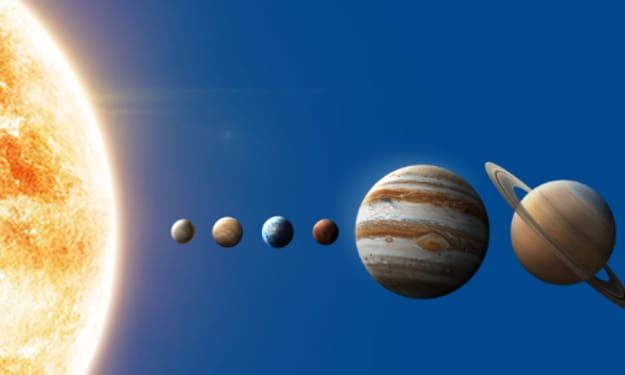
Double phenomena in the heavens Some people say in jest that the planets have aligned in their favor when life works the way they desire. Were you aware that there are seasons when things do line up in the heavens? There will be a planetary alignment AKA a planet parade, on February 28, 2026.
By Cheryl E Preston5 days ago in FYI

Comments
There are no comments for this story
Be the first to respond and start the conversation.