
My Happy Place
Documenting a Season of Red-necked Grebes on Reflections Lake in Alaska
My legs and feet were growing numb from sitting on hard ground. Something, hopefully a tree root, was digging into a crevice I’d rather not mention and swarms of mosquitoes were alternately biting any exposed flesh or flying into my ears, eyes and nose. (I’m smart enough to keep my mouth closed.)
Sweat was dripping down my forehead and neck from beneath my “John Moose” baseball cap and I could definitely feel something crawling (a spider, maybe?) across my scalp. It was Friday afternoon and I had left work early to be here, painfully uncomfortable, in my happy place.
Reflections Lake sits in the Palmer Hay Flats State Game Refuge, just off the Glenn Highway 32 miles north of Anchorage and 11 miles south of Palmer and Wasilla. Every year, thousands of birds from around the world migrate to Alaska for the summer, with many making trips of thousands of miles.
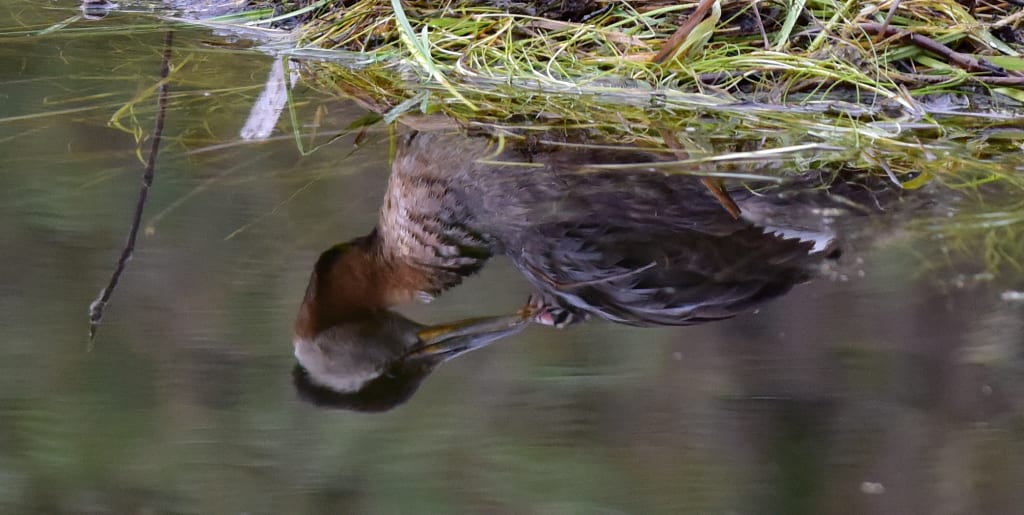
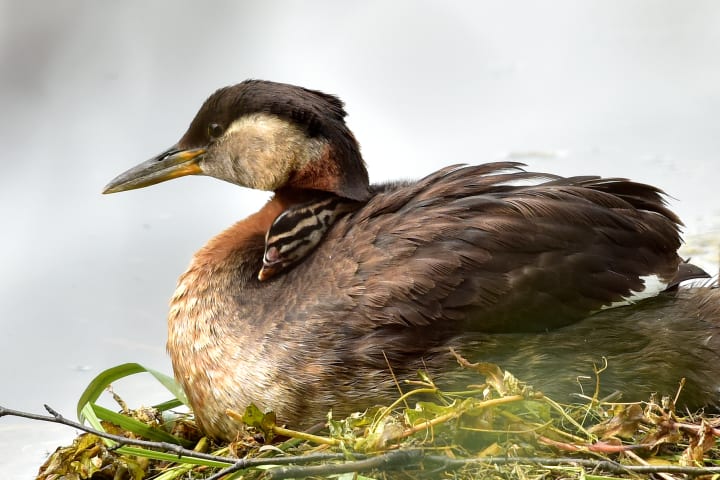
While many of these feathered travelers end up in the far north, there are still plenty that stop here for the summer. Including the red-necked grebe family I was photographing on this unnaturally warm summer day.
The grebes start arriving in May, sometimes before the ice has completely melted off area lakes. In between diving to catch fish, they undertake one of the loudest courtship rituals of any migratory waterfowl species I've witnessed.
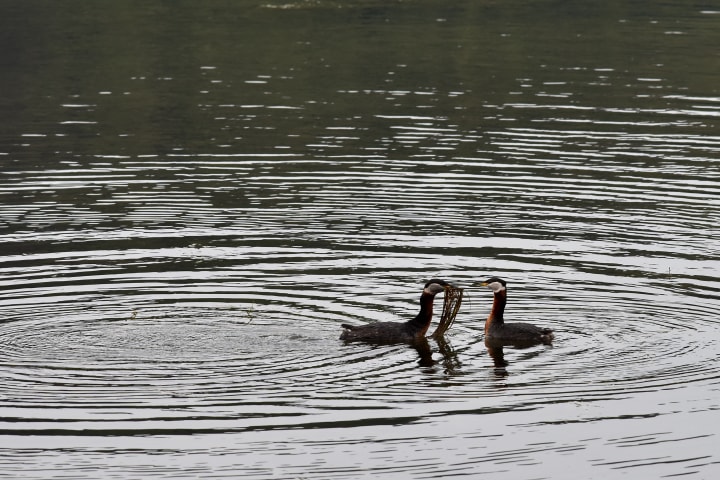
Male and female red necks will be swimming along, ignoring each other, when suddenly one will begin a raucous, screaming cry which the other imitates. Then, no matter how far apart, the two swim toward each other until they are face to face -- still screaming -- and raise their upper bodies out of the water as they turn in unison and swim side by side. As suddenly as it began, this boisterous display ends and the pair act as if nothing has happened.
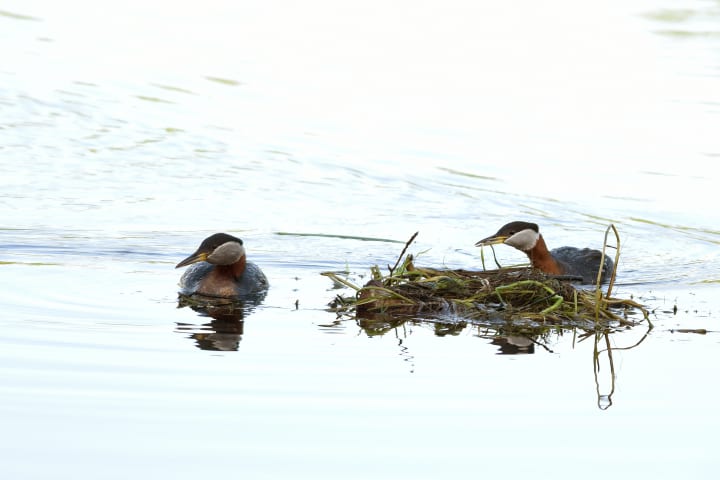
These displays happen several times a day as the pair selects a nesting site. After ceremoniously presenting each other with gifts of nest-building materials like twigs and aquatic vegetation, the pair teams up to build a floating nest. Both male and female vigorously defend their nesting site from other birds, sometimes diving underneath an interloper and "goosing" them with their long, sharp beaks.
Once the nest is built, the female will lay 2-6 eggs and the pair will take turns incubating for about three weeks. The young can swim within hours of hatching, but tend to snuggle into an adult's feathers and ride on its back for a few days while the parents take turn bringing food to the chicks.
After a couple of days the family abandons the nest and any unhatched eggs and takes to the open water to continue their story.





About the Creator
JT Fisherman
I’m a photographer and writer living, working and playing in Alaska.
Keep reading
More stories from writers in Photography and other communities.
Leavie Scott
ORDER HERE Chicago – A Radiant Urban Masterpiece by Leavie Scott Arts & Culture Review – Feature Story In his striking new work Chicago, photographer Leavie Scott captures the soul of the Windy City with a level of vibrancy and emotional resonance that is impossible to ignore. The image immerses viewers in a dazzling skyline bathed in mesmerizing tones of purple, pink, and gold—a palette rarely seen in traditional urban photography and one that instantly distinguishes Scott’s artistic voice.
By Organic Products 2 days ago in Photography
Flower Bloom 369
FLOWER Bloom 2/25/26 Wednesday By Mariann Carroll Karen had been with Tony for 7 years. Tony started acting strangely after her surgery. He would mow the lawn in the rain and be on his cellphone. He started pushing Karen away. Tony came clean about seeing someone. Karen moved out two months later. Karen moved in with a friend. She felt betrayed.
By Mariann Carroll7 days ago in Fiction




Comments
There are no comments for this story
Be the first to respond and start the conversation.