
Mirrorless vs DSLR: Which Camera is Right for You?
You decide!
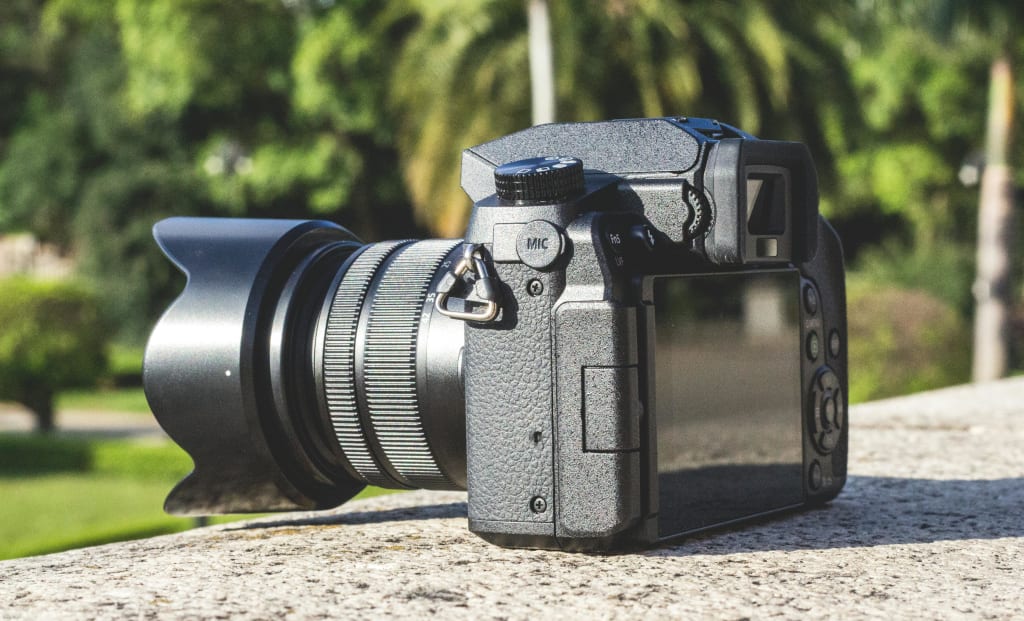
Choosing the right camera is one of the most important decisions for photographers and videographers. The debate between mirrorless cameras and DSLRs (Digital Single-Lens Reflex cameras) has been ongoing for years. Both camera types have their pros and cons, and understanding these can help you make the right choice for your needs, whether you're a beginner or a seasoned professional.
This comprehensive guide explores the features, differences, and advantages of mirrorless cameras and DSLRs, helping you decide which is best suited to your photography style, budget, and goals.
________________________________________
1. What Are Mirrorless and DSLR Cameras?
Before diving into their differences, let's define what makes a camera mirrorless or a DSLR.
DSLR (Digital Single-Lens Reflex) Cameras
DSLR cameras use a mirror and prism system to reflect light from the lens into an optical viewfinder. When you take a photo, the mirror flips up, allowing light to hit the image sensor.
• Key Features:
o Optical viewfinder for a real-time view.
o Interchangeable lenses.
o Larger and heavier bodies.
o Longer battery life.
Mirrorless Cameras
Mirrorless cameras, as the name suggests, lack the mirror mechanism found in DSLRs. Light passes directly to the image sensor, and the viewfinder is electronic or replaced by the LCD screen.
• Key Features:
o Electronic viewfinder (EVF) or no viewfinder at all.
o Interchangeable lenses.
o Compact and lightweight design.
o Advanced autofocus systems.
________________________________________
2. Mirrorless vs DSLR: Key Differences
a) Size and Portability
• DSLR: Due to the mirror and prism system, DSLRs are bulkier and heavier. They are ideal for professional shoots where portability is not a concern.
o Example: Canon EOS 90D weighs 701g.
• Mirrorless: Compact and lightweight, making them perfect for travel and street photography.
o Example: Sony Alpha a6400 weighs 403g.
Verdict: If portability is a priority, mirrorless cameras are the better choice.
________________________________________
b) Autofocus System
• DSLR: Typically rely on phase detection autofocus, which is fast and accurate, especially for capturing moving subjects. However, live view autofocus (when using the LCD screen) is slower.
o Fact: DSLRs like the Nikon D7500 offer 51 autofocus points.
• Mirrorless: Use on-sensor phase detection and contrast detection, providing faster and more accurate autofocus during video recording and live view.
o Fact: Sony A7 IV boasts 759 autofocus points with real-time eye tracking.
Verdict: Mirrorless cameras generally excel in autofocus speed and accuracy, especially for video.
________________________________________
c) Battery Life
• DSLR: Superior battery life due to the lack of electronic viewfinder usage.
o Fact: Canon EOS Rebel T7 can capture up to 500 shots per charge.
• Mirrorless: Shorter battery life due to the constant use of the electronic viewfinder or LCD screen.
o Fact: Fujifilm X-T30 offers around 380 shots per charge.
Verdict: DSLRs are better for long shoots where battery life is crucial.
________________________________________
d) Image Quality
Both DSLRs and mirrorless cameras are capable of producing excellent image quality. The determining factor often depends on the sensor size and lens quality rather than the camera type.
• DSLR and Mirrorless Sensors: Both offer APS-C, full-frame, and even medium-format sensors.
• Low-Light Performance: Mirrorless cameras are catching up with improved noise reduction and ISO performance.
Verdict: Tie – Both camera types can deliver exceptional image quality.
________________________________________
e) Lenses and Accessories
• DSLR: Have an extensive range of lenses and accessories due to their long-standing presence in the market. Major brands like Canon and Nikon offer hundreds of lenses.
• Mirrorless: While lens options for mirrorless cameras are growing, they still lag behind DSLRs in terms of variety. However, adapters allow the use of DSLR lenses on mirrorless bodies.
Verdict: DSLRs have an edge due to their established ecosystem.
________________________________________
f) Video Recording
• DSLR: Provide good video quality, but their slower live-view autofocus makes them less suited for video-focused creators.
o Fact: Nikon D850 shoots 4K at 30fps.
• Mirrorless: Designed with video in mind, offering features like 4K, faster autofocus, and better stabilization.
o Fact: Panasonic Lumix GH5 shoots 4K at 60fps.
Verdict: Mirrorless cameras are the preferred choice for videography.
________________________________________
g) Viewfinder
• DSLR: Optical viewfinders provide a natural and lag-free view of the scene. However, they lack real-time exposure adjustments. You can also find some of the best DSLR from TrueGether, the best eBay alternative. Here, you will find quality and affordability both.
• Mirrorless: Electronic viewfinders show a digital preview of the image, including real-time exposure, color, and focus adjustments.
Verdict: Mirrorless EVFs are more versatile, but optical viewfinders appeal to traditionalists.
________________________________________
3. Advantages of DSLRs
• Longer battery life, ideal for extended shoots.
• Robust and durable body construction.
• Extensive range of lenses and accessories.
• Optical viewfinder provides a natural view of the scene.
________________________________________
4. Advantages of Mirrorless Cameras
• Compact and lightweight design, perfect for travel.
• Advanced video features, including 4K and high-speed recording.
• Superior autofocus systems for stills and video.
• Real-time preview of exposure and settings via EVF.
________________________________________
5. Price Comparison: Which Offers Better Value?
Entry-Level Models
• DSLR: Nikon D3500 – ~$500 with kit lens.
• Mirrorless: Sony Alpha a6100 – ~$700 with kit lens.
Mid-Range Models
• DSLR: Canon EOS 90D – ~$1,200 body only.
• Mirrorless: Fujifilm X-T4 – ~$1,500 body only.
Professional Models
• DSLR: Nikon D850 – ~$3,000 body only.
• Mirrorless: Sony A7 IV – ~$2,500 body only.
Verdict: Mirrorless cameras tend to cost slightly more, but their advanced features may justify the price for some users.
________________________________________
6. Facts and Figures
• Market Trends: By 2024, mirrorless cameras are expected to account for over 60% of global camera sales, reflecting their growing popularity.
• User Preference: According to a 2023 survey, 56% of photographers preferred mirrorless cameras for their portability and video capabilities.
• Lenses: Canon offers over 70 lenses for DSLRs, while its mirrorless RF lineup includes 30+ lenses and is rapidly expanding.
________________________________________
7. Which Camera Should You Choose?
Choose a DSLR If:
• You prioritize battery life for extended shooting.
• You already own DSLR lenses and accessories.
• You prefer the feel of an optical viewfinder.
• You’re working with a tight budget and want more affordable options.
Choose a Mirrorless Camera If:
• Portability is essential for your work.
• You need advanced video capabilities.
• You want faster and more reliable autofocus.
• You value modern features like real-time exposure previews.
________________________________________
8. Conclusion
The choice between mirrorless and DSLR cameras ultimately depends on your specific needs, preferences, and budget. While DSLRs remain reliable and robust, mirrorless cameras are leading the way with cutting-edge technology and portability.
For photographers focused on traditional still photography, DSLRs may still hold an edge. However, for those who prioritize video, travel, or versatility, mirrorless cameras are the future.
Take into account your shooting style, requirements, and budget, and you’ll find the perfect camera to help you capture stunning moments, whether they’re through a mirror or not.
About the Creator
Ruby
I am an enthusiastic writer with a pinch of creativity. I write compelling stories that will leave you astounded and satiated at the same time.
Keep reading
More stories from Ruby and writers in Photography and other communities.
Photography Tips for Capturing Stunning Images of Your Doll
Do you know the pictures tell their own story? And for these pictures to tell the story, you need good photography skills to capture that. It does not matter if the pictures you want to click are of humans, animals, mountains, landscapes, old homes or simply a collection of dolls. In this blog, we have some of the best photography tips for capturing stunning shots of dolls. If you are obsessed with dolls or want to capture the memories of your childhood in pictures, make sure you follow these cool tips. Let's dive into these tips quickly.
By Ruby2 years ago in Photography
The Two-Setting Walk That Fixed My Photos (Without Buying Anything)
I used to come home from a photo walk with 200 frames and one “maybe.” The problem wasn’t my camera. It was my brain—spinning through menus, second-guessing every choice, and turning a simple moment into a technical debate.
By Puryear Pebley18 days ago in Photography
"Scream 7" (2026): Running out of Fresh Screams
This is the seventh time we’ve had a Ghostface crisis. Scream 7 is the latest edition of the Scream franchise. Sydney Prescott and her family are under attack by another anonymous killer dressed in a Ghostface costume. While having issues with her daughter, Tatum, they run from the bloody murders, trying to determine who is behind it all.
By Marielle Sabbaga day ago in Horror




Comments
There are no comments for this story
Be the first to respond and start the conversation.