
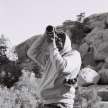
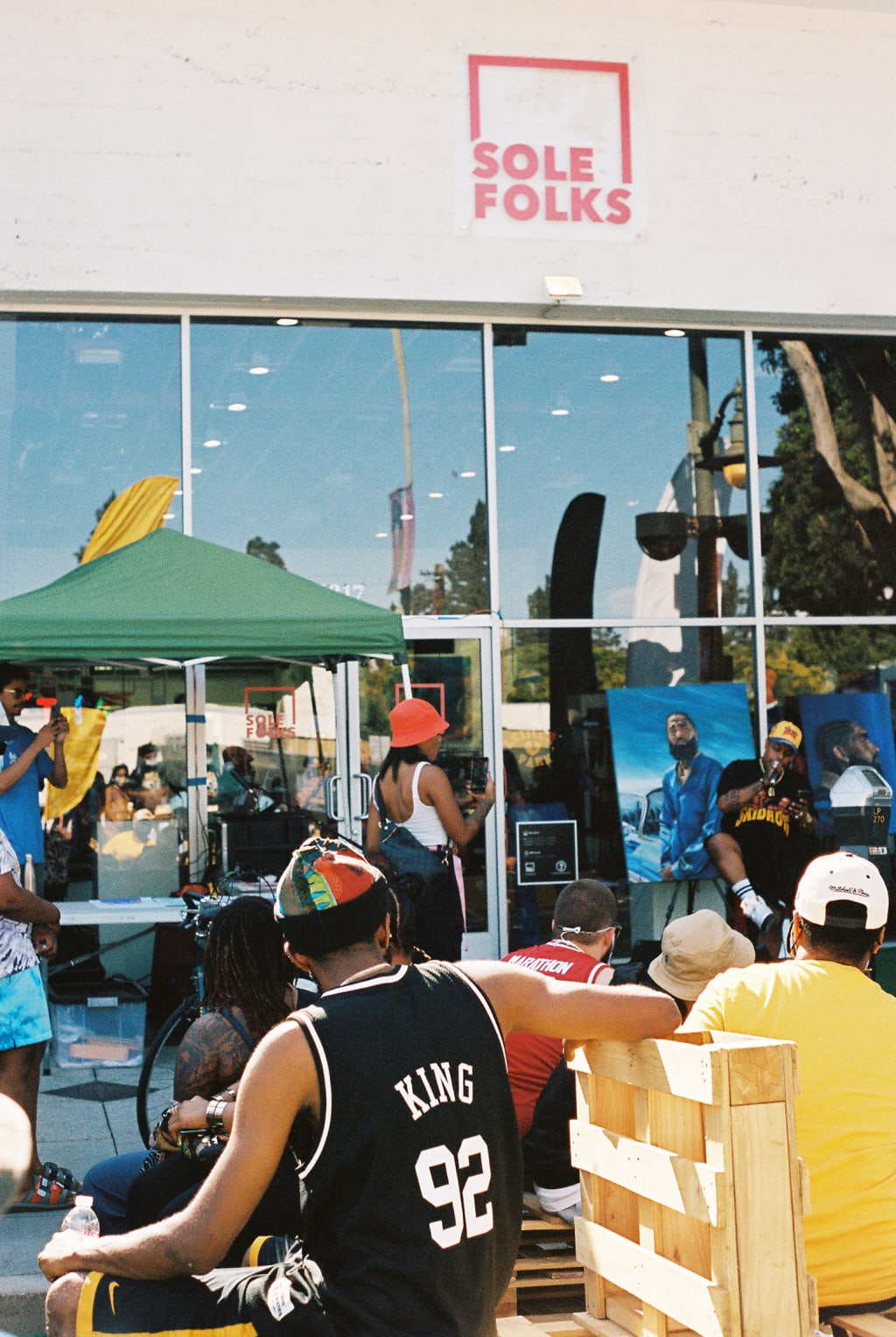
It’s been ten years since I escaped The South. I say escape because the south, for a Black man, has always been a place to run from.
To be "California born, southern bred" is to see both sides of America’s coin. To be born with glasses filtered by racism and speckled with poverty, only dreaming through the glimmer of possibility.
Clutching a degree and dream, my father found spirituality, purpose, and love in Los Angeles. In 1988, “I wasn’t even a thought” as my father would say; he was twenty-six years old, fresh out of Dillard University with the confounding thought of how to get hired with a degree in physics and no experience. At that time, owning your own business in the south was a far-fetched idea, but up Crenshaw, right down King Blvd. it was possible. The Leimert Park of the nineties was bustling with new black businesses who set up shop in buildings owned by Jewish landlords that didn’t care if you were black or white, as long as you had the rent on time. My father and two of his college roommates opened “Knowthyself Bookstore & T-shirt Shop.” This was where the foundation for my future in this city would be laid.
Los Angeles is and has always been a melting pot. On Valentine’s Day 1991, a beautiful Belizean woman on crutches tapped a soft-spoken southern Rasta on the shoulder and asked him to dance. The following month, they would watch the Rodney King tape as she breaks the news to him that she’s pregnant. I’m not sure if you would call it love at first sight, but I was born nine months later.

The following summer, Los Angeles erupted in riots. The nineties in L.A. were difficult times. The riots and gang violence were frightening enough – the Northridge Earthquake of 1994 was my mother’s breaking point. This was no place to raise a young black man. My mother and I headed to Mobile, Alabama (which could have been Mars to her; she was Belizean and had only lived in California since migrating) to live with my grandmother; whom she’d never met, but only spoken to on the phone. My mom didn’t grow up with racism, so she was ignorant of a lot of the perils that African Americans endured during the sixties. She knew of it but was not aware of how deep it is embedded into the foundation of the South.
Structural violence is universal, violence is everywhere; it’s in the Caribbean, Europe, America, etc. But racism and poverty in the south are unique, there is nothing like it. Poverty is multi-faceted. The face of poverty in Los Angeles looks a lot different than the face of poverty in the south. In the south, poverty smacks you in the face at sunrise. It is impossible to hide, perhaps that is why no one ever returns.

My mother could never know that she was only trading one traumatic upbringing for another. Nevertheless, as I transitioned from boyhood to manhood, Prichard became my foundation, and as with most families in the south "Grandma's House" became home.
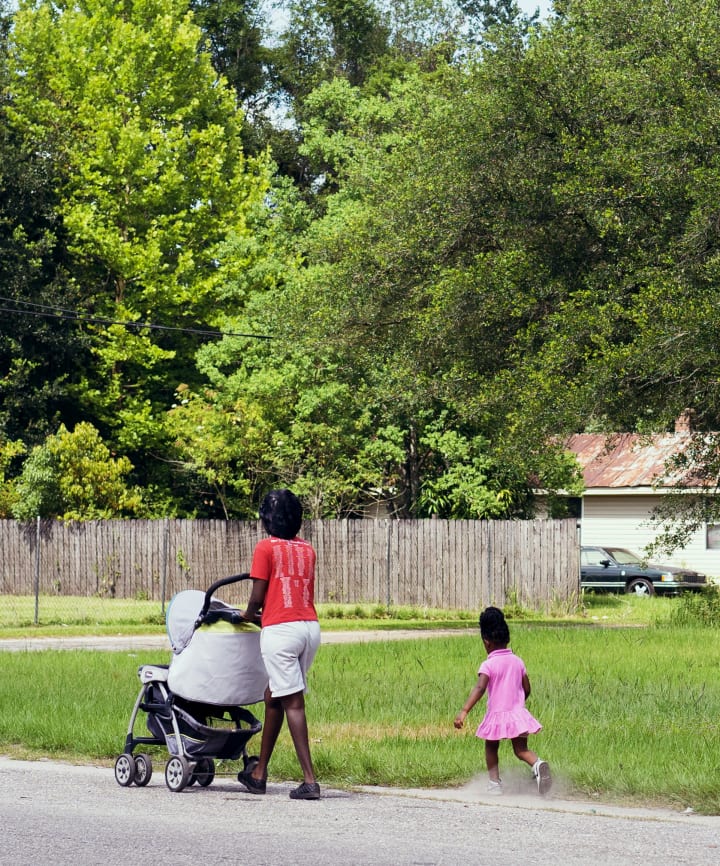
Time passed and as I grew, I watched the community around me slowly sink into desolation. Boys became men, and girls became mothers too soon, I've lost classmates to gun violence before sixteen and I've watched a young father lose his life with his daughter in his hands. It is sad but true, the traumatic experiences of my childhood are not unique to me. These memories are shared in one form or another by children of the "hood" across the world. By the time I was of age to depart it, it was little left that I could remember to depart from. The Mechanic Shop and The MLK Convenience Store closed, neighbors' homes burned to the ground, overgrown lots, and abandoned cars. It seemed that Prichard was the place that time forgot, or for a better word stood still. It wasn't until I left did I see and begin to understand the hidden beauty that encompassed my hometown and how I would be the bridge and example to propel us forward.

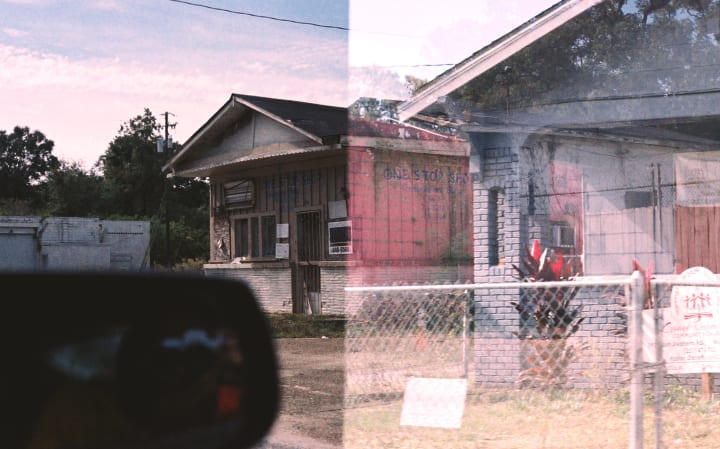
What makes one proud to be from their hometown? Usually when the hometown is a place to be proud of. Growing up no one ever was "proud" to say they were from Prichard. The name didn’t resound pride and wealth, it resonated with poverty and survival. Yet still, at football games and Mardis Gras parades, we would stand in solidarity and scream at the top of our lungs "P.A.!!" when asked what hood you were with from the DJ. Our role models were never small business owners or successful lawyers, they were dope boys in Chevys and at best the last football player that went pro. I picked up a camera by chance, it would be years before I learned of Gordon Parks and the Life magazine article on his portrayal of racism in this very city, I call home. At the time all I knew was I had to leave, because the home as they say was where the heart is, and my heart has always beat for California.

2012, Leimert Park was a vibe; a lot different from the prison bars that surround it today, it was filled with the remnants of a generation and the birthing of a new. Instantly, it was home.

Leimert filled a place in my heart, particularly in a way that I knew my small city of Prichard never would, not because it wasn't capable but, because it was never given a chance too. Leimert Park is a product of a community that reinvested back into itself, their hometown heroes not only returned but, planted seeds for the following generations to grow.

As I said, "the south has always been a place to escape from", I found that this is where we escaped to. The home I ran from was one that was united around the common ground of poverty we all shared. If we weren't poor would it still be the hood? Leimert was a black community that was not booming in wealth at the time (prior to the new Metro Line). It was black, but it wasn't the hood. How did this place exist so fluidly? Self-reliant on each other. Questions and ideas began to formulate about the state and future of my hood. My home. Where did I fit as a child of both worlds in all of it?
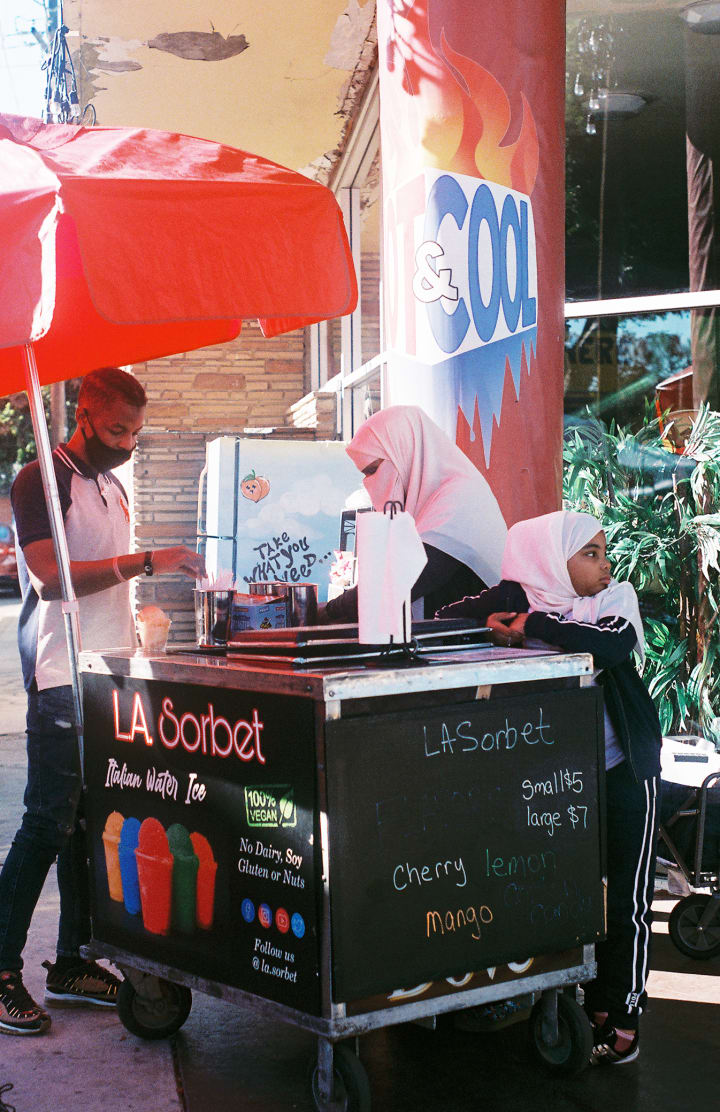
In a sense, I like my father began to find myself. Leimert became my constant, Sunday's down Degnan Blvd. became my church, the drums, my choir; the sorrel, my communion; the people, my congregation. I found that home was not a destination, but an emotion.

Leimert was the warmth I felt from dreaming around a fire pit watching embers fly to the sky. Before I knew what it was, my heartbeat for it, and after ten years of documenting it, I am beginning to understand why.

"There's really no such thing as the "voiceless". There are only the deliberately silenced and or preferably unheard" - Arundhati Roy
When you grow up with little, one finds the beauty in the simplicities of life. The small moment's matter, though they are often overlooked. I aim for those small moments in black life. The joy and pain, the poverty and success all of this encompass black life. Both sides of America's coin. My responsibility to my hometown is to raise awareness and be the change that I want to see in my community.

Growing up, photography was never an option as a way out of the hood, but as I approach 10 years in this craft, I know that it is a way to give back. An opportunity to shape the future culture in the south, for the following generation, in a likeness that represents us. Take guns out of kid's hands and replace them with cameras.
Leimert Park is an example of what black communities in the inner city are capable of when given just a bit of resources and positive examples to look up to. How do you know it's possible unless you experience it? Unless you see it? My hood might not be able to travel the world or even California, but I can, and I have. I am their eyes, their voice, their inspiration.
I am California born, but always Southern Bred.

About the Creator
Hydreams
● California born, Southern bred ● Documentarian of the Culture ● Visual storyteller: photographer, cinematographer, video editor and multimedia artist ● Creating representations of the inside by the inside
Keep reading
More stories from writers in Photography and other communities.
Curious Photography Tips Every Beginner Should Try
Have you ever wondered why two people using the same camera can produce completely different photos? The answer often lies in how well the photographer understands the camera itself. For beginners, cameras can seem filled with confusing buttons, dials, and settings. But what if those settings are actually the key to better photos?
By Craig Spiesman6 days ago in Photography
The Photographer's Code
You decide to visit your local park. You have become a close confidant to the homeless people who gather there most days. While talking to Cleo and Reed, you notice a new face in the crowd. It belongs to a stick-thin, middle-aged woman. She has her hand on her forehead as if taking her temperature.
By Paul Aaron Domenick2 days ago in Photography
Two Grumpy Old Men Solve the Problem
Marty and Steve were two grumpy old men who lived together. They had known each other for years. Marty had been a bachelor all his life. Steve said it was because no one could stand to ever live with. Marty’s standard reply was “Well, you are, so what sort of a moron does that make you!”
By Calvin London7 days ago in Humor


Comments
There are no comments for this story
Be the first to respond and start the conversation.