
In Korea, there is a city, called Changwon. The city is not as popular as Seoul or other cities, so I always need to tag ‘Busan’ to explain where the city is located. Someone, who is familiar with Gyeongsannam-do province, would take thirty minutes to drive from Busan to Changwon. If this is a first journey, it might take about an hour to get there. To fully grasp the characteristics of this city, I recommend going to the rooftop of the highest building in the city. Once you look at the aerial view, the artificially planned city will welcome your visit, as if the city is one of many products that have been manufactured by a factory. Above the lined twin looking factories sitting next to each other across, some several undesigned neighborhoods are ashamed with their bare bodies. I spent my childhood in an unplanned neighborhood, Sodap-dong, in a planned city, Changwon.
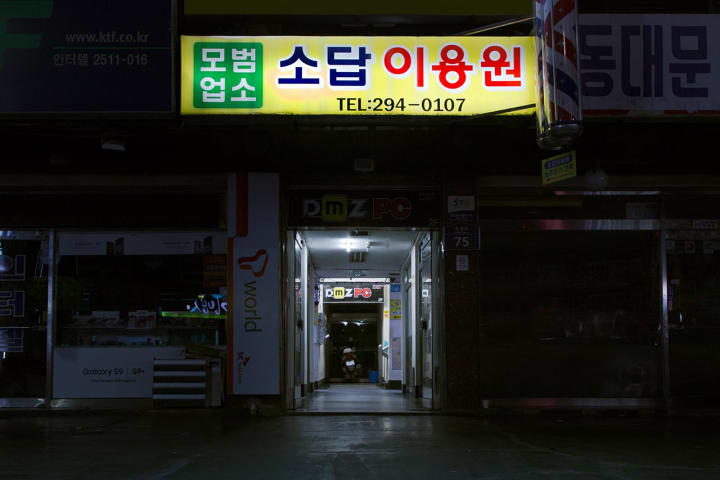
Now I hardly recall my old memories, but I still vividly remember the night when my parents' faces turned into peeled tomatoes and looked at each other. My toes were crawling like a pillbug trying to protect itself from any attacks. Although I tried my best to ignore the loud noises, the thin wall didn’t have any sound insulation effect function. Few days later, my family took a journey to Sodap-dong, Changwon, where my father's close friend lived. A new landlord lady, who lives at the first floor of this two storage house, smiled at me and gently stroked my thin head. I smiled at her back with a dream of being an adult.
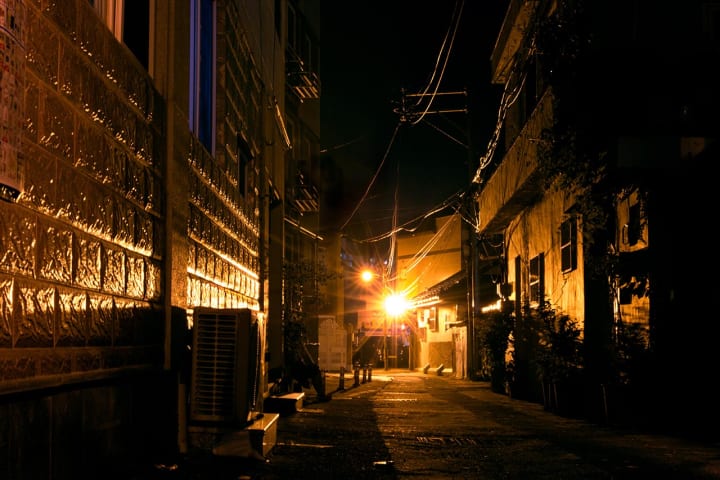
Like a usual day, behind a firmly locked wooden tiny rectangular living door, a couple was yelling at each other. The sound was automatically turned on everyday like a weekday radio broadcasting, so I ignored the existence of my neighbor, who technically lived in the same house. However, we were separated like the door which had never opened while my family were at the house.
To avoid the negative sounds from the next door, I always went to the front of the historical wooden architecture which people believe it's forbidden but actually forgotten. The door had never been opened unless there was a big event in the city, but it was a meeting spot for the children. Whenever I and some of my childhood friends, who I can’t even recall their names, go there, the elders told us the historical value of the wooden building, Hyanggyo, so the nearest bus stop is named Changwon Hyanggyo Entrance. When the sun was dropping to the west, the darkness swallowed Changwon Hyanggyo area up.
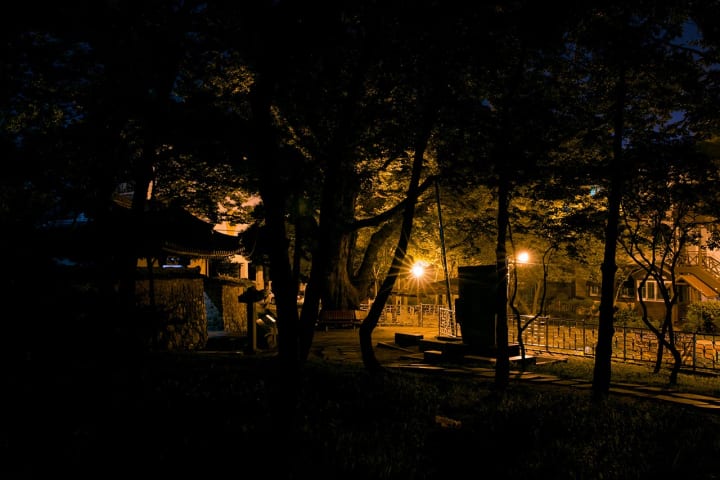
I sat at the stair of Hyanggyo and looked at the back of friends whose parents brought them back to their house. I leaned on a wooden gate painted with tinted red color. (Later on, I found out the door is called as Hongsalmoon means red arrow door.) I just sat there as if I mimicked a rock written with some old Chinese character next to Hongsalmoon. The coldness of the night wind couldn’t break the power of divine spirits, so the night was as warm as drinking hot adlay tea during a snowy day.
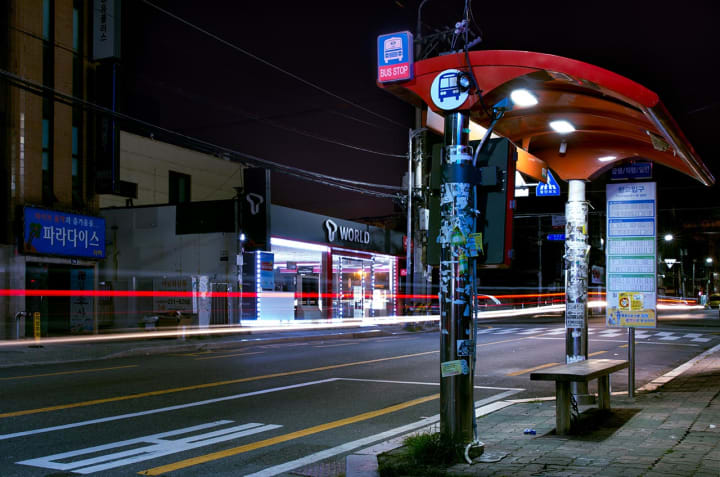
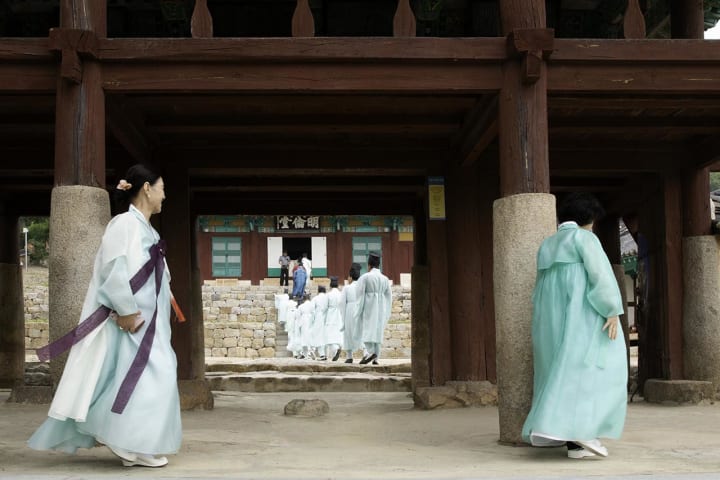
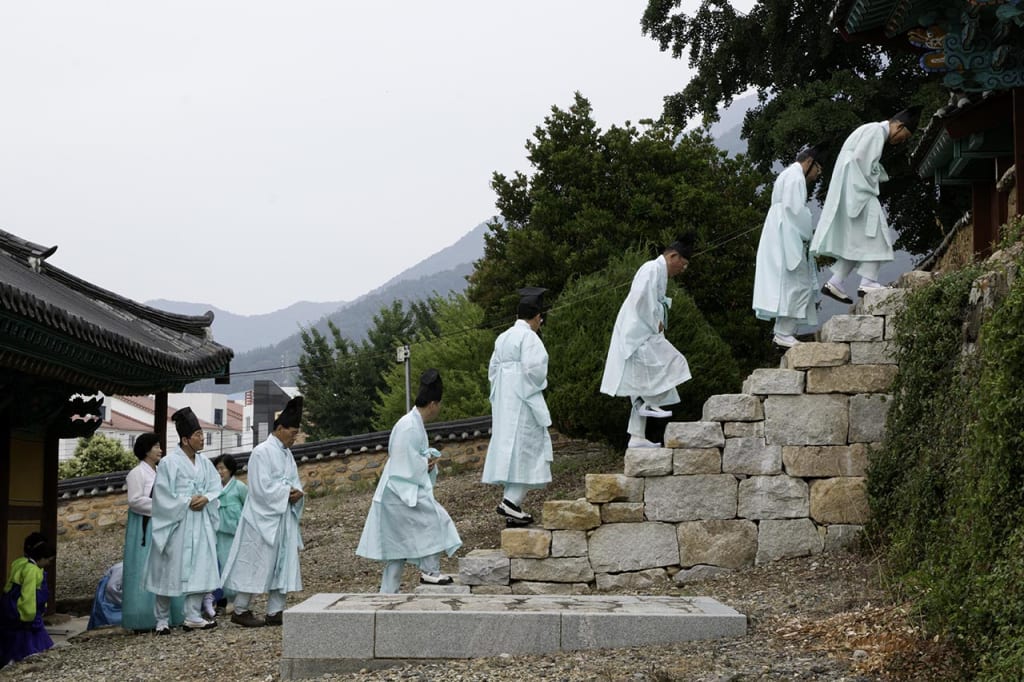
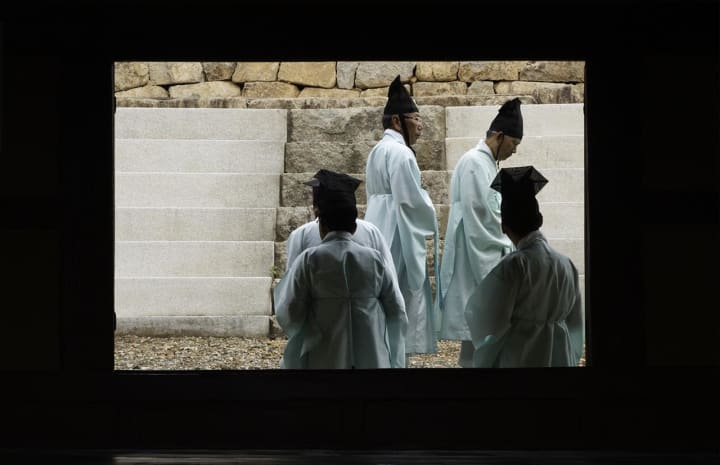
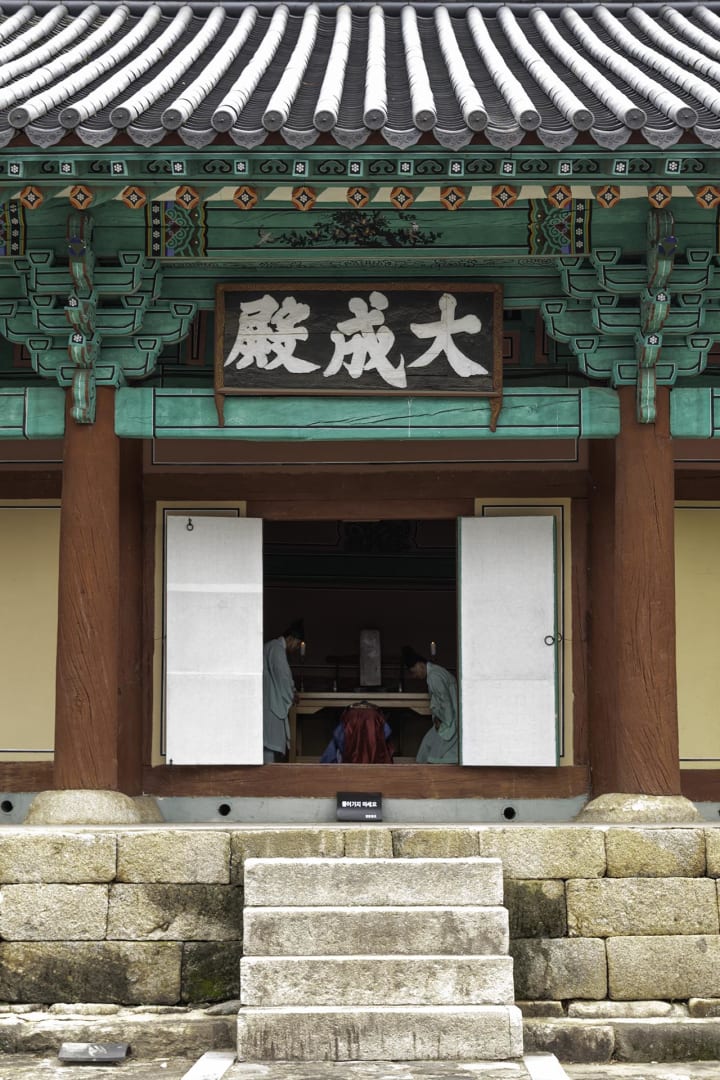
Now my hometown became a place where I want to relax and heal my pain from everyday struggle. Looking at photographs of elders who serves ceremony first day of every month of moon calendar, connects me to the past. I still remember the moment of being there. The scent of grass, the sound of cicada, and the energy of ritual history. It was the only pleasure of being in tragedy. Hoping this memory doesn't fade away, I embarked on this project.
About the Creator
Keep reading
More stories from Yejin Ha and writers in Photography and other communities.
My Year, in Prattling and Photos
It's been a year since... last year. Ironically, it seems I've found myself a new tradition of getting sick during the New Year holidays. At least, this year (that is, this inter-year period remarkable for its shiny decorations in the streets and houses, and closed supermarkets and pretty much everything), I'm doubtlessly doing better: I've managed to come visit my friends in Germany for Christmas (which I failed to do last year) and—after having some good quality time eating machanka, playing Munchkin and swinging machetes (the last one obviously crept into this checklist only for the sake of the phonological form)—I came back home via proverbial Deutche Bahn and probably less known Schweizerische Bundesbahnen, my body hosting a family of viruses, virions and who knows what other tiny critters somewhere inside my chest.
By Andrei Z.16 days ago in Photography
Prepare to Flash
I’ve learned to master the art of picking up cameras on a budget, I would like to say I do it now subconsciously out of a sense to capture the world in a not so perfect and more realistic point of view, but the reality is that I’m just too cheapskate to invest in a top of the line camera so I make do with what I can afford.
By Malachai Hough4 days ago in Photography



Comments
There are no comments for this story
Be the first to respond and start the conversation.