
How to Get Started in Photography Step by Step Guide
How to Get Started in Photography

An Introduction
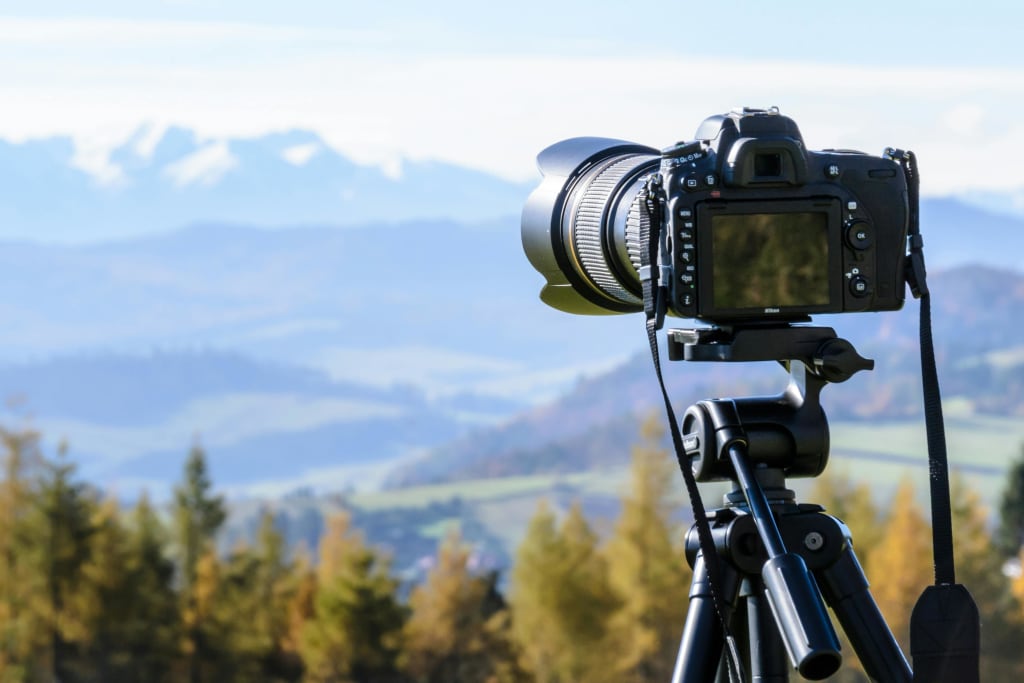
Through the art form of photography, we can express our creativity, tell tales, and capture moments. Beginning your photographic journey may be both thrilling and intimidating, regardless of whether you want to do it as a hobby or a career. Where do you start when there are so many different camera settings, methods, and styles to try? Everything you need to know to get started in photography will be covered in this guide, from learning about equipment to creating your own style.
1. Being Aware of the Fundamentals of Photography
It's crucial to comprehend the basic ideas of photography before delving into the technical details. Fundamentally, photography is the art of catching light. Aperture, shutter speed, and ISO are the three main variables that affect how your camera records light.
Aperture: This regulates how much light passes through the lens of the camera. The depth of field, which establishes how much of the scene is in focus, is also impacted. A shallow depth of field, where the background is blurred but the subject is crisp, is produced using a low f-stop (f/2.8, for example).
The duration of exposure of the camera's sensor to light is known as the shutter speed. While a slower shutter speed (e.g., 1/30) produces motion blur, a rapid shutter speed (e.g., 1/1000) freezes motion.
ISO: ISO controls how sensitive the camera is to light. While a higher ISO (such as 1600) aids in low light settings but may introduce noise into the image, a lower ISO (such as 100) is best for bright conditions.
Taking well-exposed pictures requires knowing how to balance these three settings, also referred to as the exposure triangle. Try with various combinations to see how they impact your photos.
2. Selecting Your Initial Camera
An often asked question by novices is, "Which camera should I buy?" In actuality, taking excellent pictures doesn't require the priciest gear. A lot of professional photographers began with simple equipment. When choosing your first camera, keep the following in mind:
Budget: Determine the amount of money you are prepared to spend. For novices, there are reasonably priced DSLR and mirror less cameras that provide great quality without going over budget.
Camera Type: The two most common choices are DSLRs and mirror less cameras. Mirror less cameras are smaller and frequently have more sophisticated autofocus systems, but DSLRs have been around longer and have a larger selection of lenses.
Lenses: The quality of your images can be greatly impacted by the lens you use. Beginners are frequently advised to use a prime lens with a fixed focal length (such as a 50mm) since it creates crisp photographs and compels you to consider composition.
Your smart phone can be an excellent tool if you're just starting out and don't want to spend money on a specialized camera. With the amazing cameras in modern smart phones, you can learn the fundamentals of photography before investing in more sophisticated gear.
3. Acquiring Knowledge of Composition Methods
Understanding technical settings is only one aspect of good photography; another is the way you frame your images. A key component of taking aesthetically pleasing pictures is composition. Here are some fundamental compositional strategies:
Rule of Thirds: Visualize using two vertical and two horizontal lines to divide your image into nine equal parts. For a more balanced and interesting shot, position your subject near the intersections of these lines rather than in the middle.
Leading Lines: Direct the viewer's attention to the focal point of the picture by using the natural lines in your surroundings, such as highways, rivers, and fences.
Framing: To highlight your subject and provide depth, frame it with scene elements such as windows, entrances, or trees.
Negative Space: Don't be scared to include blank areas in your pictures. You can emphasize your subject and provide a feeling of minimalism by using negative space.
4. Trying Out Different Lighting
A photograph's lighting can make or ruin it. Beginners benefit greatly from natural light because it is gentle and pleasing, especially during golden hour (shortly after dawn or before sunset). Nonetheless, developing your ability to work in various lighting scenarios will increase your adaptability as a photographer.
Soft Light vs. Hard Light: Soft light, which is diffused or originates from larger light sources, produces pleasing shadows for portraiture. A scene can gain drama by using hard light, which is produced by strong shadows from bright sunlight or a small light source.
Backlighting: This technique produces a silhouette impression when the light source is behind your subject. This might give your pictures more ambiance and feel.
To discover how lighting affects the appearance and feel of your photos, try taking them in various weather situations and at different times of day.
5. Photo editing
An essential component of photography is post-processing. To improve your photos and fix exposure, color, or composition problems, you can use editing tools like Adobe Light room or free equivalents like GIMP. But it's crucial to keep in mind that editing should enhance your photos rather than correct basic errors.
Make simple changes first, such as:
Exposure: If the initial exposure isn't exactly correct, adjust the brightness or darkness of your image.
Contrast: To make your pictures stand out, increase the contrast.
White Balance: To ensure that whites look realistic, adjust the color temperature.
Cropping: To make your composition better, center your topic or remove any distracting elements.
6. Creating Your Own Look
You’ll begin to establish your own distinctive photographic style as you get more experience. This depends on how you compose and edit your images as well as the subjects you like to take (landscapes, portraits, and street photography). To find what appeals to you, don't be scared to try out various genres and approaches.
7. Patience and Practice
Lastly, practice is the most crucial piece of advice for someone just starting out in photography. Carry your smart phone or camera with you wherever, try out various settings, and push yourself with novel compositions. Don't give up if your initial attempts at photography don't work out because it's a skill that gets better with practice.
Keep shooting, read books, watch tutorials, and participate in internet photographic communities. You'll improve your technical abilities and acquire a talent for taking beautiful pictures over time.
Introduction
Beginning a photographic career is a fulfilling experience that combines creativity and technical understanding. You may achieve stunning photography by learning the fundamentals, selecting the appropriate equipment, mastering compositional strategies, experimenting with lighting and practicing frequently. Remember
About the Creator
Fast world engagement
"Fast World Engagement" is centered on examining how we connect in a world that is changing quickly and the fast-paced nature of modern living.
Keep reading
More stories from Fast world engagement and writers in Photography and other communities.
Asia Cup Pak vs India
One of the fiercest and most anticipated rivalries in the world is that between Pakistan and India in cricket. The future players for both cricketing nations are the target of this rivalry, which reaches beyond the top teams. Young cricket players from both nations can display their skills in the Emerging Asia Cup, and the most recent match between Pakistan and India in this competition did not let down.
By Fast world engagementabout a year ago in Gamers
My Year, in Prattling and Photos
It's been a year since... last year. Ironically, it seems I've found myself a new tradition of getting sick during the New Year holidays. At least, this year (that is, this inter-year period remarkable for its shiny decorations in the streets and houses, and closed supermarkets and pretty much everything), I'm doubtlessly doing better: I've managed to come visit my friends in Germany for Christmas (which I failed to do last year) and—after having some good quality time eating machanka, playing Munchkin and swinging machetes (the last one obviously crept into this checklist only for the sake of the phonological form)—I came back home via proverbial Deutche Bahn and probably less known Schweizerische Bundesbahnen, my body hosting a family of viruses, virions and who knows what other tiny critters somewhere inside my chest.
By Andrei Z.24 days ago in Photography
Smartphone Photography Tips for Stunning Shots in 2026
Smartphone cameras have evolved at lightning speed. What once were simple point-and-shoot tools have become powerful imaging devices capable of rivaling dedicated cameras. Whether you’re capturing landscapes, portraits, street scenes, food, or low-light moments, mastering smartphone photography, as highlighted by Stories Today, means understanding both creative fundamentals and modern techniques that take advantage of current technology.
By Stories Todaya day ago in Photography


Comments (1)
Insightful post, though we can enhance the images by using Remini https://remiproapk.com/