
How Marketers Are Using Text to Video to Scale Content Creation
Discover how AI-powered text-to-video tools are revolutionizing marketing strategies, helping brands produce engaging video content faster, cheaper, and at scale.
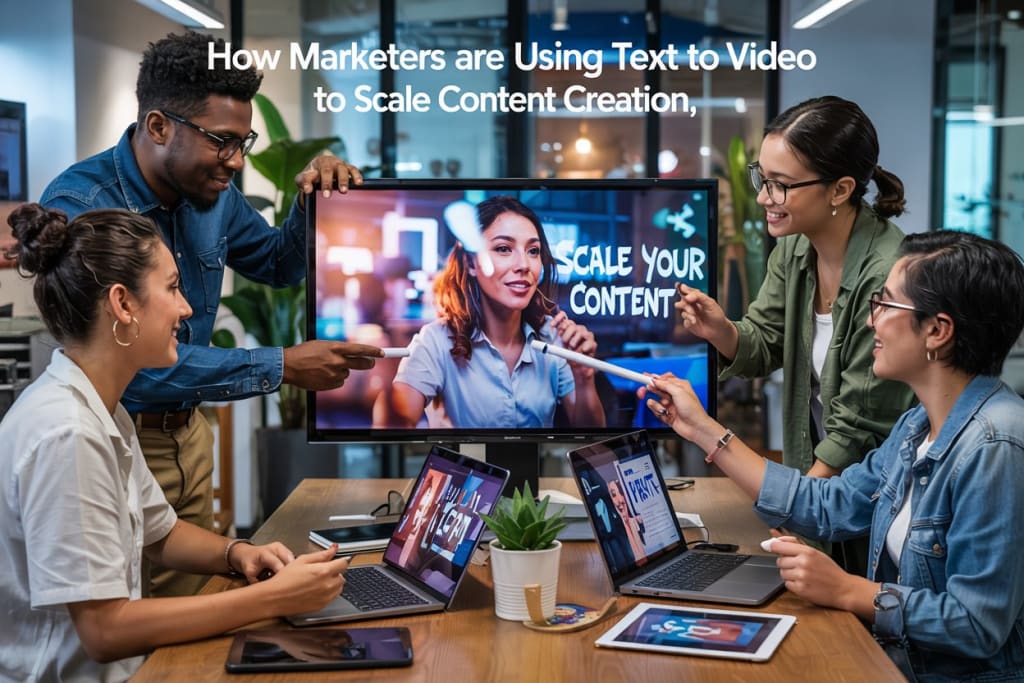
In today's fast-paced digital world, the demand for high-quality, engaging video content is growing exponentially. Marketers are under pressure to produce more videos than ever—across social media platforms, websites, email campaigns, and ads. However, creating professional-grade video content can be time-consuming, costly, and resource-intensive.
Enter Text to Video technology.
This revolutionary tool uses artificial intelligence to convert written content—such as blog posts, product descriptions, scripts, or even brief outlines—into fully-formed videos in just minutes. And marketers are taking notice.
In this article, we’ll explore how marketers are leveraging Text to Video tools to scale content production, engage wider audiences, and stay ahead in an increasingly visual world.
What is Text to Video?
Text to Video refers to AI-powered tools that automatically generate video content from written text. These platforms use machine learning, natural language processing (NLP), and video editing automation to pair relevant visuals, voiceovers, music, and transitions with the provided script or content.
Popular platforms like Pictory, Lumen5, InVideo, and Steve.ai have made it easy for marketers to create professional-looking videos without needing design or video editing expertise.
Why Marketers Are Turning to Text to Video
Here are the main reasons why marketers are embracing text-to-video tools to scale their content strategy:
1. Faster Content Production
Traditionally, creating a video could take days or even weeks. You’d need to write a script, film, edit, and finalize the content. With text-to-video tools, that same process can be reduced to a few clicks.
Marketing teams can now repurpose existing content—like blogs, whitepapers, or press releases—into short, engaging videos in under an hour. This speed allows brands to stay agile and respond quickly to trends or breaking news.
2. Cost-Effective Scaling
Hiring a videographer, editor, and animator can quickly drain a marketing budget. By using text-to-video software, even small businesses and solopreneurs can produce high-quality videos at a fraction of the cost.
This democratization of video content allows smaller teams to compete with larger brands, producing content more frequently and at scale.
3. Multi-Platform Adaptability
Today’s content must be platform-specific. What works on LinkedIn might flop on TikTok. Text-to-video tools often offer template presets for different platforms—from vertical videos for Instagram Stories to widescreen formats for YouTube.
Marketers can easily repurpose a single piece of content into multiple formats, optimizing reach and engagement across channels.
4. Improved SEO and Engagement
Google loves video. Embedding videos into blog posts can increase dwell time, improve SEO rankings, and boost content discoverability. On social media, videos often perform better than static images or plain text posts.
By turning written content into videos, marketers can enhance both visibility and engagement without starting from scratch.
5. Personalization at Scale
Some advanced text to video tools, like Steve.AI, allow marketers to create AI-generated spokesperson videos in different languages and accents. This is a game-changer for global brands looking to localize content quickly and efficiently.
Imagine creating 20 versions of a product video tailored to specific regions, demographics, or industries—with minimal manual effort.
Use Cases: How Marketers Are Using Text to Video
Let’s dive into specific ways marketers are using this technology in real-world campaigns.
✅ Turning Blog Posts into Videos
Many marketing teams are repurposing blog content into short explainer videos, increasing the ROI of their existing content. These videos can be shared on YouTube, social media, or embedded in the original blog post.
✅ Creating Video Ads
Text to video tools make it simple to generate product teasers, testimonials, or promotional videos with engaging visuals and music—all without needing footage.
✅ Enhancing Email Marketing
Adding video thumbnails or short clips to email newsletters can boost click-through rates significantly. Marketers can now add professional-looking video content to emails with minimal effort.
✅ Educational Content and Tutorials
Brands are using text-to-video tools to create microlearning content and how-to videos that educate customers, nurture leads, or onboard users.
✅ Social Media Highlights
Text-based summaries of events, trends, or reports can be transformed into quick, visually engaging videos perfect for Instagram, Facebook, or Twitter.
Tips for Getting the Most Out of Text to Video
While these tools are powerful, using them strategically is key. Here are some best practices:
- Keep it concise: Aim for videos under 2 minutes for social platforms.
- Use compelling headlines: Your text intro sets the tone—make it count.
- Match visuals to tone: Choose templates, images, and music that reflect your brand.
- Optimize for sound-off viewing: Many users watch videos muted—use captions!
- Test and iterate: Try different formats, styles, and messages to see what resonates.
Limitations to Consider
As impressive as text-to-video tools are, they’re not perfect. Here are a few limitations:
- Generic visuals: Some platforms rely on stock footage, which may lack originality.
- Voiceover quality: AI-generated voices have improved but may not feel as authentic as a real human.
- Complex edits: Custom animation or intricate transitions still require human editors.
That said, for many day-to-day marketing needs, these tools are more than sufficient—and getting better every year.
The Future of Marketing with Text to Video
We’re only scratching the surface of what’s possible with AI video generation. As the technology evolves, we can expect even more advanced personalization, real-time editing, and deeper integration with content management systems.
In the near future, we might see:
- AI-generated influencers narrating brand stories
- Interactive videos that adjust in real-time based on user input
- Real-time A/B testing for video variants on social platforms
Final Thoughts
Text to video is not just a trend—it’s a transformational shift in how marketers create and scale content. By lowering the barriers to entry, these tools empower marketers to produce engaging, high-quality videos at speed and scale.
If you haven’t yet explored text-to-video tools, now’s the time to experiment. Whether you’re a solopreneur or part of a global marketing team, these tools can help you stay ahead of the curve, connect with audiences, and bring your brand story to life—one frame at a time.
About the Creator
Keep reading
More stories from piyush Rawat and writers in Photography and other communities.
Leavie Scott
ORDER HERE Chicago – A Radiant Urban Masterpiece by Leavie Scott Arts & Culture Review – Feature Story In his striking new work Chicago, photographer Leavie Scott captures the soul of the Windy City with a level of vibrancy and emotional resonance that is impossible to ignore. The image immerses viewers in a dazzling skyline bathed in mesmerizing tones of purple, pink, and gold—a palette rarely seen in traditional urban photography and one that instantly distinguishes Scott’s artistic voice.
By Organic Products 7 days ago in Photography
Curious Photography Tips Every Beginner Should Try
Have you ever wondered why two people using the same camera can produce completely different photos? The answer often lies in how well the photographer understands the camera itself. For beginners, cameras can seem filled with confusing buttons, dials, and settings. But what if those settings are actually the key to better photos?
By Craig Spiesman5 days ago in Photography
📢 Raise Your Voice Thread: 03/05/2026
Our “Raise Your Voice Threads” are hosted most alternating Thursdays at 12PM ET to offer creators more avenues to uncover exceptional stories on Vocal. As we are continuously searching for fresh creators and inspiring stories, this thread provides an opportunity to exchange and discuss the stories that have moved and motivated us on Vocal.
By Raise Your Voice by Vocal5 days ago in Resources



Comments
There are no comments for this story
Be the first to respond and start the conversation.