
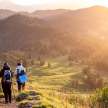

For years, Tilicho Lake had been etched into my travel dreams a mythical turquoise pool tucked beneath the icy giants of the Annapurna range. I had heard stories, seen photos, and watched YouTube documentaries. But nothing compared to the raw experience of being there. This blog is not just about reaching the lake; it’s about the journey, the struggles, the surprises, and how I completed one of Nepal’s most rewarding treks.
Planning the Trek
Before setting out, I spent weeks researching everything best season, routes, permits, gear, and costs. I chose to trek in late April, a time when the skies are mostly clear, the trail is not too crowded, and the snow hasn’t yet blocked the path to Tilicho Lake.
I opted for the classic route: starting from Chame, joining the Annapurna Circuit, and taking the Tilicho Lake side trip before crossing Thorong La Pass. I planned for 8 days with Adventure Vision Treks Package which were:
Annapurna circuit with Tilicho Lake Trek and Tilicho Lake Trek, which included enough buffer for altitude acclimatization.
Day 1–2: Drive from Kathmandu to Chame The Bumpy Start
The trek officially began with a long, exhausting jeep ride from Kathmandu to Besisahar, followed by a rugged drive up to Chame. The road beyond Besisahar was brutal narrow, muddy, and adrenaline-pumping, especially around cliffs and waterfalls. But I took it as the first test of patience and resilience.
Chame greeted me with chilly winds, pine forests, and prayer flags fluttering against the blue sky. I spent the evening soaking in hot tea and the first real mountain views.
Day 3–4: Trekking from Chame to Manang Finding the Flow
The trail from Chame to Manang was magical. I passed through Pisang, where ancient monasteries and Tibetan-style villages charmed every step. The air grew thinner, and the views broader Annapurna II and Gangapurna looked surreal like postcards come to life.
Reaching Manang (3,519m) felt like entering a small Himalayan town. I spent an extra day here to acclimatize by exploring Gangapurna Lake and hiking up to a viewpoint. This was essential preparation before heading to higher altitudes.
Day 5: Manang to Khangsar
Leaving the Annapurna Circuit trail, I veered off toward Tilicho Lake. The trail to Khangsar was quiet, and I started to feel the isolation. It was a short trek, just 3–4 hours, but the altitude made it slower.
Khangsar was more like a settlement than a village quiet and cold. Only a few trekkers were around, and the silence was surreal. I met a group of Nepali hikers, and we shared stories over dal bhat that night.
Day 6: Khangsar to Tilicho Base Camp
This was the toughest day so far. The trail was narrow and landslide-prone. There were points where I had to navigate carefully along unstable gravel paths that hugged steep cliffs. Each step demanded focus.
After about 6 hours, I reached Tilicho Base Camp (4,140m). The air was thin, and altitude headaches had begun for some trekkers. I stayed hydrated, ate light, and slept early to prepare for the big day.
Day 7: The Final Push Tilicho Base Camp to Tilicho Lake
We started before dawn. Headlamps on, backpacks strapped, and hearts pounding. The climb was steep and snow-covered in places. The oxygen level was noticeably lower, and every breath took effort.
After about 3–4 hours of ascent, we reached Tilicho Lake (4,919m). And there it was a massive blue jewel, frozen in parts, shimmering under the rising sun, surrounded by snow walls and prayer flags.
It was more than a view it was an emotion. I sat silently for a long time, overwhelmed. We clicked photos, chanted "Om Mani Padme Hum", and just... took it all in.
Day 8–9: Return Journey
We retraced our steps back to Manang, where the air felt thicker and the food tasted better. The return was much faster, and our hearts were light. I didn’t go all the way to Thorong La Tilicho was my final destination for this trip.
Challenges I Faced
Altitude Sickness: Even with acclimatization, mild headaches, and nausea tested my endurance.
Landslide Zone: The trail after Khangsar required extreme caution. One wrong step could be fatal.
Cold Nights: Nights at Base Camp were freezing. Thermal layers and a good sleeping bag were lifesavers.
What Helped Me Complete the Trek?
Proper acclimatization in Manang.
Hydration and Nutrition I drank lots of water and avoided heavy meals at altitude.
Layered Clothing Managed cold and heat with base, fleece, and down layers.
Mental Preparation I reminded myself constantly why I started.
Why Tilicho Lake is Special?
Tilicho Lake isn’t just high in altitude; it’s high in spiritual and emotional value. You don’t just trek to a lake you trek through Himalayan cultures, Buddhist prayer stones, yak pastures, and breathtaking ridgelines. The experience stays with you.
About the Creator
Maik Tyson
Hey everyone, It's me, Maik Tyson. Aw aw not the UFC fighter but the storyteller who would write stories for you to fight with your inner enemies and enjoy my stories. Visit me: https://www.adventurevisiontreks.com/trip/manaslu-circuit-trek
Keep reading
More stories from Maik Tyson and writers in Photography and other communities.
Men in Love
They found the letter in the left breast pocket of a fallen soldier, buried under the rubble near the French countryside, where the early winter of 1939 had already begun to freeze time. The soldier's uniform was torn, his face half-covered in mud, his eyes wide open staring toward something long gone. In his pocket was a neatly folded piece of paper, smeared faintly with blood but still legible.
By Maik Tyson10 months ago in Confessions
Curious Photography Tips Every Beginner Should Try
Have you ever wondered why two people using the same camera can produce completely different photos? The answer often lies in how well the photographer understands the camera itself. For beginners, cameras can seem filled with confusing buttons, dials, and settings. But what if those settings are actually the key to better photos?
By Craig Spiesmana day ago in Photography
Leavie Scott
ORDER HERE Chicago – A Radiant Urban Masterpiece by Leavie Scott Arts & Culture Review – Feature Story In his striking new work Chicago, photographer Leavie Scott captures the soul of the Windy City with a level of vibrancy and emotional resonance that is impossible to ignore. The image immerses viewers in a dazzling skyline bathed in mesmerizing tones of purple, pink, and gold—a palette rarely seen in traditional urban photography and one that instantly distinguishes Scott’s artistic voice.
By Organic Products 4 days ago in Photography


Comments (1)
Planning a trek like this takes work. I've been through similar research for mountain trips.