

Big thanks to you
Basically what I'm doing is I'm photographing the same beach for a month and I'm producing a short film around that so something like a documentary short film and then I'm also producing a book from it as well so it's really exciting I can't wait to share it I'm not sure exactly when it's going to come out because there's a lot of work do when I get home but I've taken so many photos so onto Sharp Images there's four primary reasons
Why you get unsharp images and I want to sort of go through those and I'll show you some examples as well and make sure you stick around to the end because then I'm going to show you why you can have images that are too sharp and I'm going to talk a little bit about Lightroom okay on to the first one which is the obvious one which is just camera shake so making sure your camera is sturdy if I hand hold my camera then I make sure that I have it really close to my body and then I also recommend that you try different shutter speed.
In different conditions so if it's calm go out put some different lenses on because obviously if you're shooting with a longer lens like a 200mm millimeter lens so you're going to have to have a faster shutter speed than if you're shooting with a wide angle lens like this 14 to 24 millimeter because on this you'd probably get away with like a 20th of a second evening wind but on a 200 millimeter lens you're not going to but everybody's different when you're hand holding it so what I'd recommend is go and do some tests see what you can do and have a look at it but make sure that when you're doing it.
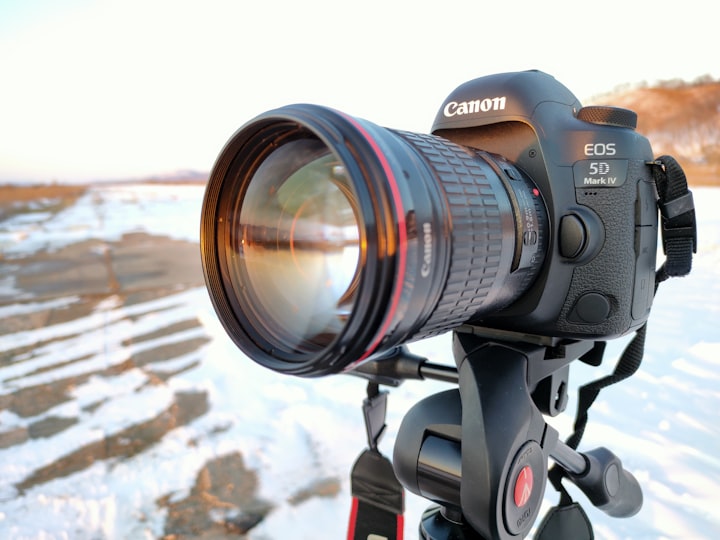
You're not holding it like that and looking at the back of the screen look through the eyepiece and hold it really tight but most of the time in landscape photography what I'd recommend is putting it on a tripod and if you're going to get a tripod that'll make sure you get a reasonably sturdy one I know it's more to carry but it's really useful to have a sturdy tripod because again if it's windy you don't want your tripod falling over and a bigger tripod's always going to give you more stability so when you've got it on your tripod what I'd also recommend is getting an L bracket because if you're doing portrait shots you don't want it just at the side like that where it's leveraging off to the side um and and then becoming unstable you want a very stable platform and then make sure you put it on Rock if you can um you know if there's if you're shooting somewhere and you've got a choice of where you're shooting try and get it as stable as possible often you don't have that choice because obviously you're going to be shooting a very tight composition but that's really important so once you've got your your tripod stable there's a few things a few tips to make sure to get really sharp images so the first thing is don't use your shutter button so when you when you're on a tripod.
I've seen loads of people put it on a tripod they've got a second long exposure and they press the shutter button and that means that you're going to have some vibration if you're going to use your shutter button then what I'd recommend is having something like a five second delay and then when you press it it then delays before it takes the actual shot and then any sort of vibrations going to minimize the longer the lens again the more important that is again you just won't notice it but if you're shooting at 200 millimeters any tiny vibration will be noticed so you wanted that to settle down a little bit all the other thing I'd recommend is use a remote which I use and I've got a little remote and I just press it and it just means it makes life so much easier because I'm disconnected from my camera then so I can it can be settled down really stable and then the fine
The final thing for on a tripod make sure you don't have a strap on it so have a removable strap because if you have a strap on it you can have something that's going to blow in the wind and then also a lens Hood as well you take the lens hood off unless you need it for flare or it's raining because you know it's gonna It's Gonna Act Like a bit of a windmill it's going to push it around so you don't want that to happen really the next thing is focus this is the thing that most people worry about but it's not too difficult.
I think that's better but there are times when you don't want that like beach baubles that I took here which is one of my favorite images so you can be a little bit creative with the foreground sometime and have it out of focus but you've got to be purposefully out of focus if you want everything in focus and you've got to think about depth of field and depth of field is impacted by two things it's impacted by aperture and I'm sort of simplifying this a little bit but that's that's important to simplify it I think because it's a lot of complexity in it but it's impacted by aperture so um whether you're shooting at F 2.8 or f11 which will obviously have more in focus and it's also impacted by your focal length so if you're shooting at 200 millimeters you're going to have less in Focus than you're shooting at 14 millimeters so for instance this shot that I took in Harris is shot at 14 millimeters and um I don't have to be that careful with that because everything is going to be in Focus front to back at f8 um even things like a meter or two in front of me because the wider you have it the more is in focus and that's why when you're shooting with your phone I think this is like a three millimeter lens or something you know you don't really worry about it too much because everything's in Focus all the time.
So then it comes down to choosing the correct aperture and the reason it's important to choose the correct aperture is you don't just want to go to F22 because as you go from F 2.8 up to F22 then you start to get what's called diffraction and diffraction means you get a less sharp image so you've got to choose that correct aperture for the depth of field that you want and what I'd recommend using is photo pills so photo pills is a great app and what you can do you can go into here and see depth of field and then what you can do is you can put in your camera you can put in the focal length that you're shooting at so same shooting 24 millimeters at F10 then I'm going to focus and then just say I'm going to focus on Infinity because in doubt what I'd always say is focus on the furthest object away and then that will tell me that the F10 the near point of focus is going to be 1.91 meters away so you can see it's 1.91 meters away and that's what's called acceptably sharp now I usually double that so I would because accessible sharp isn't pin sharp so if you double that and say four meters away then then everything at four meters away is going to be in sharp all the way to Infinity.
If you wish if you focus on Infinity I explain this in a lot more detail so go and take a look at that but basically this is a really good app it will really help you to decide what aperture to use and you don't want to push it too far because if you push it too far your results are going to get a lot softer um and then there might be a case where you can't do it you just can't get everything in Focus you think I don't want to go to s22 because that's just going to everything's going to be soft so you decide on f11 say but then the foreground's not sharp so you've got a focus stack so you then got to focus on the distance you've got to focus on the foreground and you're going to blend those together and there's a video here explaining how that to do that it's super easy to do you don't have to worry about it what.
I'd recommend even if you can't do it now is when you go out make sure you do that what I do is I have my camera on my tripod like that and I just go Focus take shot at the top Focus take shot at the bottom and that's it it's as simple as that and then you've got that data and you can worry about it later you don't have to um you know worry about it when you're when you're in your field even if you can't focus that now get that information.
I know that my 24 to 200 millimeter lens is sharper wide open than it is um at like f13 or something but then it's also important to know the characteristics of your lens so understanding whether whether it's sharper 24 millimeters or 200 millimeters then you know where to when to swap to a different lens potentially um a prime lens like this 50 millimeter f one point 8 is going to be the sharpest however sometimes I use my 24 to 200 over something like my 24 to 120 which is definitely sharper just because it's more convenient so the best thing I'd say about lenses is understand that they're sharper wide open and understand the characteristics of your own lenses , understand where they're good so that then you've got a mental picture of that when you're out.
The other thing is make sure your lens is clean because that can affect the sharpness of the image if you've got um any moisture or oil on your lens then the light's not going to go through the lens correctly there's going to be interference and you're going to get a less sharp image that's really important okay I just want to talk a little bit and before I go on to Lightroom quickly I just want to talk a little bit about megapixels megapixels are nothing to do with sharpness.
If you put an image this big so an A3 image at 12 megapixels or at 48 megapixels you will not see the difference between the two um as you get bigger and bigger and bigger you start to see the difference but that's nothing to do with sharpness that's to do with the amount of information that's stored in the image a 48 megapixel image that's slightly out of focus or you've moved the camera is not going to be good a 12 megapixel sharp image is going to be way better so people get those two things confused they're not the same thing ones more information one is the image is correctly focused and you've not moved the camera it's sharp so that's really important so don't worry if you've got a lower megapixel image you can still get super Sharp Images that will be brilliant printed brilliant shown on the web you don't need to worry about it okay can an image be too sharp it can because people over sharpen them all the time in Lightroom. I wasn't that bothered about everything being pin sharp I wanted the foreground to be sharp.
I wanted these trees to be sharp so I focused on one of these trees here and you can see that that is super pin sharp but I'm not too bothered about the distance here so these trees in the background because it was foggy it doesn't really matter too much the other thing is that you don't want to over sharpen it so you you're playing an amount of sharpening to be honest I very often don't mess with the sharpening at all.
I think people get carried away with sharpening in Lightroom thinking that that's going to create a sharp image a sharp image is created in your camera it's not created in Lightroom now there are really good tools that allow you to add sharpening afterwards um in Photoshop and Lightroom so you can do that but don't overdo it because what happens is you you lose the mystery of that image it becomes too crispy and um a sharp image isn't necessarily the best image you know some images look better a little bit sharper some you know like this image here that I took in in Harris as well is isn't going to benefit a huge amount from being sharp and in fact this image I actually did as an ICM where I moved my camera and you could argue that the Blurred one is better than the super sharp one so sharpness is a thing that you can get carried away about what I'd Recon is make sure you're in the camera you can get the sharpest image possible but then don't worry too much about trying to do it afterwards in Lightroom.
I hardly ever mess with sharpening I the only thing I do is just move the thing left and right a little bit don't do it too much it looks horrible it looks too crispy so I haven't covered a few other things I've not covered things like ISO.
ISO is a funny thing it gives you more grain it doesn't reduce the sharpness so much but it effectively looks a little bit less sharp because it adds more grain to the image it adds more noise to the image which obviously can look less sharp and also ISO reduces a dynamic range which can affect sharpness as well , but I don't want to go into those in too much detail I think what I've explained should help you try to get sharper images it's not that difficult to be honest once you've got a few things under your belt so a good look.
The best but the best thing to do is be in control of it and have your own where you can curate your images you can write a blog you can even open a store and sell prints if you're ready to do that.
bye
About the Creator
CORNEL STRATON
Hi
I am a photographer with experience in events and a nature photographer.
Occasionally I offer valuable information for those who want to learn how to use the camera and get the best results.
Nice reading
Keep reading
More stories from CORNEL STRATON and writers in Photography and other communities.
photography for beginners
Hey everyone In today's material I want to share with you some mistakes that I used to make as a portrait photographer and my top five tips that you can start doing today to improve your photography so you don't make the same mistakes that i did.
By CORNEL STRATON2 years ago in Photography
My Year, in Prattling and Photos
It's been a year since... last year. Ironically, it seems I've found myself a new tradition of getting sick during the New Year holidays. At least, this year (that is, this inter-year period remarkable for its shiny decorations in the streets and houses, and closed supermarkets and pretty much everything), I'm doubtlessly doing better: I've managed to come visit my friends in Germany for Christmas (which I failed to do last year) and—after having some good quality time eating machanka, playing Munchkin and swinging machetes (the last one obviously crept into this checklist only for the sake of the phonological form)—I came back home via proverbial Deutche Bahn and probably less known Schweizerische Bundesbahnen, my body hosting a family of viruses, virions and who knows what other tiny critters somewhere inside my chest.
By Andrei Z.19 days ago in Photography
A Lifetime of Shakas
For more than three decades as a part-time freelance news and sports photographer in Hawaiʻi, I’ve captured countless moments across the islands — and a few on the mainland. Along the way, almost without realizing it, I built an ever-growing photo archive of people flashing the shaka sign.
By Tim Wrighta day ago in Photography


Comments