
Creating Beautiful Fashion Beauty Shots in the Great Outdoors
This article will show you how to create beautiful fashion beauty shots in the great outdoors.


How many times have you found yourself in a beautiful weekend setting outdoors capturing your family, friends, or a special event only to find out that the photos didn’t turn out the way you expected them? I’m sure many of you have found yourself in that same situation. Outdoor photography can create a beautiful setting for people photography but can also be challenging.
Direct sunlight can be unpleasant, undesirable objects can affect your composition. And on many occasions, Mother Nature might not want to cooperate. These are just a few of the problems that you can encounter when photographing subjects. However, with a little practice and some patience, those challenges can be mastered.
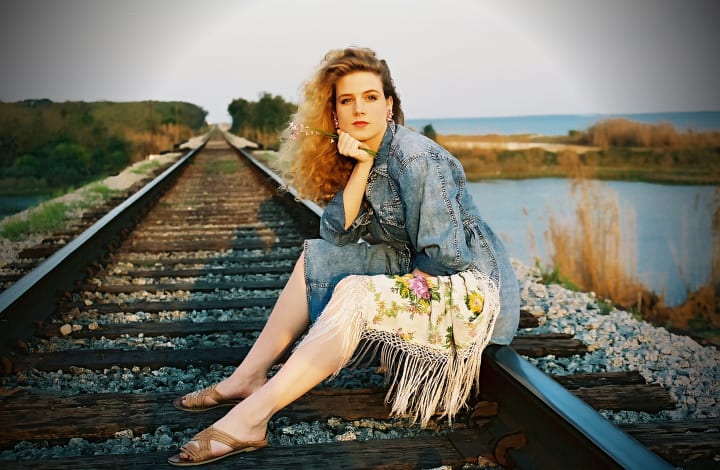
Over the years as a professional photographer, I’ve encountered many problems along the way. But with some patience and continuing development, I was able to overcome these obstacles.
Let me share a few tips to help you create better outdoor beauty shots.
Keep the background clean. In other words, don’t distract from the main subject. Simple repeating patterns on a brick wall or fence, subdued shades on a country path, the consistent color of a patch of flowers, all make for a nice backdrop for an outdoor portrait. When setting up your subject, you want your subject to be the focal point.
Learn to control the depth of field which is the distance between the nearest and furthest object in a photo that appears acceptably sharp.

For example, the edge of a forest, or the mountains in the distance may provide for a beautiful backdrop with proper control of the depth of field. A DSLR camera allows you to adjust your depth of field setting to produce more or less focus relative to your subject. Some of the newer smartphones offer a similar feature.
For example, the eye is directly drawn to the main focal point of your subject. If the subject is in sharp focus in proportion to the background, it will be highlighted as the main focal point of your subject. Controlling the depth of field is done by adjusting the aperture setting (aperture priority, often abbreviated A or Av on the camera mode dial).

For instance, you see a picture of a beautiful butterfly in a patch of flowers. You notice the butterfly is in sharp focus but the flowers are somewhat blurred. The photographer achieved this by using a small f-stop setting. This might be a little challenging in a bright light situation.
While you open up the aperture (lower the f-stop), you must also increase the shutter speed to avoid overexposing the subject. Increasing the shutter speed reduces the resolution in the picture. Keep practicing until you find the best combination for both the aperture and shutter speed for the desired result you’re looking for.
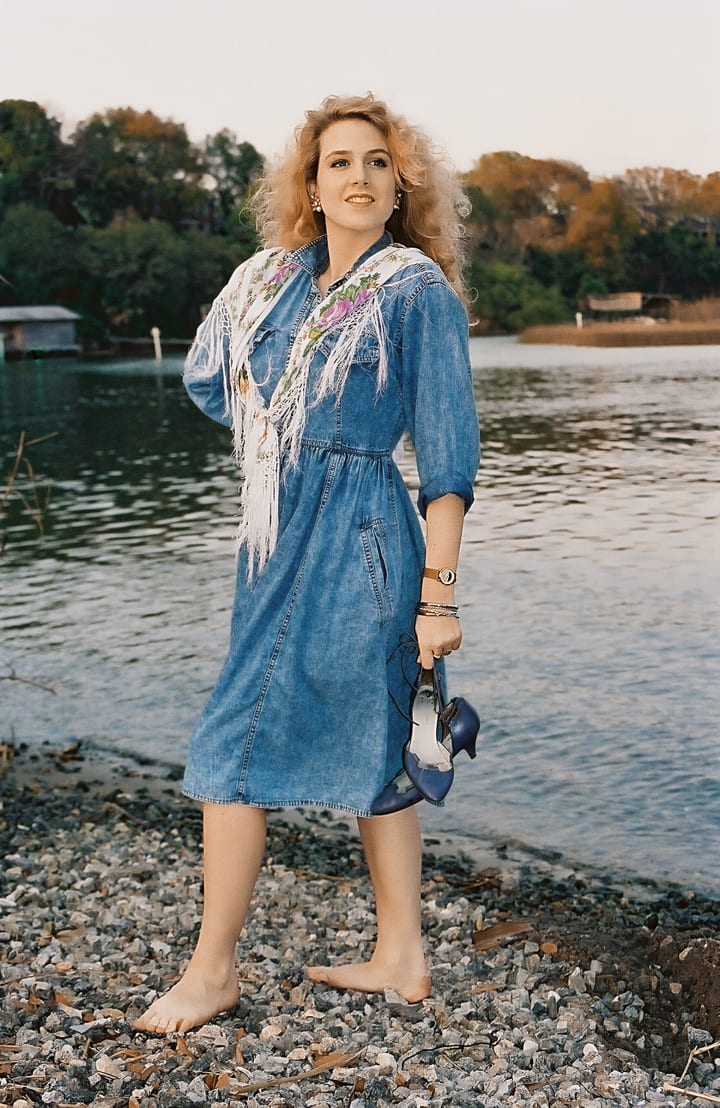
Be aware of any distracting objects behind your subject. A visible tree or bush can emerge like an extra limb growing out of the top of your subject's head. While it may look amusing, it surely won’t make a good impression on your subject. Scout around to find a pleasing background and interesting angle with no distracting objects in sight.
Try to avoid the midday sunlight since it can produce shadows and other unwanted effects. Photographing your subject in the early morning or late afternoon is much more desirable.
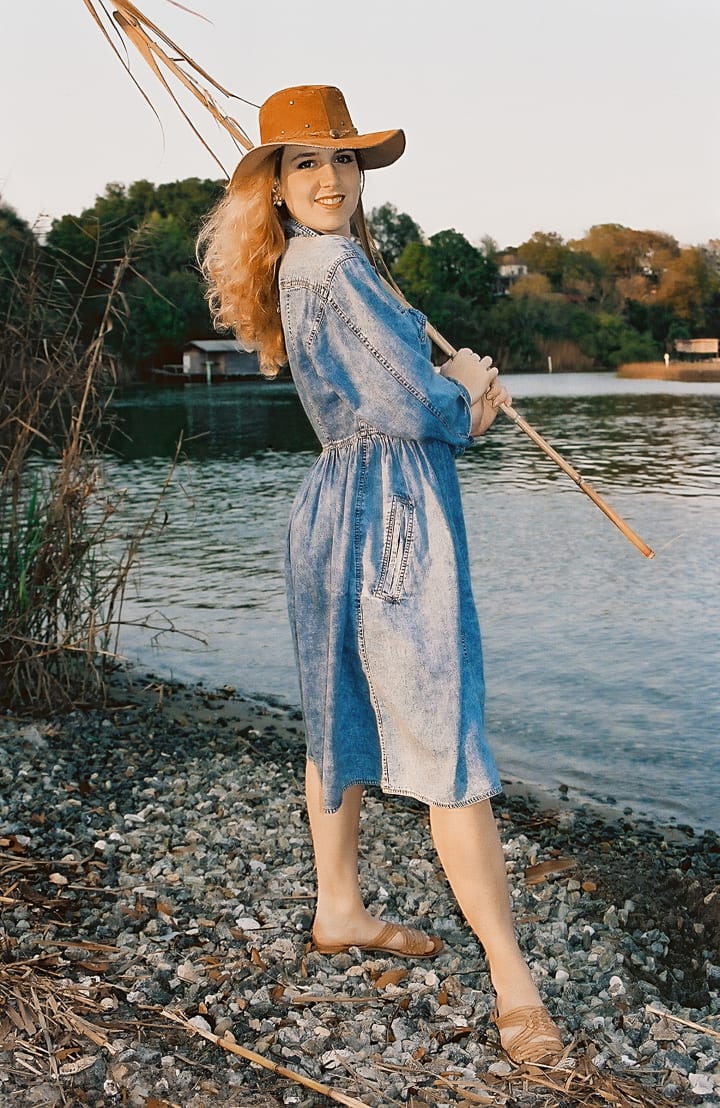
Controlling the natural light and correcting the white balance in your images can help enhance the beauty of your subject. Make it your objective to spark your creativity to see the world around you in a fresh and unique way.
Stop and think for a moment, photographic art is created by those with the skill to recognize beyond the ordinary, to view the world in a special way, and to express their perception for others to observe. So, practice and practice more, and don't be hesitant to try something new.
The world is bountiful in shapes, textures, colors, and patterns of light. So, remember, keep your composition simple, control the depth of field, and get rid of any unwanted objects that can distract from your subject.
About the Creator
Anthony Dezenzio
Anthony is the author of several books, including "My Berlin, and Chantal Sweet and the Old Lady of the Forest". He is currently working on a novel depicting the horrific events experienced by his mother during and after the fall of Berlin.
Keep reading
More stories from Anthony Dezenzio and writers in Photography and other communities.
The Lost Art of Effective Leadership Qualities
If everybody had the same mindset, there would be no need for leadership. But, although we are all created equal, it doesn’t work out that way. A handful will become leaders and all the others will become followers. You too, can become a leader if you learn to apply these methods and put them to work. They hold the key to success experienced by every great leader in history. To succeed, you must overcome fear, self-consciousness, and the feeling of being inferior to others.
By Anthony Dezenzio3 years ago in Motivation
My Year, in Prattling and Photos
It's been a year since... last year. Ironically, it seems I've found myself a new tradition of getting sick during the New Year holidays. At least, this year (that is, this inter-year period remarkable for its shiny decorations in the streets and houses, and closed supermarkets and pretty much everything), I'm doubtlessly doing better: I've managed to come visit my friends in Germany for Christmas (which I failed to do last year) and—after having some good quality time eating machanka, playing Munchkin and swinging machetes (the last one obviously crept into this checklist only for the sake of the phonological form)—I came back home via proverbial Deutche Bahn and probably less known Schweizerische Bundesbahnen, my body hosting a family of viruses, virions and who knows what other tiny critters somewhere inside my chest.
By Andrei Z.19 days ago in Photography
A Lifetime of Shakas
For more than three decades as a part-time freelance news and sports photographer in Hawaiʻi, I’ve captured countless moments across the islands — and a few on the mainland. Along the way, almost without realizing it, I built an ever-growing photo archive of people flashing the shaka sign.
By Tim Wrightabout 11 hours ago in Photography
How to Succeed at the Benson Directory®
Congratulations and welcome to the Benson Directory® employee #22391! As our newest call handler, you will have the privilege of speaking with dozens of unique and interesting people on a daily basis as well as the opportunity to earn bonuses for high performance. Contained within this handbook you will find a set of ease to follow instructions designed to help you settle in to your new role and begin paving the way to success.
By S. A. Crawford3 days ago in Fiction



Comments
There are no comments for this story
Be the first to respond and start the conversation.