
Artsy Fartsy
Painters know a thing or two about photography.
Editing starts long before a photo is ever taken. Every day, we are making thousands of edits to our lives. Choosing the turkey sandwich on brown bread instead of white, picking the darkly coloured orange instead of the lighter one with a green tinge. Choosing to wear your favourite t-shirt instead of the new sweater your grandmother gave you, the one with the too-cute fluffy white cats.

Some people are told they have an innate gift. These are the prodigies of the art world. The ones that seem capable of turning the most mundane, most boring subject into an absolute masterpiece. I’m not a prodigy. When I was young, my first camera was one of those disposable film cameras that you had to spin the dial on until it clicked. I would go through one in a day and then beg my mom to get them printed.

And then I was always so disappointed. Why wasn’t what I had seen through the camera lens what I saw in my photos? Where was the vibrancy, the beauty, the fine detailing? Why was it that everything was crooked, blurred or oddly framed?
The older I get the more my creativity has branched out from disposable cameras to drawing to writing. I love Pokemon, Digimon and Yu-Gi-Oh but I wanted monsters of my own. So, I would draw them, colouring them in with pencil crayon. For a while, I became completely obsessed with horses and designed one for every element. Fire, water, earth and so on. I don’t have any photos of those drawings so let me just tell you they were fat little ponies that I absolutely loved. My skills got better and better with practice. Anyone that thinks creativity just happens, hasn’t put the effort in moving from stickmen to realism.

My photography quality varies. Flowers, pets and zoo animals became easy subjects. Like many, I went through the phase of upping the contrast on my images. I liked the vibrant colours that would come out of it. The bright blues and greens that were missing from the days of the disposable. Today if you see a photo from me the most editing I did was cropping out my thumb or that weird shadow. I keep it basic. If I do feel the need to do more editing I use Paint, Microsoft Powerpoint, sometimes just the editing tools available on my phone.
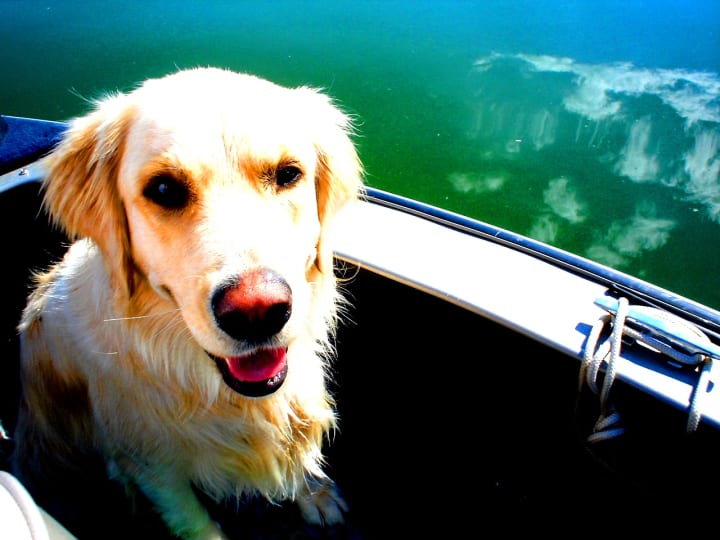
I’m much more likely to simply crop and post today. No filters. Job done.
If I can’t get the photo myself, I can scour the internet, books and magazines. I purchased a projector to help me quickly get down the details to further improve my drawing skills. The projector in its own right is a way of cropping images. The base of it is only 5x5 inches. When I’m getting ready to create a new painting or drawing I follow a few tips which can apply to photography and design just as easily.
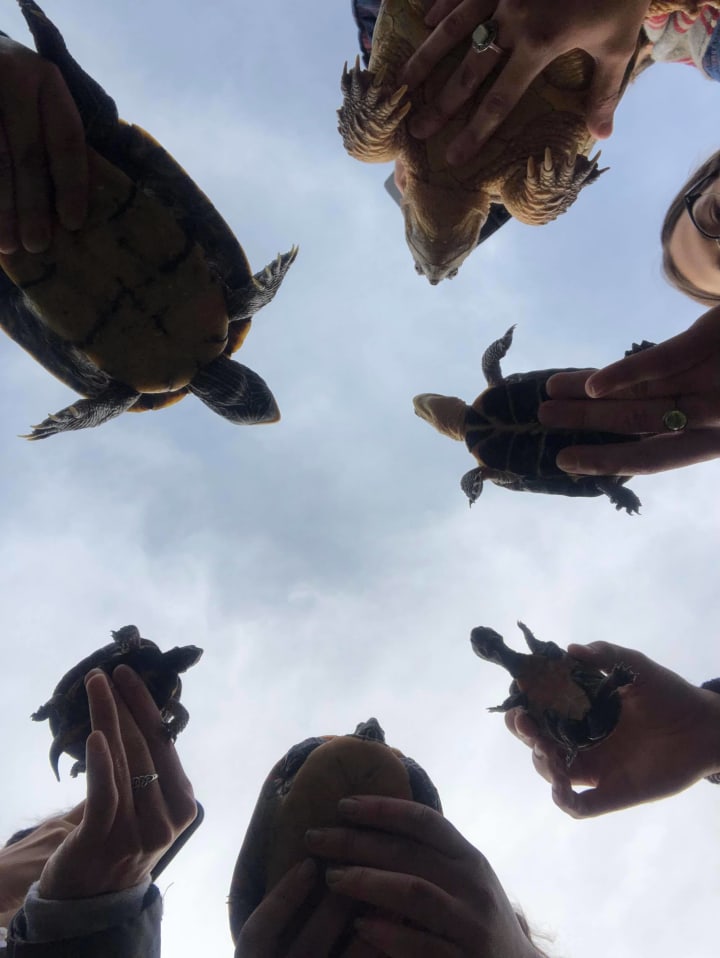
1. Experiment: You won’t know what is going to work best unless you try a number of different ideas. Instead of going for the first idea that pops in your head scribble out a number of quick drafts. Experiment with different angles, different cropping. Try out the filters, different text, multiple layouts.

2. Colour Theory: When I was starting to learn how to paint the best advice my teacher ever gave me was to start simple. Start with two colours. Black and white or two contrasting colours. As you grow, start expanding. Three colours. Try mixing your own—grayscale then the full spectrum using red, blue and yellow. Knowing colour theory will really help you figure out what pops.

3. Negative Space: So you have your subject perfectly framed but what about all that space around your subject? What is happening in the background and the foreground? Are there layers of perspective or is it a flat two dimensional image? Is your subject a small spot on the canvas or should it be zoomed way in until there is no negative space?
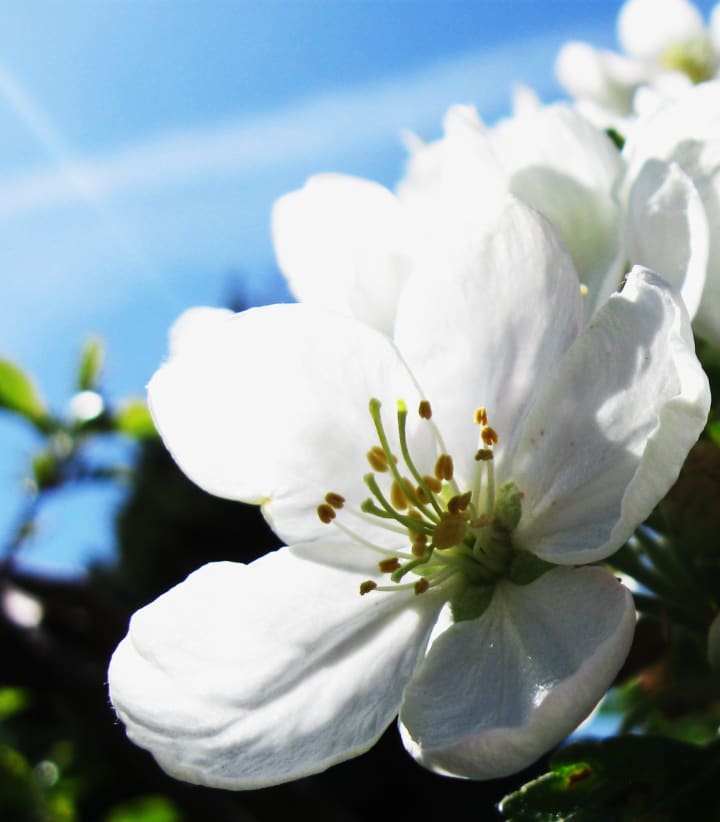
4. Rule of Thirds: I always keep this rule in the back of my mind. Basically, divide your paper or working surface into a three-by-three grid. Now, use this grid when decided how to place your objects. The intersecting lines are the focal points of any image. So instead of centering your subject, try placing them on one of those intersecting lines.

Of course, I am not a professional photographer. I’m a painter and creative writer, future ecologist-in-training. And like everyone else except for my great uncle, instead of a disposable camera I use my cell phone now.
Okay, yes, you are right. I can’t capture the feel of the insanely beautiful rocky mountains. I can’t get the perfect picture of that moose I saw in the field one day. There is definitely no way I’m going to get an amazing shot of a bird perched on the top of a tree. But at least I can separate myself from the lens and still enjoy all of it in the moment.
And maybe paint a few of them too. Abstract or not.

Call it artsy fartsy if you want. Styles change and so do preferences. Sometimes it’s better, sometimes it’s worse. I don’t expect to go viral on Vocal or Twitter either way. If you still want to go for that perfect shot here are my tips:
1. Take LOTS of photos. One of them is bound to be something worthwhile.
2. Use the equipment within your means. I don’t have the money for a fancy camera so I don’t have one.
3. Play to your strengths. I can’t get the fantastic bird photo but I can find a similar photo and create a drawing or painting with my own unique touch.
4. And remember the four ideas I mentioned earlier: the rule of thirds, negative space, colour theory and, most importantly, keep experimenting!

____________
I hope you enjoyed my rant! Please support my work with a heart, maybe a tip, and check out my other articles! Let me know what you want to learn about next on FB, Twitter, or Insta @akelseyreich.
Everything is connected. Written by Kelsey Reich on March 4/2021 in Ontario, Canada.
About the Creator
Kelsey Reich
🏳️🌈 Life-long learner, artist, creative writer, and future ecologist currently living in Ontario.
Find me on Instagram, and buy me a coffee @akelseyreich!
Your support is appreciated!
Keep reading
More stories from Kelsey Reich and writers in Photography and other communities.
Anthro Universe
The bar didn’t have much to offer other than hot broth and eye-watering moonshine. It didn’t help that the alligator bartender referred to both as swamp water. Fifty-fifty chance you would actually get what you were looking for. Rob, an old tiger, took a cautious sniff of his cup. Not liking the odour he switched cups with his human friend, Sheila. Sheila took a swig, her face expressionless as she focused on writing in her little black notebook.
By Kelsey Reich5 years ago in Futurism
My Year, in Prattling and Photos
It's been a year since... last year. Ironically, it seems I've found myself a new tradition of getting sick during the New Year holidays. At least, this year (that is, this inter-year period remarkable for its shiny decorations in the streets and houses, and closed supermarkets and pretty much everything), I'm doubtlessly doing better: I've managed to come visit my friends in Germany for Christmas (which I failed to do last year) and—after having some good quality time eating machanka, playing Munchkin and swinging machetes (the last one obviously crept into this checklist only for the sake of the phonological form)—I came back home via proverbial Deutche Bahn and probably less known Schweizerische Bundesbahnen, my body hosting a family of viruses, virions and who knows what other tiny critters somewhere inside my chest.
By Andrei Z.12 days ago in Photography
The People We Meet on Vacation: Moments, Connections, and Lasting Impressions
The People We Meet on Vacation: Moments, Connections, and Lasting Impressions Vacations are more than a break from daily routines. They are a unique social experience where people from different backgrounds cross paths in unexpected ways. The people we meet during a holiday often leave strong impressions, even if the interaction lasts only a few minutes. These encounters can shape memories, influence perspectives, and sometimes turn into lifelong friendships. Understanding who we meet on vacation helps explain why travel feels so meaningful to many people.
By America today a day ago in Photography


Comments
There are no comments for this story
Be the first to respond and start the conversation.