
10 Simple Photo Editing Tips for a Faster Workflow
10 Simple Photo Editing Tips for professionals


If you've been doing photography for a time, you've most likely built some sort of post-processing system. Of course, getting the photo right on camera is ideal, but since this isn't always possible, having a simple, simplified post-processing approach can save time and hassle.
Although the actual workflow procedure varies from photographer to photographer, and sometimes even from image to image. If you follow a routine, you'll not only speed up your editing, but you'll also prevent losing valuable pixel data if you photograph with jpegs.
To speed up your photography editing workflow here are the few best tips discussed in this article.
- To save time, fix your images in-camera

Taking a photo with the knowledge that you'll have to change anything later in post-production is common. You don't have to correct anything afterward if you can fix it now in-camera. You may modify the exposure with a quick turn of a dial. To get a closer crop, zoom in. Make that horizon line straight. It's preferable to mess with straightening it in post-production. Especially if you have to manually modify 100 horizon lines.
You'll be able to make changes later. But why put something off till tomorrow when you can do it now? Slow down in the field and look at the scene to save time in post-production. To acquire the shot you desire, you'll generally need to take fewer shots.
The less post-processing you have to do, the closer the in-camera image is to your final image.
2. Use Import/Export Software
Set up your editing software to run in the background. Lightroom offers good import and export capabilities. You can also create a custom preset that applies your preferred import parameters. You can modify parameters later, but when you import, you're laying the groundwork for your post-processing edits.
You can also export your work once you've finished. You can apply sharpness to the output and rename photos. Lightroom makes the adjustments for you. You don't need to consider it.
3. Create a system to help find your images quickly

You'd probably remember where you stored them if you only had a couple. However, after 1,000 (or 100,000) photographs, you'll require a storage system.
Place files in a location where you'll be able to discover them later. It doesn't matter what your system is; what matters is that you have one.
You can add global keywords and metadata, such as titles and copyright information, during the import process. Keywording is a pain, but without it, you won't be able to find your photographs. You will save a lot of time later if you take a few seconds to apply keywords during import.
It's not just about speedier post-processing when it comes to speeding up your workflow. It's all about having photographs available when you need them.
4. Only the best images should be edited
Photographers who rush through post-production don't spend enough time on each image. They only work with the very finest.
This necessitates the implementation of a successful culling method. Culling entails getting rid of images that didn't work and focusing on the ones that did.
Use hearts, colors, flags, or stars to rank your favorites. Make an initial selection from your photographs by rapidly going through them. Then do it again, this time focusing on your favorites. You don't have to utilize this method, but you should have one.
A program like Photo Mechanic could be utilized to speed up the process. This is a program that has been created to expedite the culling process.
Your workflow will be substantially accelerated if you only post-process the finest of the best.
5. Use Keyboard shortcuts
The process of making photo edits might be tedious. Make use of any keyboard shortcuts that your post-processing program offers.
You've saved time and energy if you can do something with one keystroke that would typically take two. It may not seem like much, but consider the thousands of photos in your archive. When multiplied by 1000 or 100,000, a one-second keystroke becomes a significant amount.
Use Lightroom's Auto-Advance feature, for example. Place a checkbox next to Photo>Auto-Advance to enable it. Lightroom automatically proceeds to the next image when you add a flag or star during culling. When you cull photographs, this saves you hundreds of keystrokes.
6. For quick adjustments, use presets and auto.
It's easier to make minor adjustments than to start fresh. Use auto settings or presets to begin post-processing.
In most cases, the auto-icon resembles a magic wand. Your image is analyzed and adjustments are made by the software. By pressing the auto option in the Basic panel, you can see what settings Lightroom proposes. You can always undo the adjustments if you don't like the outcome.
With a single click, presets or filters give your photos a new look. You can either download or create your filters. You can save your favorite settings as a preset in Lightroom. To do so, go to the Develop module and click the "+" next to the Presets panel. Choose to Create Preset from the drop-down menu.
7. Make use of batch editing
Taking a series of shots in the same scene or with the same subject is a common occurrence. The lighting and camera settings will be comparable. Each image doesn't need to be post-processed independently. Batch editing is a better option.
Batch editing refers to the process of post-processing multiple photos at once.
You can achieve this in Lightroom in a couple of ways. You can use the Sync button or copy and paste the settings.
Start editing one photo first. Then select the image you've edited and go to Edit>Copy (Ctrl or C) to copy your settings. You'll be asked the settings you want to replicate in a dialogue box. You have the option of checking all or specific settings.
Then paste the settings Edit>Paste (Ctrl or V) onto an unprocessed image.
To sync settings, choose all photographs that are identical to the ones you just changed. In the Develop module, click the Sync button. That concludes our discussion. All of the photographs will have your settings applied to them. It makes no difference if you chose two or two hundred.
8. Make Your Editing Process More Efficient
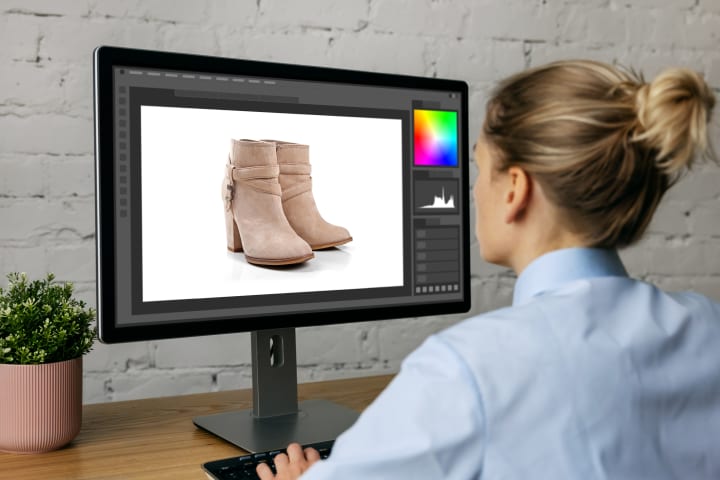
Have a system in place once you begin editing photographs. It makes no difference how that system looks; all that matters is that you make the same adjustments in the same order. In Lightroom, some photographers jump right to the Develop Module panel. They start with the basics and work their way down the list.
Setups that don't apply to your photographic style can be skipped. Choose the options that are most important to you and make changes in the same order. Change the order if you find yourself having to return to a setting frequently. Dehaze, for example, often darkens the image. This necessitates a change in exposure. You'll be able to edit faster if you can automate as much as possible.
9. On the Go Editing
You can create a mobile post-processing workspace on a laptop or mobile device. This won't necessarily take the place of your primary workspace, but it will allow you to begin editing. You should be able to import your photographs into Lightroom, add keywords, and begin culling by the time you get home.
10. Make a decision
A digital image can be edited in a thousand different ways. When you're decisive, you'll be most efficient in post-production. It's not a bad idea to experiment with a couple of different post-processing techniques. However, you must then make a decision.
It's easy to make a decision when you only have two options. Which one is better, this or that?
There is no one-size-fits-all approach to image post-production. It is simply important that you enjoy it.
About the Creator
Isabella
Content Writer
Keep reading
More stories from Isabella and writers in Photography and other communities.
10 Wedding photography editing styles to wow your clients
Every wedding photographer has their style of wedding photo editing. Some photographers prefer traditional and classic aesthetics, while others want to keep up with the latest trends. Your wedding photo editing technique is one way you may grow as a photographer.
By Isabella4 years ago in Photography
Leavie Scott
ORDER HERE Chicago – A Radiant Urban Masterpiece by Leavie Scott Arts & Culture Review – Feature Story In his striking new work Chicago, photographer Leavie Scott captures the soul of the Windy City with a level of vibrancy and emotional resonance that is impossible to ignore. The image immerses viewers in a dazzling skyline bathed in mesmerizing tones of purple, pink, and gold—a palette rarely seen in traditional urban photography and one that instantly distinguishes Scott’s artistic voice.
By Organic Products 3 days ago in Photography
Curious Photography Tips Every Beginner Should Try
Have you ever wondered why two people using the same camera can produce completely different photos? The answer often lies in how well the photographer understands the camera itself. For beginners, cameras can seem filled with confusing buttons, dials, and settings. But what if those settings are actually the key to better photos?
By Craig Spiesmanabout 9 hours ago in Photography
I wanted to title this something different, but worried that my chosen title might cause problems entering the United States in the future so this is the new title. It's the greatest title. No one has ever written a title better than this. (All titles unrelated to content).
Let me be honest. I am finding this difficult. Now, I like a challenge, a stretch, a bit of an obstacle course. “Write about the decline of the British Empire in the form of a narrative poem in which your protagonist is an artichoke” I read, and flex my fingers. “Write a haiku to evoke the sensation of sibilance using only the first half of the alphabet.” “Well”, I think to myself, “this should be fun.” But “write about a system that isn’t working”? A system that isn’t working? Now? In 2026? ONE system? My favourite system that isn’t working? The sexiest system that isn’t working? The one giving me the most angst day to day? The one giving me the most existential dread? I am, as I say, finding this difficult. I will own that I have contemplated writing a thousand words on why the steady “all on” setting on my fairy lights is the EIGHTH of seven options which must be sequentially activated to get there, because that is a system that some fool came up with and it definitely doesn’t work, and now who is paying the price, eh? But how can I write about my fairy lights when…. When…. When….
By Hannah Moore7 days ago in Humans


Comments
There are no comments for this story
Be the first to respond and start the conversation.