
Who Is Most Likely to Succeed? Traits That Predict Achievement
"Exploring the Key Characteristics Behind Long-Term Success in Life and Work"
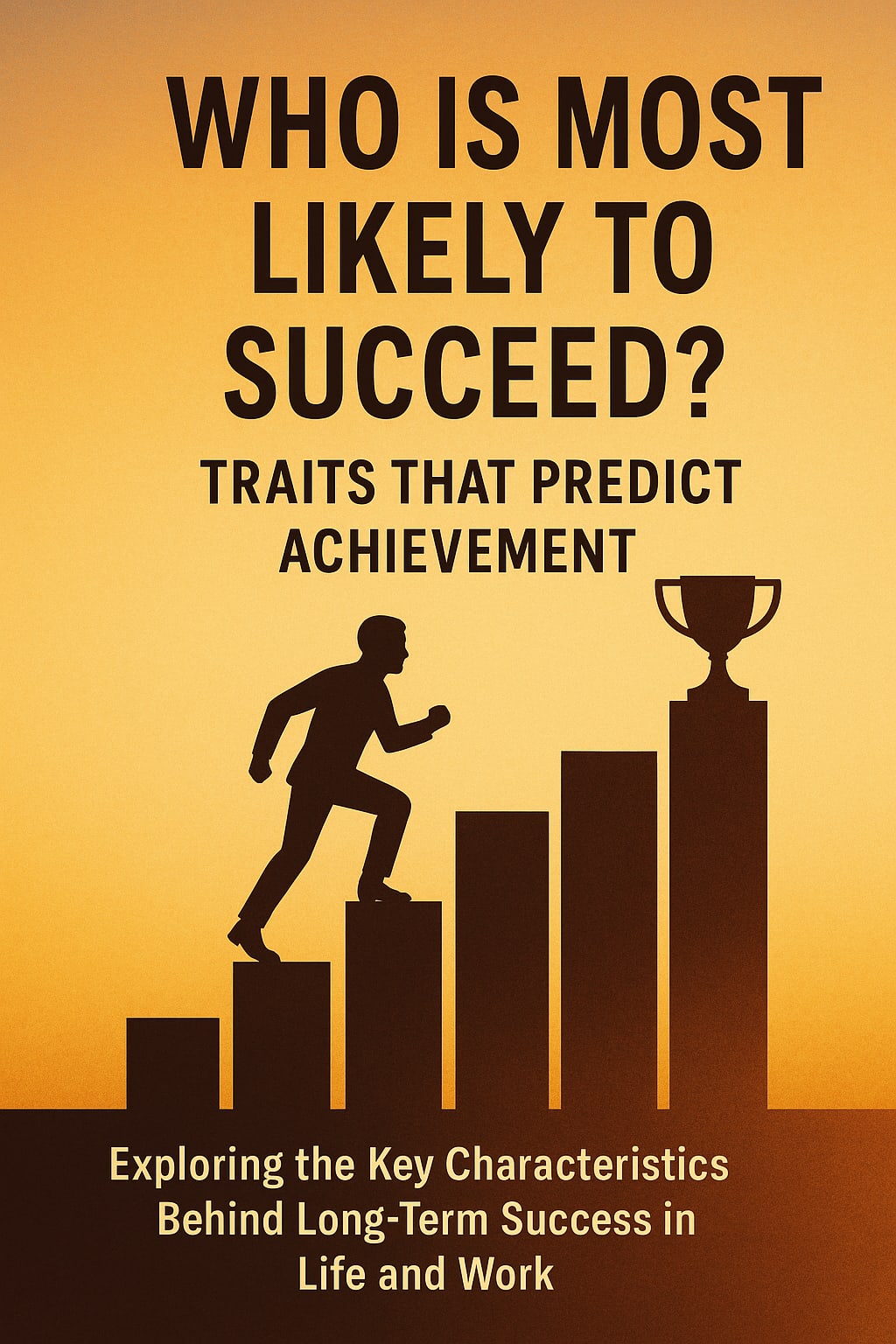
Success is often seen as a product of talent, luck, or timing—but dig deeper, and a more nuanced picture emerges. What truly separates high achievers from the rest? Is it intelligence? Opportunity? Personality? As scientists and psychologists continue to study human behavior, a set of common traits consistently rise to the top, painting a clearer picture of what drives long-term success in life and work.
One of the most compelling traits linked to achievement is grit—a term popularized by psychologist Angela Duckworth. Grit is the ability to persevere through obstacles, maintain motivation over long periods, and continue pursuing goals despite setbacks. In her research, Duckworth found that grit was a stronger predictor of success than IQ or talent. West Point cadets who scored higher on grit questionnaires were more likely to survive the grueling first summer of training. National Spelling Bee contestants with more grit studied longer and advanced further. Grit, it seems, is the glue that holds ambition and execution together.
Closely related to grit is conscientiousness, one of the Big Five personality traits. People who score high in conscientiousness tend to be organized, responsible, and dependable. In longitudinal studies, conscientiousness has consistently predicted job performance, academic success, and even long-term health outcomes. Employers value it because conscientious workers are more likely to show up, follow through, and complete tasks thoroughly. Unlike raw intelligence, conscientiousness is less about ability and more about behavior—and it’s something that can often be cultivated through habits and self-discipline.
But grit and conscientiousness alone don’t tell the whole story. Emotional intelligence (EQ)—the ability to recognize, understand, and manage emotions in oneself and others—is a powerful force behind effective leadership and interpersonal success. Unlike IQ, which is relatively fixed, emotional intelligence can be developed over time. Leaders with high EQ are better at motivating teams, navigating conflict, and adapting to change. In a rapidly evolving workplace, where collaboration and communication are critical, EQ often determines who rises through the ranks.
Another less obvious but equally important trait is curiosity. People who are intrinsically motivated to explore, ask questions, and seek knowledge tend to be lifelong learners. Curiosity fuels innovation and creativity—it’s the spark that leads to breakthroughs. In an age defined by constant technological and social change, curiosity is a key driver of adaptability. When workers are curious, they are more likely to engage in proactive learning, solve complex problems, and envision new possibilities.
Then there’s resilience, the trait that allows individuals to bounce back from failure. In a world where success is rarely a straight line, the ability to recover from disappointment and try again is crucial. Psychologist Carol Dweck’s concept of a growth mindset—the belief that abilities can be developed through effort—has gained traction in education and business alike. Those with a growth mindset view failure not as a dead end, but as a learning opportunity. They embrace challenges, persist in the face of difficulty, and ultimately, grow stronger from adversity.
Passion also plays a vital role. It energizes action, sustains motivation, and helps individuals maintain focus over the long term. While fleeting interest might drive short-term effort, deep passion fosters commitment. The most successful people often speak of a "calling"—something they feel compelled to do, not because of external rewards, but because it aligns with their values and identity. This intrinsic motivation becomes a powerful engine for persistence and excellence.
Interestingly, while success is often associated with individual traits, social support and relationships cannot be overlooked. Studies show that people with strong social networks tend to live longer, experience less stress, and perform better at work. The ability to build and maintain meaningful relationships—whether through empathy, trust, or communication—often amplifies other traits like resilience and emotional intelligence. No one truly succeeds alone.
Finally, self-efficacy—a belief in one’s ability to accomplish goals—rounds out the list. When individuals believe they can influence outcomes through their own actions, they are more likely to set challenging goals, take initiative, and persist through difficulties. This confidence is not blind arrogance; it’s grounded in experience and reflection. Over time, small wins build a sense of capability that becomes self-reinforcing.
So who is most likely to succeed? It’s not necessarily the smartest person in the room, the wealthiest, or even the most charismatic. It’s the one who combines grit, conscientiousness, emotional intelligence, curiosity, resilience, and passion—with a strong belief in themselves and support from others.
While some traits are innate, many can be nurtured. Habits, environments, relationships, and mindsets all influence the development of these qualities. The path to success isn’t reserved for a lucky few—it’s open to anyone willing to grow, adapt, and persist. The science is clear: success is less about where you start, and more about how you continue.
About the Creator
Keep reading
More stories from Zeeshan Khan and writers in Motivation and other communities.
"Building Confidence: Steps to a Stronger You"
Emma’s Journey: Building Confidence, One Step at a Time Emma always admired people who seemed confident and sure of themselves. They spoke up without hesitation, took on challenges with excitement, and carried themselves with a calm strength that Emma wished she had. But for most of her life, Emma had felt the opposite — shy, unsure, and often overwhelmed by self-doubt.
By Zeeshan Khan10 months ago in Motivation
I Woke Up at 5 AM for 7 Days — Here’s the Honest Truth Nobody Talks About
I remember staring at the ceiling at 4:57 AM, my alarm threatening to shatter the silence of my room. Two minutes away from the most agonizing hour I had ever voluntarily committed to, my mind screamed at me: Go back to bed. Sleep is safe. Success can wait.
By Imran Pisani6 days ago in Motivation


Comments (1)
You've really dug into what makes high achievers tick. I've seen this in action. Take my buddy who started a business. He had grit, kept going despite failures. Conscientiousness helped him stay organized. And his EQ let him handle customers well. It makes me wonder, which of these traits do you think is hardest to develop? And how can we start cultivating them in ourselves?