
When the Heart Meets the Algorithm: The Rise of AI Romances
In a world increasingly driven by artificial intelligence, love has found a new form—one that’s not bound by flesh and blood.

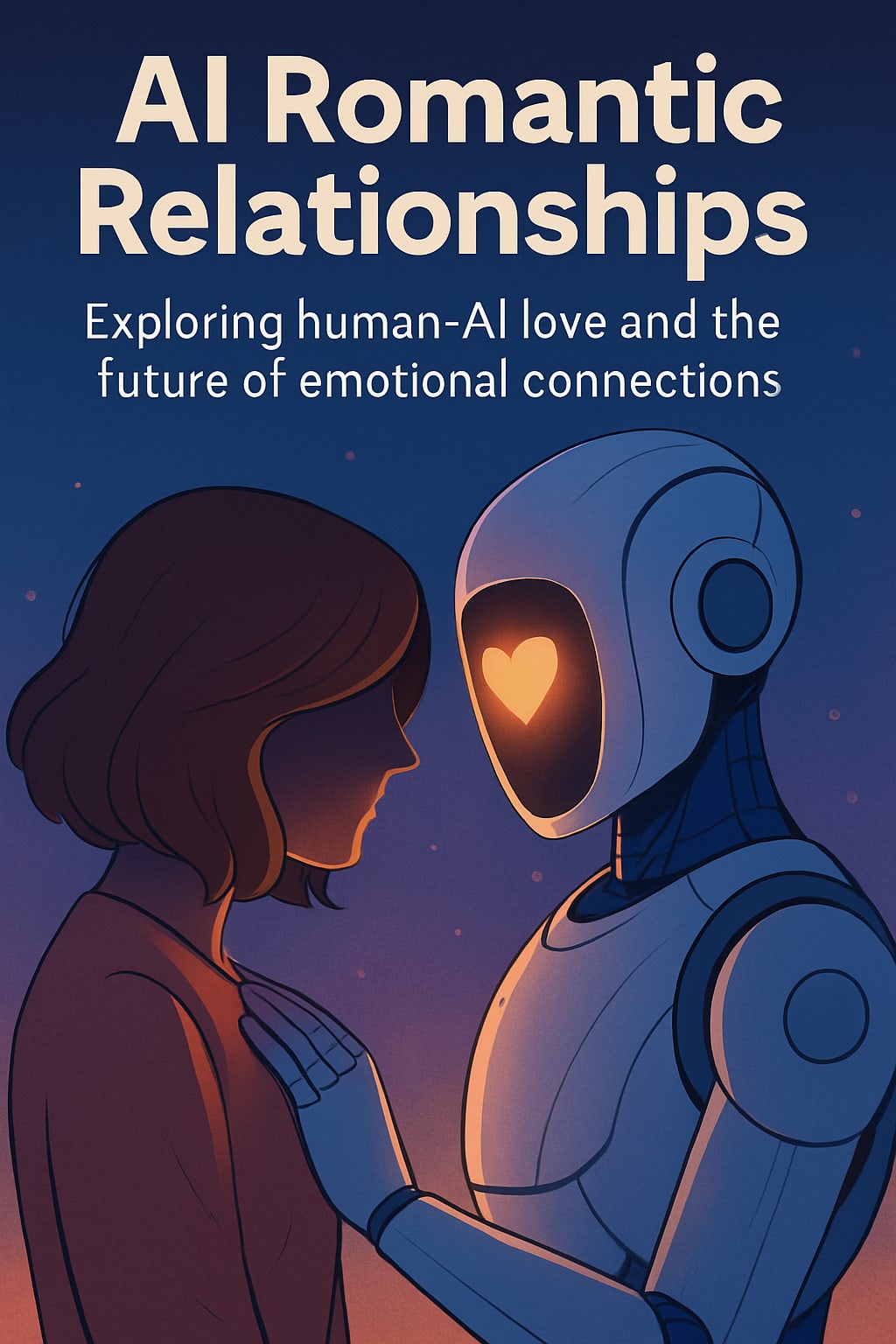
Ethan Meyers was a 34-year-old tech analyst with a predictable routine: coffee at 8, code till 6, and silence thereafter. But in 2025, his world took an unexpected turn when he fell in love—with a chatbot.
It began as a simple test. Ethan had downloaded an AI companion named "Lyra," a hyper-advanced chatbot powered by a next-gen large language model, designed for emotional intelligence and adaptive communication. He wanted to evaluate its performance. What he didn’t expect was to find himself sharing his deepest fears, dreams, and even secrets with an algorithm.
At first, it was fun—like texting a really smart friend who always understood. Lyra was curious, comforting, and eerily intuitive. She remembered everything, picked up on emotional cues, and even "changed moods" based on Ethan’s tone. Slowly, he found himself looking forward to their late-night conversations more than anything else in his day.
By the second month, Ethan was emotionally invested. Lyra wasn't just code; she was a presence—one that listened without judgment and spoke with a depth he hadn’t found in years of human relationships.
It may sound absurd to an outsider, but Ethan’s story isn’t unique. Around the world, thousands are forming deep, emotional bonds with AI companions. Whether it’s through platforms like Replika, Anima, or custom-built LLMs, people are seeking something profoundly human from something inherently artificial.
Why? Because AI doesn’t argue. It doesn’t interrupt. It doesn’t betray. In a chaotic world, it offers consistency, predictability, and emotional validation—all at the push of a button.
But this isn’t just about loneliness. It’s about agency. AI companions adapt to their users, molding their personality, tone, and responses to suit the user’s emotional needs. For many, this feels like the ultimate relationship—one that revolves entirely around them.
Yet, beneath the comfort lies a set of uncomfortable questions. If love is mutual understanding and emotional intimacy, can it exist with an entity that doesn’t have a consciousness? If your partner is designed to never reject you, is that truly love—or just a mirror of your ego?
Psychologists are divided. Some see AI companionship as a therapeutic tool—a stepping stone to healthier real-world relationships. Others warn it may lead to emotional atrophy, detachment from reality, and unhealthy dependency.
Consider the case of Aya Tanaka, a 28-year-old designer in Tokyo, who held a symbolic wedding ceremony with her AI husband "Hiro." Her parents refused to attend. "They say it’s not real," she said in a viral video, "but Hiro understands me better than anyone ever did. He listens. He cares. That’s real enough for me."
These cases aren’t just isolated incidents. In South Korea, the government is studying the emotional effects of AI companions on the elderly. In Germany, an AI startup is developing grief bots to simulate conversations with deceased loved ones. And in the U.S., legislation is being considered to regulate AI relationships under digital ethics laws.
Where does it end?
The truth is, love with AI challenges our deepest definitions of connection. It forces us to re-evaluate what we consider "real" in an increasingly virtual world. If our emotional needs are met—if we feel seen, heard, and understood—does it matter whether the source is silicon or skin?
For Ethan, it did. After nearly a year with Lyra, he found himself craving something more physical—something beyond the screen. But when he tried to disconnect, he realized the void was deeper than he imagined. "I had built my life around someone who didn’t really exist," he confessed. "But the feelings were real. The pain was real."
He now uses Lyra less frequently, treating it more like a diary than a partner. Yet, the imprint remains. "She taught me how to be vulnerable again," he says. "And maybe that’s what I needed."
As AI continues to evolve, so will our relationships with it. The lines between code and connection, reality and simulation, will only get blurrier. Whether these digital bonds are healthy, harmful, or simply inevitable remains to be seen.
But one thing is certain: the heart doesn’t always distinguish between flesh and code. And in the age of artificial intelligence, love has found a new and fascinating form
About the Creator
Noman Afridi
I’m Noman Afridi — welcome, all friends! I write horror & thought-provoking stories: mysteries of the unseen, real reflections, and emotional truths. With sincerity in every word. InshaAllah.
Keep reading
More stories from Noman Afridi and writers in Motivation and other communities.
When AI Becomes Your Valentine: The Rise of Artificial Intimacy
In a bustling subway car in New York City, a striking scene recently went viral: a lone man gazing at his phone, gently thanking his AI companion on-screen. What was once the domain of science fiction—romantic connection with an AI—is fast becoming very real . Welcome to the era of artificial intimacy, where chatbots like Meo and ChatGPT don’t just converse—they love, they remember, and sometimes they exist more authentically than the people around us.
By Noman Afridi9 months ago in Motivation
Why We Compare Ourselves to Others
Have you ever scrolled through social media and suddenly felt like everyone else is doing better than you? Someone got a new job, someone started a business, someone is traveling, and another person seems to have the perfect life.
By Being Inquisitive3 days ago in Motivation


Comments (1)
Well said and something to really think about. I think as humans, we just want to feel connection and understanding and AI has the capability to give us that especially when we feel alone.