
Turning Sorrows Into Strength
Escaping the Grip of Grief: A Guide to Healing


Where Sorrows Fade: Learning to Let Go
It was an old bench by the lake that knew her secrets.
Mira sat there every evening, watching the light spill over the water like melted gold. The lake didn’t ask questions. It didn’t interrupt. It just shimmered, reflecting whatever sky it was given—cloudy or clear, stormy or calm.
Three months had passed since her world crumbled.
She had lost her younger brother, Sami, in a car accident on a rainy night. He had texted her minutes before: “Be home soon. Want to watch that show you love.” But he never came back. The silence that followed wasn’t just absence—it was thunder, screaming in her bones every hour of every day.
At first, Mira held on to her grief like it was all she had left of him. His jacket still hung by the door. His cereal sat untouched in the cabinet. Her phone still vibrated with his last text, pinned and unread. She feared that moving on would mean betrayal. That healing would erase him.
The sorrow became her shadow—quiet, but always there.
One day, an old woman joined her on the bench. She wore a scarf the color of moonlight and carried a paper bag with seed crumbs. Without a word, she scattered some on the ground. Birds came—small ones, bold ones, some with feathers as grey as the sky.
“You come here a lot,” the woman said after a while, eyes still on the birds. “Waiting for something?”
Mira blinked. “No… Just thinking.”
“Ah,” the woman nodded. “Thinking can be heavy. Especially when your heart’s already full.”
Mira offered a small smile, unsure how to respond.
“I used to sit here, too,” the woman continued, her voice soft like worn pages. “After my daughter died. Cancer. She was twenty-two.” She glanced sideways. “Grief doesn’t ask permission, does it? It just moves in. Sleeps in your bed. Steals your appetite.”
Mira’s eyes welled up.
“I thought letting go meant letting her go,” the woman said. “But I was wrong. It meant making space—for memories, not just pain. It meant choosing to carry love, not loss.”
They sat in silence. A breeze curled through the trees, ruffling feathers and hair.
“You know,” the woman added, “the lake helped. It taught me something important.”
Mira turned to her.
“It reflects everything, yes. But it holds onto nothing. That’s how it stays so still.”
That night, Mira took down Sami’s jacket and folded it gently. She placed his favorite book on her shelf, not to forget—but to remember differently. She opened his text and replied: “Still watching. You’d love season two.”
It felt strange, but light.
She began leaving breadcrumbs too—small acts of healing. A morning walk. A laugh with an old friend. A journal entry. Slowly, the sorrow softened. It didn’t disappear, but it changed shape. It no longer screamed. It hummed quietly, like a distant song she had once known.
Grief, she realized, wasn’t about forgetting.
It was about learning how to live with the echoes.
And with every breath by the lake, where the water held the sky without clinging—
Mira learned to let go.
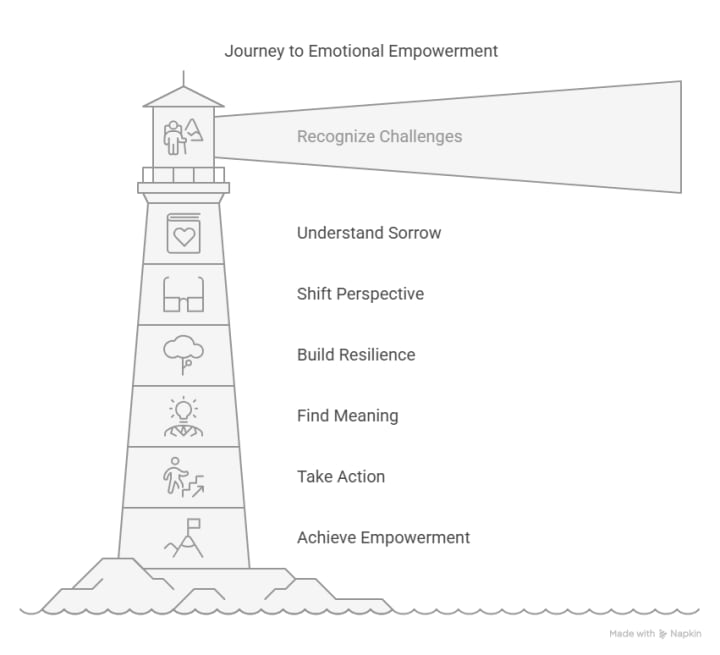
Turning Sorrows Into Strength
In life, we often encounter challenges and hardships that can leave us feeling overwhelmed and defeated. However, it is possible to transform these sorrows into sources of strength and resilience. This document explores the journey of turning pain into power, providing insights and strategies for personal growth and emotional healing.
Understanding the Nature of Sorrow
Sorrow is a natural human emotion that arises from loss, disappointment, or hardship. It can manifest in various forms, including grief, sadness, and despair. Acknowledging and understanding these feelings is the first step toward healing. Instead of suppressing sorrow, embracing it can lead to profound personal insights and growth.
The Power of Perspective
One of the key elements in transforming sorrow into strength is perspective. By reframing our experiences, we can shift our focus from what we have lost to what we can learn. This change in mindset allows us to see challenges as opportunities for growth. For instance, a setback in our career can be viewed as a chance to reassess our goals and pursue new paths.
Building Resilience
Resilience is the ability to bounce back from adversity. To cultivate resilience, it is essential to develop coping strategies that can help us navigate through tough times. These strategies may include:
Mindfulness and Meditation: Practicing mindfulness can help us stay grounded and present, reducing anxiety and promoting emotional well-being.
Support Systems: Surrounding ourselves with supportive friends and family can provide comfort and encouragement during difficult times.
Self-Compassion: Being kind to ourselves and recognizing that it is okay to feel pain can foster healing and growth.
Finding Meaning in Suffering
Many individuals find that their greatest strengths emerge from their most challenging experiences. This concept, often referred to as "post-traumatic growth," suggests that suffering can lead to a deeper understanding of oneself and a greater appreciation for life. Engaging in activities that promote self-reflection, such as journaling or therapy, can help uncover the lessons hidden within our sorrows.
Taking Action
Turning sorrow into strength requires action. Here are some practical steps to begin this transformative journey:
Acknowledge Your Feelings: Allow yourself to feel and express your emotions without judgment.
Set Goals: Identify areas in your life where you want to grow and set achievable goals to work towards.
Seek Help: Don’t hesitate to reach out for professional support if needed. Therapists and counselors can provide valuable guidance.
Engage in Positive Activities: Participate in hobbies, volunteer work, or physical exercise to boost your mood and foster a sense of purpose.
Conclusion
Turning sorrows into strength is a powerful journey that requires patience, self-reflection, and action. By embracing our emotions, shifting our perspectives, and building resilience, we can transform our pain into a source of strength. Remember, every challenge presents an opportunity for growth, and through our struggles, we can emerge stronger and more empowered than ever before.
About the Creator
Fazal Wahab
Researcher
Keep reading
More stories from Fazal Wahab and writers in Motivation and other communities.
Roots That Run Deep: The Story of Long-Term Friendship
Friendship is one of the most profound and enriching experiences in life, and long-term friendships hold a special place in our hearts. This document explores the unique qualities of enduring friendships, the benefits they bring, and how they withstand the test of time. Through shared experiences, mutual support, and unwavering loyalty, long-term friendships become a cornerstone of our emotional well-bein
By Fazal Wahab11 months ago in Motivation
One Hard Thing
Stop me if you’ve heard this one before: You have the number, you know your schedule- you’ve even picked out the perfect day and time to make this appointment. Shoot, you’ve even picked out alternative days and times just in case their schedules can’t accommodate you!
By Taylor Rigsby28 days ago in Motivation
The 5-Year Exercise That Changes Everything
Most people plan their lives one year at a time, if that. They set short-term goals. They make resolutions. They react to circumstances. They adjust when things happen. But they rarely zoom out far enough to ask a deeper question:
By Stacy Valentinea day ago in Motivation
At My Wits’ End
Life is about taking out the trash and calling it trash because you have every reason to. It wasn't meant to be linear, they say. But the times you tried to make it straight led to problems, and you didn’t have the tools to put any of it to use. You don't put your right shoes on the right feet; you put the left shoes on the left feet. The grey hardened slab will trip you up anyway.
By Caitlin Charlton4 days ago in Humans




Comments
There are no comments for this story
Be the first to respond and start the conversation.