
Tranquility of life
The more you think the more you Rise

Tranquility of Life
The more you think, the more you rise
There was a quiet village at the edge of the mountains, surrounded by trees, rivers, and birds that sang gently every morning. People in the village lived simple lives. They worked in fields, raised animals, and told stories by firelight. They were not rich in gold, but rich in peace. No wars touched them, and no hunger stayed for long. It was a place many had forgotten, yet it had something that many people in the cities had lost — tranquility.
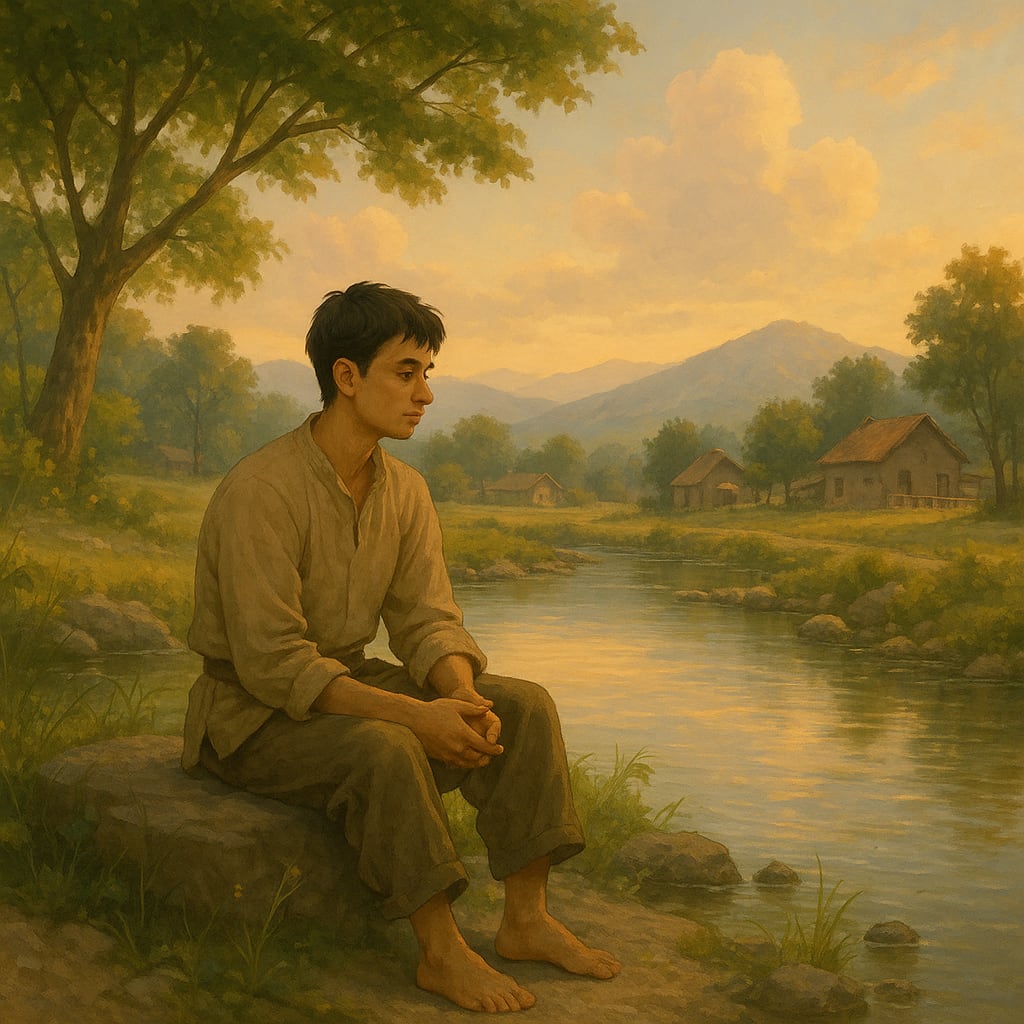
In this village lived a young man named Mohez. He was kind, quiet, and thoughtful. He helped his father in the fields, took care of his younger sister, and often spent time sitting by the river, watching the water flow. While others talked loudly or worked with great energy, Mohez always seemed calm. He listened more than he spoke. He thought more than he acted.
Some people in the village whispered, “He is too slow.” Others said, “He is soft, not strong like his father.” Even his uncle once said, “That boy thinks too much. Thinking doesn’t fill your belly.”
But Mohez didn’t mind. He believed that life had meaning beyond hard work and noise. He believed that in silence, there was wisdom.
One evening, after the work was done, Mohez’s father sat with him near the river. The sun was setting, and the sky was painted in soft orange.
“You’re different from me,” his father said. “When I was your age, I wanted to build, to fight, to prove myself. But you... you sit and watch the birds.”
Mohez smiled. “I think about life, Baba. About how it flows like this river. It doesn’t rush. It doesn’t fight. It simply finds its way.”
His father looked at him quietly for a moment and said, “Just don’t let thinking stop you from living.”
Mohez nodded. He understood.
One day, something strange happened in the village. A group of men came from the city. They wore fine clothes and brought letters from the king. The king was building a great road through the forest, and he wanted wood, stones, and workers. The village had to give supplies. The people became afraid. If they gave their wood, what would they burn in winter? If their young men left to work, who would protect the farms?
The village elders gathered to decide what to do. They argued. Some shouted. Others begged. But no one had a plan that helped everyone.
Mohez stood at the back, listening.
Then he raised his hand.
Everyone turned. The boy who barely spoke now wanted to say something.
“I have an idea,”Mohez said, gently. “Let’s offer the king something else — knowledge.”
The people frowned. “What do you mean?”
“We live near the forest,” Mohez said. “We know it better than anyone. What if we guide the builders? Show them safer paths, stronger trees, and better stone? In return, they won’t take too much from us, and they’ll pay our people as guides.”
The elders looked at each other. They had not thought of this.
“It is not strength,” one elder whispered. “But wisdom.”
They sent Mohez with a letter to the city. A week later, the king’s men returned — with respect. The offer was accepted. The village kept its peace. Many young men worked as guides and brought back gold. And for the first time, people looked at Mohez with new eyes.
Years passed. The road was built, and the village became a stop for travelers. A small school was built near the river. Mohez, now older, became a teacher. Children from nearby villages came to learn — not just math and reading, but about life, kindness, and thought.
He taught them that life is not a race. That silence is not weakness. That the deepest answers come when we sit still and listen.
One day, a student asked him, “Sir, how did you become so respected? You don’t have a sword. You never shouted. You never ruled anyone.”
Mohez smiled.
“Because I learned early that thinking is strength. It helps you see what others miss. And when you see clearly, you walk wisely. That is how you rise — not above others, but above ignorance, fear, and anger.”
The boy looked thoughtful.
“And why do you sit by the river every evening?” he asked.
Mohez looked at the flowing water and said softly, “Because it reminds me that peace is not about stopping. It’s about moving without noise. Quietly, but with purpose.”
In his final years, Mohez grew old but never bitter. He still walked slowly, still smiled gently, and still taught the children. When he passed away, the entire village gathered by the river. They lit candles and shared stories of how one calm, thoughtful boy changed their lives.
A stone was placed near the river with his words carved into it:
“The more you think, the more you rise.”
Moral of the Story:
In a world that moves fast and speaks loud, don’t forget the power of quiet thought. Strength is not only in action — it is also in wisdom, patience, and peace. Real rise comes from within — when your heart is still and your mind is awake.
About the Creator
Keep reading
More stories from Hafeez ur Rehman and writers in Motivation and other communities.
One Hard Thing
Stop me if you’ve heard this one before: You have the number, you know your schedule- you’ve even picked out the perfect day and time to make this appointment. Shoot, you’ve even picked out alternative days and times just in case their schedules can’t accommodate you!
By Taylor Rigsby15 days ago in Motivation




Comments
There are no comments for this story
Be the first to respond and start the conversation.