
Think Progress
The role of thinking in the path of development

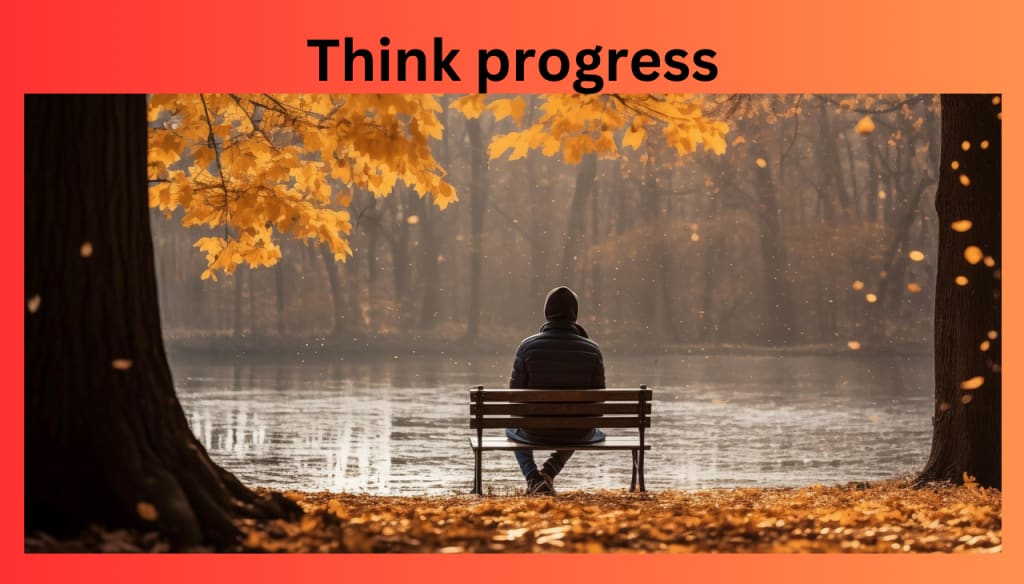
Think Progress
Progress doesn’t happen by chance. It begins with a thought—a question, a spark of curiosity, or a dream for a better life. From the wheel to artificial intelligence, every human advancement has been fueled by our ability to think, imagine, and solve problems. This article explores how thinking drives progress, why it matters for our future, and how anyone can use their mind to make a difference.
### **What Does "Think Progress" Mean?**
Progress means moving forward, but thinking is what pushes that movement. To "think progress" is to focus on ideas that improve lives, challenge old habits, and solve problems. It’s not just about big inventions like smartphones; it’s also about small changes, like a farmer finding a smarter way to water crops or a teacher using games to help kids learn.
Three things are key to thinking progress:
1. Asking, "Why?" And "How?"
2. **Creativity**: Imagining new solutions.
3. **Courage**: Daring to try something different.
Without these, societies get stuck in the past.
### **The Power of Critical Thinking**
Critical thinking is the engine of progress. It means looking at ideas carefully, questioning assumptions, and using facts to decide. For example, doctors once thought illnesses came from "bad air." But scientists like Louis Pasteur questioned this and discovered germs, changing medicine forever.
Today, critical thinking helps us tackle issues like climate change or fake news. When people check facts instead of believing everything they hear, they make wiser choices. Schools and workplaces now teach critical thinking because it’s vital for innovation.
### **History Shows How Thinking Drives Change**
Every big leap in history started with an idea:
1. **The Scientific Revolution (1500s–1700s)** Thinkers like Galileo and Newton used experiments, not superstition, to explain the world.
2. **The Industrial Revolution (1700s–1800s)**: Innovations like steam engines began with someone asking, "Can we use energy better?"
3. **The Digital Age (1900s–today)**: Visionaries like Alan Turing imagined computers, and Tim Berners-Lee created the internet, changing how we live.
These examples show progress isn’t just about tools—it’s about seeing opportunities where others see problems.
### **Education: Building a Thinking Mind**
Education unlocks the power to think creatively. In places where girls couldn’t go to school, educated women now lead businesses, fight for rights, and improve health care. Knowledge gives people the tools to fix unfair systems.
But education must adapt. Memorizing facts isn’t enough. Schools need to teach problem-solving and teamwork. For example, in Finland, students work on real-world projects like reducing pollution. This teaches them to *think* progress, not just repeat old ideas.
### **What Stops Progress?**
New ideas often face resistance:
**Fear of Change**: People dislike disruptions. When cars were invented, many preferred horses, calling cars "dangerous."
**False Beliefs**: Myths, like denying climate change, slow action on urgent issues.
**Inequality** When groups lack education or resources, their ideas are lost.
To overcome these, we need patience, dialog, and fairness. For example, solar energy grew when communities learned its benefits instead of being forced to adopt it.
### **Small Ideas, Big Changes**
Progress isn’t just about big inventions:
- A street vendor in India made a fridge from clay that works without electricity, helping farmers save food.
- Apps like Khan Academy offer free lessons to millions.
- City gardens teach sustainability and feed families.
These prove anyone, anywhere, can make a difference.
### **Technology: Good and Bad**
Technology speeds up progress but has risks. Social media connects people but spreads hate. Machines boost productivity but take jobs. The solution? Use technology ethically. Companies like Microsoft now focus on AI ethics to protect privacy and rights.
We also play a role. Fact-check before sharing news, limit screen time, and use tech to help, not harm.
### **How to Think Progressively**
You don’t need to be a genius. Start here:
1. **Stay Curious**: learn daily—read, watch documentaries, take courses.
2. **Accept Failure**: Thomas Edison failed 1,000 times before inventing the light bulb. Mistakes teach us.
3. **Work Together**: Share ideas. Join clubs, attend workshops, and brainstorm.
4. **Act Local**, volunteer, support green businesses, mentor someone.
### **The Future of Progress**
Tomorrow’s progress depends on solving today’s problems:
**Climate Change**: Innovations like lab-grown meat and carbon capture tech reduce emissions.
**Healthcare** Gene-editing tools like CRISPR may cure diseases; telemedicine reaches remote areas.
**Social Justice** Movements like #Black Lives Matter use social media to demand fairness.
The future hinges on today’s choices: Will we prioritize quick profits or lasting solutions? Include everyone or leave some behind?
### **Conclusion: Everyone Can Make a Difference**
Progress isn’t just for scientists or leaders. A student questioning old ideas, an artist challenging stereotypes, or a parent teaching kindness—all drive change. Thinking progress means believing no problem is too big and no idea too small.
As Socrates said, *“The secret of change is to focus on building the new, not fighting the old.”* Let’s create a better world—one thought at a time.
This simplified version retains the core ideas in accessible language, structured to inspire action while emphasizing that progress starts with everyday thinking.
About the Creator
Muhammad Iqbal
Experienced writer creating research-based articles on medicine, pharmacy, and motivation. I simplify complex topics to educate readers on health, pharmaceuticals, and positive life change.
Keep reading
More stories from Muhammad Iqbal and writers in Motivation and other communities.
Don’t Believe Everything You Think:
The Power of Questioning Your Mind** Our thoughts shape our reality. They influence how we feel, how we act, and how we interact with the world. But what if many of those thoughts are not as truthful or reliable as they seem? The phrase “Don’t believe everything you think” is more than just a catchy saying—it’s a vital lesson in self-awareness. In a world filled with information, opinions, and emotions, learning to question our own minds is one of the most important skills we can develop. This essay explores why our thoughts are often misleading, how unchecked thinking can harm us, and practical ways to cultivate a healthier relationship with our inner voice.
By Muhammad Iqbalabout a year ago in Motivation



Comments (1)
Well written, congrats