
The Weight of Fear
When an accident turns into a lesson, a boy learns that true courage lies in compassion, not anger.

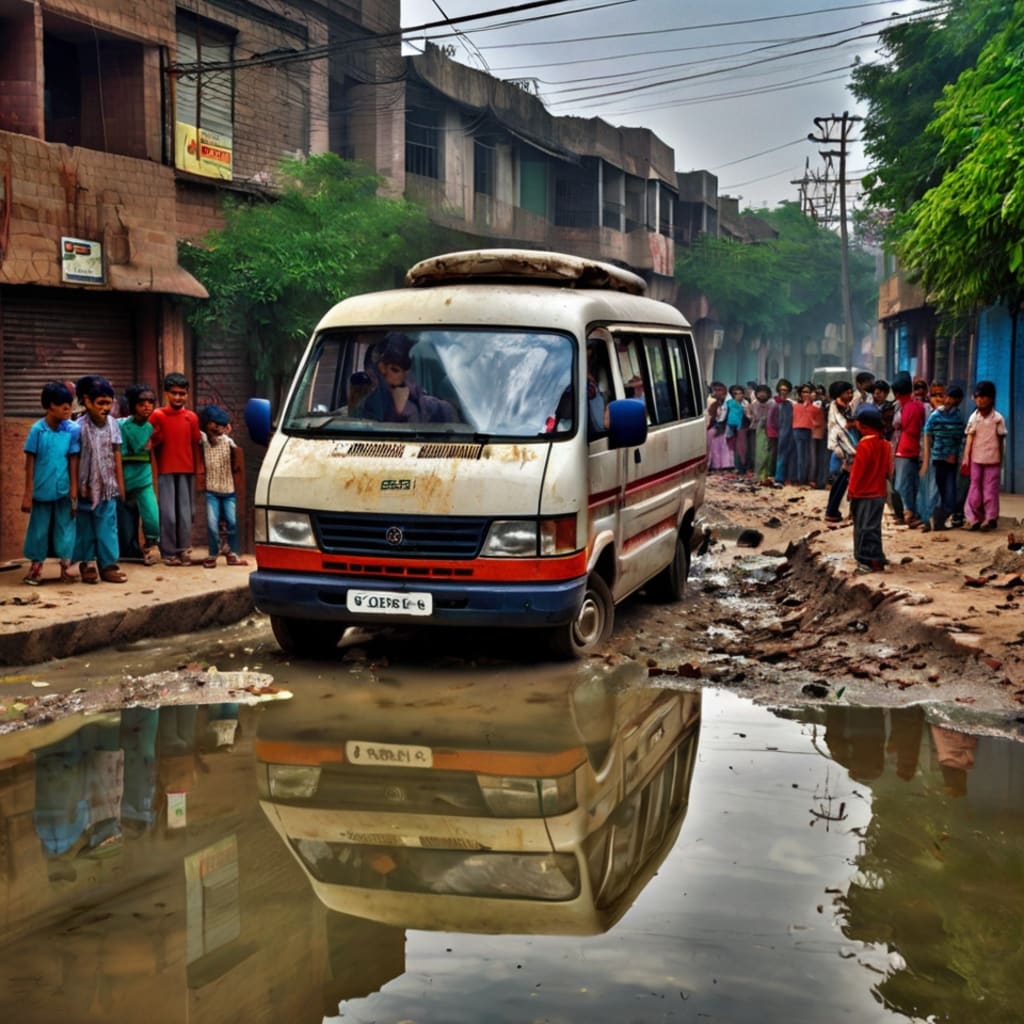
The Weight of Fear
BY:Ubaid
“Wahab, you’re such a coward!” Rimsha Javed scolded, her voice sharp with mockery. “Look at what happened! That poor boy broke your bicycle chain, and you didn’t even say a word. These ragged kids have no manners. You could have at least shouted at him.”
Her younger brother Waqar followed Wahab into the house, grumbling under his breath, his words loud enough for their elder sister, Rida, to hear from the lawn. She laughed teasingly, “Oh, I’m sure Wahab was too scared of the boy’s curse. That must be why he kept quiet.”
Wahab said nothing. He quietly parked his bicycle against the wall and slipped into his room. Waqar, however, was eager to retell the whole incident in detail. He explained how, while returning from school, a ragpicker boy suddenly struck Wahab’s bicycle with a stick, breaking the chain. Afraid that the boy might hit his head next, Wahab had quickly ridden off.
“I swear, he seemed half-crazy,” Waqar concluded with a shrug. His eyes, however, lingered on Wahab’s brand-new bicycle and the shiny schoolbag hanging on his shoulders.
Just then, a neighborly voice called out from across the wall.
“Wahab, son, are you free? Could you fetch me some yogurt from the shop?”
It was an elderly lady from next door.
“Of course, Aunty. I’ll just drop my bag first,” Wahab replied cheerfully, rushing to help.
Waqar rolled his eyes. “Are you serious? Aren’t you tired after two hours of tuition? Always running errands like some servant.”
Wahab only smiled. He had no answer, and Waqar knew his words would never change his brother. Still, he muttered, “You’re just afraid. If you ever refuse, you think Aunty will complain to Dad. That’s the only reason you say yes to everything.”
He shook his head in frustration and unlocked the front door.
---
Later that evening, their father, Zohaib, drove out with Wahab and their grandfather. They had barely entered the main road when disaster struck. A rickshaw swerved recklessly, crashing into their car.
The rickshaw toppled over. Their car’s side window shattered with a loud crack, scattering glass everywhere. Cuts immediately streaked across Zohaib’s hands and arms, blood dripping freely.
“Zohaib! Get out and catch that rickshaw driver!” Grandfather shouted in fury. “Is this any way to drive? He could have killed us!”
“Leave it, Abba,” Zohaib said softly, wincing in pain. “The poor man has suffered damage too.”
“Yes, Dada Abu,” Wahab added anxiously. “We don’t know what troubles he might be facing, or why he was in such a rush. If Baba gets harsh, Allah might be displeased. Please, Baba, let’s just go to the hospital first. Look at your hands—there’s so much blood.”
“You two are unbelievable!” Grandfather snapped. “A father and son pair of cowards!”
Angrily, he pushed the car door open and stepped outside. A crowd had already gathered around the accident scene. Zohaib’s face tightened with worry. “Oh no. May Allah protect that poor driver from Abba’s temper.”
Before anyone could say more, a man rushed toward them with a strip of cloth in his hand. He gently helped Zohaib out of the car and quickly tied the cloth around his wounds to slow the bleeding.
Meanwhile, bystanders had uprighted the rickshaw. The driver, shaken but alive, stood nervously before Grandfather. Wahab held his breath, expecting an outburst.
Instead, something remarkable happened. Grandfather’s expression softened. He placed a firm but gentle hand on the driver’s shoulder, speaking words no one heard clearly. Then, reaching into his pocket, he pulled out a few large notes and pressed them into the man’s hand. The driver bent low in gratitude, his face trembling with relief.
Wahab felt a smile spread across his face. So Abba was right, he thought. Kindness always wins over anger.
Zohaib, now bandaged, looked back and saw the scene. Relief washed over his features. The crowd, too, seemed satisfied, murmuring approvingly at the unexpected turn.
The man who had tied the cloth said gently, “This is only temporary. Please go to the nearest hospital to have the wounds cleaned properly and dressed.”
“Yes, thank you,” Zohaib nodded gratefully.
Wahab and a few others quickly cleared the shards of glass from the backseat. Soon, Grandfather returned to the car and slipped behind the wheel. His tone was calmer now.
“Alhamdulillah,” he said, exhaling deeply, “I remembered just in time that the heaviest accountability is for our words. That thought alone frightened me—what if the Almighty, far stronger than I, were to hold me accountable for my tongue?”
A chill passed through all three of them. Wahab shivered as his grandfather started the car again, steering it toward the hospital.
---
That night, as Wahab replayed the day’s events in his mind, one truth shone brightly. Fear wasn’t always weakness. Sometimes fear—the fear of Allah, the fear of injustice, the fear of hurting someone powerless—was what protected a person from becoming truly cruel.
And perhaps, he thought, it was not cowardice at all, but the greatest strength a human heart could carry.
About the Creator
Keep reading
More stories from Ubaid and writers in Motivation and other communities.
The Friend They Once Called Miser
The Friend They Once Called Miser BY:Ubaid Saquib Fareed, Tasawur, Sajid, and Nasir—these were names often heard together in the corridors of the college in Jhang. Out of them, Nasir was the most recent addition to the group. He had joined the college only two months earlier but had already won the trust and affection of both Sajid and Tasawur.
By Ubaid 6 months ago in Motivation
“A Poor Man Helped a Stranger… The Next Day His Life Changed Forever”
In a small dusty village surrounded by dry fields and broken roads, there lived a poor man named Rahim. Rahim owned nothing but a tiny mud house, a worn-out bicycle, and a heart full of kindness.
By Maavia tahirabout 13 hours ago in Motivation
The Last Voice Message
It was a quiet Sunday evening when Daniel’s phone vibrated on the kitchen table. He had just returned home after a long day at work, the kind of day that left your mind empty and your body tired. Outside, the sky was fading into deep shades of blue, and the city lights were slowly flickering on. Daniel poured himself a cup of coffee and glanced at his phone. 1 New Voice Message. The notification made him pause. He frowned slightly when he saw the sender's name. Lucas. Daniel’s heart skipped. Lucas had been his best friend since childhood. They had grown up together, shared secrets, dreams, and countless late-night conversations. But Lucas had died three days ago. A car accident on a rainy highway. The kind of sudden tragedy that leaves people staring at the floor during funerals, unsure what words could possibly make sense. Daniel had stood there at the funeral home, staring at the closed casket, trying to convince himself it wasn’t real. And now… A voice message from Lucas. Daniel stared at the screen, his coffee forgotten. Maybe it was an old message delayed by the network. Maybe Lucas had sent it earlier and it only just arrived. That had to be it. Still, his hands felt strangely cold as he pressed play. For a moment, there was only static. Then a familiar voice spoke. “Hey, Daniel… if you're hearing this, something probably went wrong.” Daniel froze. Lucas’s voice sounded calm, but there was something unusual in it. A strange heaviness. “I’m recording this because… well, I have a feeling something bad might happen tonight.” Daniel felt his chest tighten. Lucas continued. “You know how I always trust my gut. And right now it’s screaming at me.” A quiet laugh followed. “But you’ll probably call me dramatic.” Daniel remembered saying exactly that many times. Lucas had always been the intuitive one. The message continued. “I’m driving back from the lake house right now. It’s raining pretty hard, and the roads are terrible.” Daniel’s grip on the phone tightened. The accident had happened on that same road. Lucas paused for a few seconds before speaking again. “I didn’t want to call because I’d probably just sound paranoid. But there are things I’ve been meaning to say for a long time.” The rain could be heard faintly in the background of the recording. “First… thank you.” Daniel blinked, confused. “For sticking by me all these years. You’re more than a friend, man. You’re family.” Daniel swallowed hard. Lucas’s voice softened. “I know I don’t say stuff like this often, but you deserve to hear it.” Daniel suddenly felt a deep ache in his chest. The kind of ache that only comes from words that arrive too late. Lucas continued. “And there’s something else…” The sound of a windshield wiper swept across the background. “If anything ever happens to me… don’t let Mom stay alone in that house. She pretends she’s strong, but she’s not as tough as she acts.” Daniel closed his eyes. Lucas always worried about his mother. “Visit her sometimes. Even if she says she’s fine.” The message went quiet for a moment. Then Lucas spoke again, slower this time. “And Daniel… there’s one more thing.” A faint rumble of thunder echoed through the recording. “You keep putting your life on pause.” Daniel frowned slightly. “You always say you’ll chase your dreams later. Later when you have more money. Later when things are safer.” Lucas sighed. “Stop waiting.” The rain in the recording grew louder. “You wanted to write stories. You wanted to travel. You wanted to start that podcast we talked about.” Daniel’s throat tightened. “Life doesn’t wait for the perfect moment.” Lucas chuckled softly. “And clearly… neither does fate.” Daniel felt a chill run down his spine. “I guess what I’m trying to say is… don’t waste time the way I did.” The car engine could be heard revving slightly. “If you’re hearing this, it probably means I never made it home.” Daniel’s eyes filled with tears. There was a long pause in the recording. Then Lucas spoke one last time. “But I’m not scared.” Daniel leaned closer to the phone. “I’ve had a good life.” The rain softened slightly in the background. “And I had a great friend.” Daniel wiped his eyes. “Take care of yourself, okay?” A faint smile crept into Lucas’s voice. “And hey… if there’s Wi-Fi in the afterlife, maybe I’ll send you another message someday.” Then the recording ended. Silence filled the kitchen. Daniel sat there, staring at the screen long after the message had finished. Outside, the wind rustled softly through the trees. For the first time since the funeral, Daniel let the tears fall freely. But mixed within the sadness was something unexpected. Clarity. Lucas had known something might happen, and instead of fear, he had chosen to leave behind words that mattered. Daniel slowly stood up and looked out the window at the city lights stretching into the distance. For years he had postponed his dreams. Waiting. Delaying. Convincing himself there would always be more time. But Lucas’s final message echoed in his mind. Life doesn’t wait for the perfect moment. Daniel picked up his phone again. Not to replay the message. But to open a blank document. At the top of the page, he typed the title of his first story. “The Last Voice Message.” And for the first time in a long while, Daniel began to write.
By Sahir E Shafqat7 days ago in Motivation


Comments
There are no comments for this story
Be the first to respond and start the conversation.