
The War for the Dawn: A Writer's Conquest
And How the Greatest Enemy Lived in His Mirror

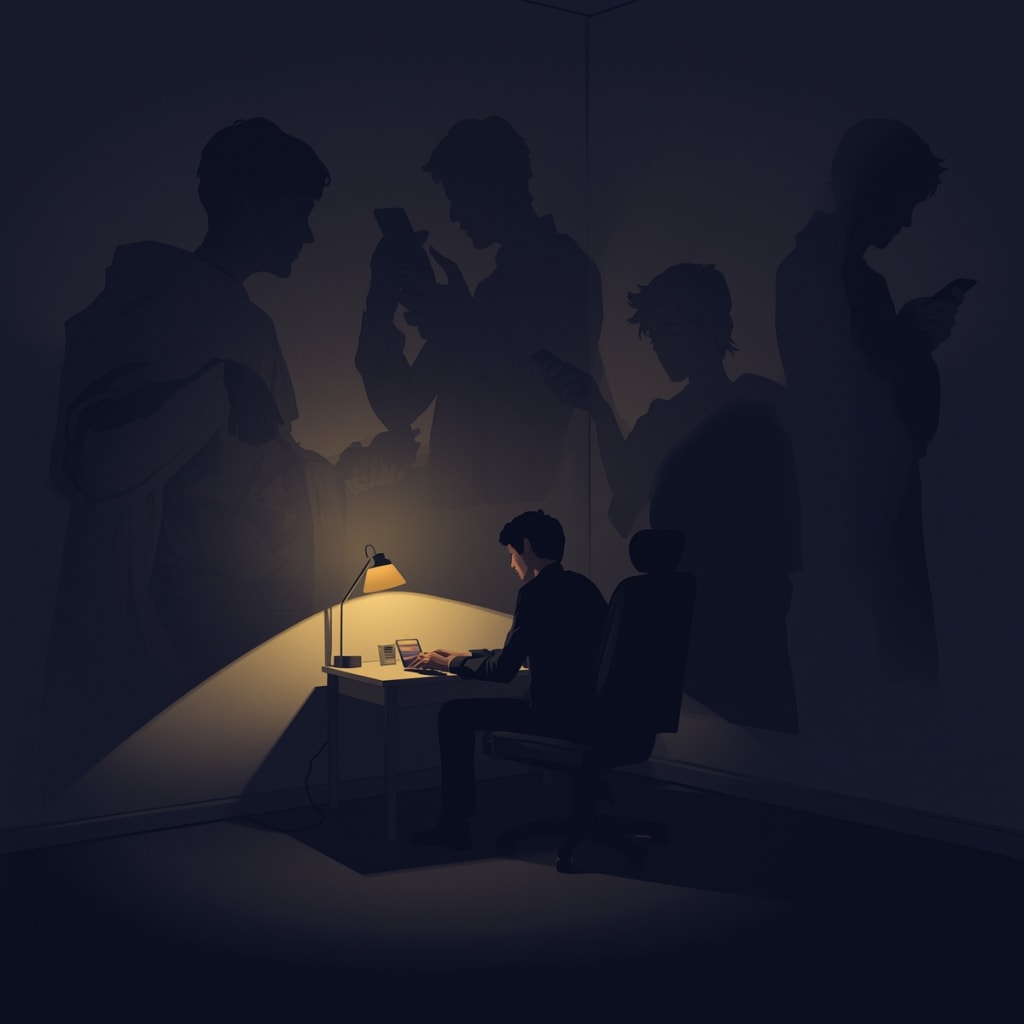
The alarm screamed at 4:45 AM, a sound that felt like an assault. In the warm, dark cocoon of his bed, the first battle of the day was already raging. One voice, thick with sleep, whispered of the comfort of the pillow, the pointlessness of this ritual, the sheer madness of leaving this warmth for the cold, dark silence of the morning. This was the voice of the old Leo, the one who found solace in mediocrity.
But another, quieter, more stubborn voice was rising. It didn't shout; it simply stated a fact. “You made a promise.”
With a groan that was more a physical tearing away from one version of himself, Leo swung his legs over the side of the bed. The floor was cold. This was his victory. Not a grand, celebrated triumph, but a small, private surrender of comfort for the sake of a promise he’d made to himself. This was the war he was learning to fight: the war against himself.
His goal was to write a novel. It was a dream he’d carried since college, now buried under a decade of client meetings, commutes, and the numbing comfort of television. The dream was still there, but the man who held it had become his own greatest obstacle. His enemy wasn't a lack of time; it was the part of him that would rather scroll through his phone than stare at a blank page. His enemy was the voice that said, “You’re not a real writer,” and the fear that agreed, “What if you try and prove it?”
Each morning, he would sit at his desk, the single lamp casting a small pool of light. The blank document was a taunt. The first skirmish was always against the urge to check email, to get a “quick win” by answering a simple message. But he’d made a rule: the document must be open, and words, any words, must be written.
Some days, the enemy was strong. He would write a paragraph, then delete it, the critic in his head roaring with laughter. The fight was pure attrition, a grinding down of his own resistance word by painful word. He’d leave the desk after an hour feeling bruised and defeated, with only a hundred clumsy words to show for it. On those days, winning was simply showing up for the fight at all.
Other days, a strange thing would happen. After thirty minutes of forcing sentences, a crack would appear in his own defenses. The critical voice would tire, and a trickle of something genuine would emerge. The characters would start to speak, the plot would twist in a way he hadn't planned, and for a glorious hour, he wasn’t Leo the marketing manager fighting himself; he was a creator, a channel for a story. Those moments were the spoils of war, the treasure he fought so hard to claim.
The battles weren't confined to the early mornings. They raged all day. When a colleague suggested after-work drinks, he had to fight the part of himself that craved social validation over the solitude of writing. When he felt stuck in his story, he had to fight the urge to declare the whole endeavor a foolish fantasy and binge-watch a series instead. He was his own tempting devil and his own weary, resolute angel.
One rainy Tuesday, he hit the wall. For a week, the writing had been sludge. The voice of doubt was no longer a whisper; it was a scream. “You have no talent. This is a waste of your life. Everyone is moving forward while you’re stuck in this childish dream.” He sat at his desk, head in his hands, utterly defeated. The urge to quit, to surrender to the easier, more predictable version of his life, was a physical weight.
This was the decisive battle. To quit now would be to admit that the enemy within was right. He thought about the 4:45 AM alarms, the hundred sacrificed evenings, the cumulative weight of all those small victories. Were they for nothing?
He opened his laptop. Not to write, but to read. He scrolled back to the beginning, to the clumsy, awkward first chapter he’d written months ago. And he read. He saw the clunky sentences, yes, but he also saw the spark of an idea. He saw a character he’d forgotten he’d created. He saw the sheer, stubborn volume of work he had produced. It was imperfect, messy, and human, but it was real. It was evidence of the fight.
He didn't write a thousand words that night. He wrote one sentence. Then another. They weren't brilliant, but they were a declaration. They were the flag of his resistance planted firmly back on the battlefield.
A year later, Leo typed the two greatest words he had ever written: “The End.” He sat back, exhausted and exhilarated. The manuscript was a mess that would need endless revision, but it was complete. There was no parade, no contract, no external validation. Just the quiet hum of the early morning and the weight of the stack of pages beside his laptop.
He looked at them, and a profound peace settled over him. The success wasn't in finishing the novel. The success was in the thousands of tiny surrenders he had won from himself. The victory wasn't over a publishing industry or a competitive marketplace. The victory was over the procrastinator, the critic, the coward, and the quitter that had once ruled his life.
He had conquered a continent of doubt, not with a single glorious charge, but with the daily, grinding discipline of a thousand lonely mornings. He had faced the most formidable opponent he would ever know—the limitations he himself had built—and he had won. And he knew, with a certainty that felt like truth, that this was the only victory that truly mattered. All others would simply be its echo.
About the Creator
john dawar
the best story writer
Keep reading
More stories from john dawar and writers in Motivation and other communities.
A Story of Broken Crayons and a Mended Heart
The dreams I’d woven—of reading him Goodnight Moon, of hearing him call me “Mama”—shattered against the cold, clinical diagnosis. My struggle wasn't against poverty or failure, but against a ghost. How do you fight a silence that has taken root inside your own child?
By john dawar4 months ago in Motivation
The Future of Technology
In the year 2145, the world had transformed in many amazing ways. Technology was no longer just a tool; it had become a part of every person's life. Cities sparkled with floating cars, and buildings reached high into the clouds, made of strong, transparent materials that shimmered under the sun. The air was filled with the gentle hum of drones delivering packages and the soft voices of friendly robots assisting people everywhere.
By Hamad Afridi 2 days ago in Motivation
📢 Raise Your Voice Thread: 03/05/2026
Our “Raise Your Voice Threads” are hosted most alternating Thursdays at 12PM ET to offer creators more avenues to uncover exceptional stories on Vocal. As we are continuously searching for fresh creators and inspiring stories, this thread provides an opportunity to exchange and discuss the stories that have moved and motivated us on Vocal.
By Raise Your Voice by Vocal2 days ago in Resources




Comments
There are no comments for this story
Be the first to respond and start the conversation.