
The Strength to Stand Back Up
Because even on the days she broke, compassion helped her rise again.im

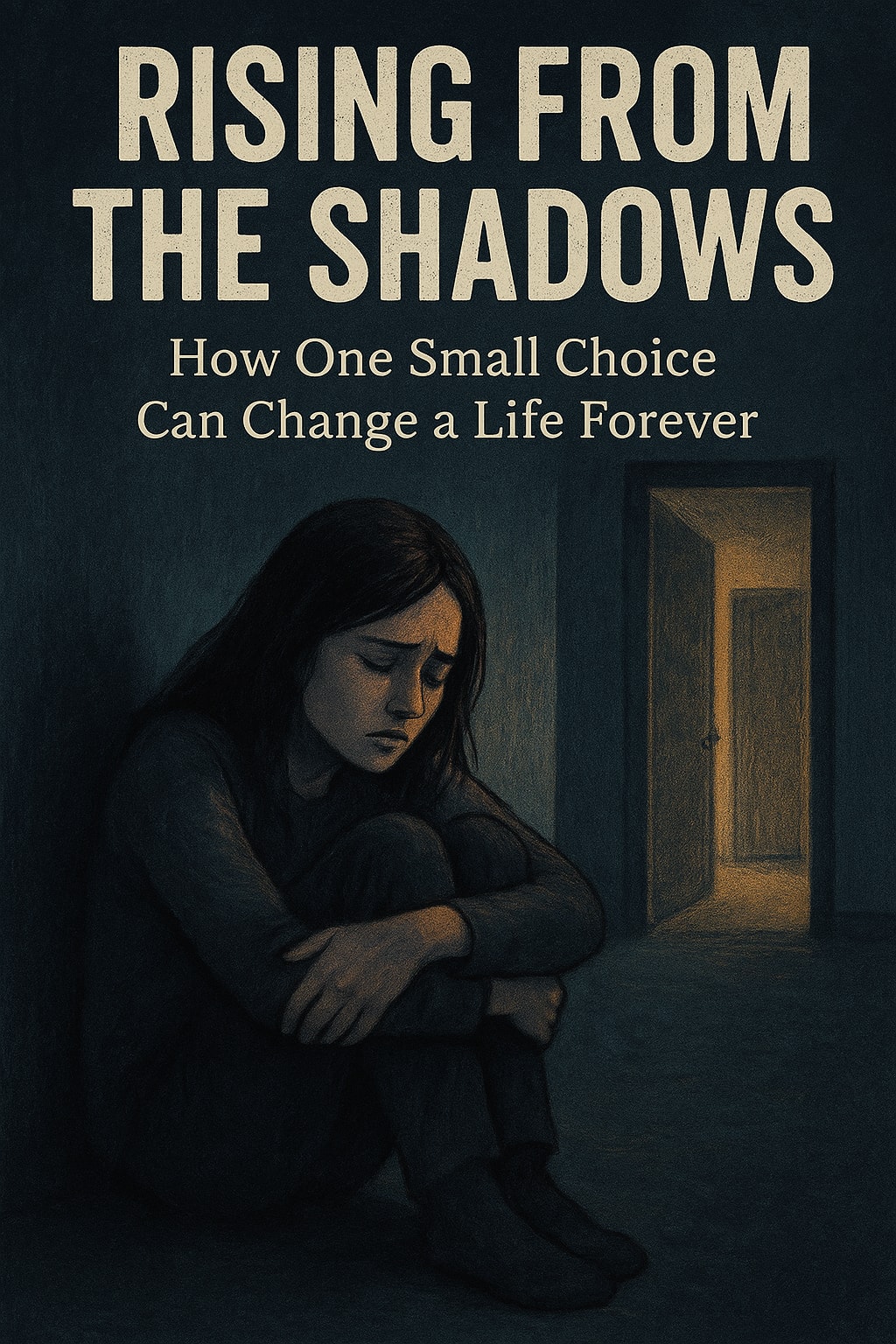
Some mornings, the world felt too heavy for Aisha to lift.
She wasn’t sure when the weight began—whether it had been years in the making or whether it arrived suddenly, like a winter storm crashing against her chest. All she knew was that waking up was an act of courage, and stepping outside was a kind of rebellion.
But she did it anyway.
Every day.
The town didn’t know her story. They only knew her smile—the small, polite one she learned to wear the same way others wore coats in the cold. People loved to say she was “strong,” a word that sometimes felt more like a sentence than a compliment. Strength meant keeping the façade. Strength meant never cracking. Strength meant carrying everything alone.
But humans were not made of stone. And one day, she broke.
It happened on an ordinary Tuesday.
She had gone to work, answered emails, printed reports, nodded through meetings, and sat at lunch with coworkers who talked about vacations and weekend plans. She laughed on cue, even though every laugh felt like a lie.
When she finally walked home, her hands trembled. Her chest tightened. The world blurred.
By the time she reached her door, she couldn’t breathe at all.
The panic attack hit like a wave she never saw coming. Her groceries spilled. Her knees collapsed. The quiet hallway echoed with the sound of her heartbeat breaking itself apart.
And for the first time in her life, Aisha couldn’t pretend she was okay.
She curled onto the floor and whispered, “I can’t do this anymore.”But the universe, strange and unpredictable as always, sent her an answer in the form of her neighbor, Mr. Ellis—an old man with a gentle voice and eyes that seemed to understand every kind of pain.
He found her on the floor and didn’t ask useful questions like “What’s wrong?” or “What happened?”
He simply sat beside her.
“Breathe with me,” he said.
He inhaled slowly, exhaled slowly, and waited until she could follow. Minutes passed. Eventually, the world steadied. Her heart slowed. The panic loosened its grip just enough for her to think again.
When she finally looked up, tears streaking her face, she expected pity.
Instead, he nodded—like her pain made perfect sense.
“We all fall,” he said. “It’s the one thing humans do better than anything else. But we’re also very good at getting back up… especially when someone lends a hand.”
Aisha didn’t know why those words mattered as much as they did. Maybe because they came from someone who said them without judgement. Maybe because he didn’t try to fix her—he simply refused to leave her alone in that moment.
He helped her stand, handed her the groceries, and said before leaving:
“You don’t have to carry everything alone. Nobody does. That's not strength. That’s suffering.”
That night, she sat on her couch, replaying his words. Something inside her shifted—a tiny, silent crack where the light could finally seep through.
The next week, she signed up for therapy.
It felt terrifying at first, telling a stranger the things she had spent years hiding. But with every session, she learned something new about being human—something she had never given herself permission to learn.
She learned that pain wasn’t a weakness.
She learned that asking for help wasn’t failure.
She learned that strength wasn’t about enduring. It was about healing.
And slowly, she began to change.
She started taking walks in the park after work. She started journaling again—the kind of writing where her words didn’t have to be pretty, only honest. She started calling her sister on Sundays, letting her in on the struggle instead of pretending everything was fine.
The weight didn’t disappear overnight.
But it shifted.
Bit by bit.
Breath by breath.
One afternoon, months later, she saw a young man sitting alone on a bench, shoulders shaking as he tried—and failed—to hide his tears. People walked past him, pretending not to see. Aisha recognized the look on his face.
She sat beside him.
She didn’t ask what happened.
She didn’t force him to speak.
She simply said:
“Breathe with me.”
And he did.
For a moment, two strangers sat together, human in their hurting, human in their healing.
Aisha realized then that Mr. Ellis had given her more than comfort on that terrible day. He had given her a lesson—the clearest truth of the human condition:
We survive by holding on.
We heal by holding each other.
The man wiped his tears. Aisha offered a small smile—not the polite, practiced one, but a real one, shaped by everything she’d endured.
“You’re not alone,” she said.
He nodded.
Neither was she.
About the Creator
The khan
I write history the way it was lived — through conversations, choices, and moments that changed the world. Famous names, unseen stories.
Keep reading
More stories from The khan and writers in Motivation and other communities.
Fired at 30: The Failure That Funded Her Freedom
At 30 years old, Mia believed she had finally made it. She had the job title she worked years for. The corner desk by the window. The steady paycheck that made her parents proud and her friends quietly impressed. From the outside, her life looked stable, secure... even enviable.
By MIGrowth2 days ago in Motivation
Empathy in Medicine Initiative Launches National Student Chapter Program from Great Neck, New York
Great Neck, New York (Long Island / NYC Metro), USA – The Empathy in Medicine Initiative (EMI), a student-led nonprofit organization dedicated to advancing empathy and communication in healthcare, has officially launched its new Student Chapter Program. Founded by Kevin Lin, a student at Great Neck South High School in Great Neck, NY, EMI continues to expand its reach by empowering high school and college students across the country to lead empathy-centered healthcare initiatives in their own communities.
By Emma Wegenast6 days ago in Motivation


Comments
There are no comments for this story
Be the first to respond and start the conversation.