
The Significance of Entertainment
Enhancing Lives and Education

Entertainment has evolved significantly over the years, adapting to changing social, cultural, and technological contexts. From ancient times to the modern era, entertainment has undergone various transformations, catering to evolving tastes and preferences. Initially, entertainment was communal, with people gathering for performances like theater, music, dance, and games. In the middle ages, entertainment became more specialized based on social classes. The 19th and 20th centuries saw the commercialization of entertainment with the emergence of cinema, radio, and television, offering individualized experiences. The internet has played a crucial role in transforming entertainment by enhancing visibility, accessibility, and diversity. It has enabled global access to a wide range of content, fostering the emergence of new forms of entertainment and diverse opportunities like online sports viewing and gaming. The internet has revolutionized how entertainment is consumed, shared, and created, shaping the industry's evolution over time.
Healthy entertainment of excellent quality is crucial for the healthy growth and development of one's personality. Engaging in activities that provide joy and relaxation is essential for keeping the mind lively and fresh. For students, balancing academic studies with hobbies, sports like cricket, or other enjoyable activities is vital for personality development. Pursuing such interests not only adds variety to life but also contributes to personal growth and well-being. Extracurricular activities play a significant role in shaping one's character and can complement academic pursuits, fostering a more well-rounded individual.
Engaging in various forms of entertainment, including sports, plays, books, and cinema, plays a crucial role in personality development. In India, festivals, sports, dance, and music have been integral to cultural entertainment since ancient times. Participating in these activities not only provides enjoyment but also contributes to building a well-rounded personality. Modern entertainment options like cinema, plays, and books continue to offer diverse avenues for individuals to relax, unwind, and explore new ideas. By actively engaging in different forms of entertainment, individuals can nurture creativity, relieve stress, improve social skills, and enhance overall well-being. The evolution of entertainment over time reflects the changing preferences and needs of society while remaining a vital aspect of personal growth and cultural expression.
Sports and other forms of physical activity is essential for maintaining a healthy lifestyle and developing a good personality. Sports not only keep our minds lively and interested but also contribute to physical fitness and increased energy levels. Playing sports helps improve physical fitness, leading to enhanced energy levels and overall well-being. This increase in physical energy can positively impact work efficiency by boosting productivity, focus, and overall performance. Therefore, incorporating sports and physical activities into one's routine can have a significant positive effect on work efficiency and overall quality of life.
Entertainment can be classified into two categories: active and passive. Active entertainment involves individuals' mental and physical participation, where they are actively involved in the activity. Examples of active entertainment include playing cricket, football, engaging in handicrafts, or participating in sports activities. On the other hand, passive entertainment does not require active participation but rather involves observing or listening. Watching a sports match, listening to music, or watching a movie are examples of passive entertainment where individuals are not actively engaging but rather enjoying the content. Active entertainment entails active participation both mentally and physically, while passive entertainment involves more observation or listening without direct involvement in the activity.
In conclusion, entertainment plays a significant role in our lives, offering a diverse range of activities that cater to different preferences and interests. It can be classified into two main categories: active and passive. Active entertainment involves mental and physical participation, such as playing sports, engaging in crafts, or actively participating in activities. On the other hand, passive entertainment entails observing or listening, like watching a movie, listening to music, or watching a sports match. Both forms of entertainment contribute to personal growth, relaxation, and overall well-being, enriching our experiences and enhancing our quality of life. Understanding the distinction between active and passive entertainment can help individuals make informed choices about how they engage with various forms of entertainment to suit their preferences and needs.
About the Creator
Keep reading
More stories from Sanjana Dixit and writers in Motivation and other communities.
Evolutionary Journey of Humans
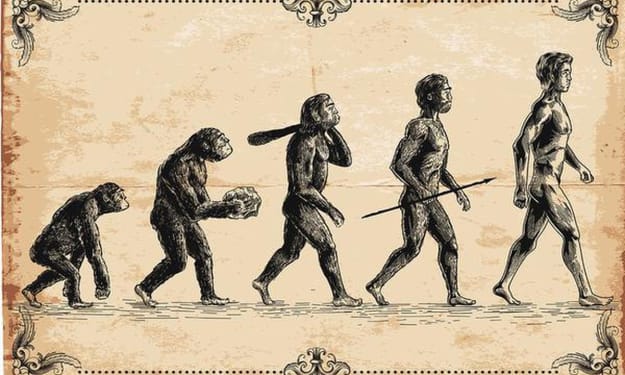
The evolution of humanity unfolds as a captivating narrative spanning millions of years, originating from a pivotal divergence around seven million years ago when our ancestors separated from chimpanzees. This divergence marked the inception of a profound journey that has significantly influenced the trajectory of human history. Through a complex process of adaptation and change, Homo sapiens, the sole surviving hominin species today, emerged as a testament to resilience, innovation, and an enduring quest to comprehend our origins. Scientific exploration, fueled by fossil records, archaeological findings, innovative methodologies, and DNA research, has revolutionized our understanding of ancient human history.
By Sanjana Dixit2 years ago in Humans
In the Waiting Crowd, I Learned to Walk Away
A young man waits years for a confession of love, then chooses to leave. This Might Hurt, But It Will Save You Have you ever felt that gnawing pit in your stomach—the kind that keeps you awake at night—because you’re waiting for someone to notice your heart? Waiting, hoping, imagining a confession that might never come? You scroll through your day, pretending it’s fine, while deep down, a voice whispers: “Is this really worth it?”
By Ahmed aldeabella6 days ago in Motivation
Rahul Shah PT: Advancing Patient Care Through Expertise and Innovation
In the evolving field of rehabilitation and physical therapy, professionals who combine advanced education, clinical expertise, and leadership play a vital role in shaping patient outcomes and the future of healthcare. Dr. Rahul C. Shah, PT, DPT, MBA stands among those dedicated professionals who have built a reputation through expertise, innovation, and commitment to evidence-based care. With nearly a decade of clinical experience and specialized certifications in orthopedic and sports physical therapy, Dr. Shah continues to make a meaningful impact in the healthcare community.
By Thetribunemedia6 days ago in Motivation


Comments
There are no comments for this story
Be the first to respond and start the conversation.