

Introduction
Goal setting is an essential process that empowers individuals to achieve their desired outcomes. While many people understand the importance of setting goals, not everyone is aware of the secret behind effective goal setting. This secret lies in the acronym SMART, which stands for Specific, Measurable, Achievable, Relevant, and Time-bound. In this article, we will explore the concept of SMART goal setting in detail, discussing each element and uncovering the power it holds in maximizing goal attainment. By understanding and implementing SMART goals, individuals can unlock their true potential and transform their aspirations into reality.
1. Specific
The first element of SMART goal setting is specificity. A specific goal is clearly defined and leaves no room for ambiguity. When setting goals, it is important to be precise about what you want to achieve. Vague goals like "get fit" or "earn more money" lack clarity and are difficult to pursue effectively. Instead, focus on creating goals that answer the questions of who, what, where, when, why, and how. For example, a specific goal would be "lose 10 pounds in three months by exercising four times a week and following a balanced diet." The more specific your goal, the easier it becomes to develop a plan of action and measure progress.
2. Measurable
The second element of SMART goal setting is measurability. A goal needs to be measurable to track progress and determine success. By establishing measurable criteria, you can objectively assess whether you are moving closer to your goal or if adjustments are required. Incorporate quantifiable elements into your goals, such as numbers, percentages, or specific milestones. For instance, instead of setting a vague goal like "increase sales," a measurable goal would be "increase monthly sales by 20% within six months." This allows you to track your progress and make informed decisions along the way. Remember, what gets measured gets managed, so ensure your goals are measurable to stay on track.
3. Achievable
The third element of SMART goal setting is achievability. While it's important to dream big, setting unattainable goals can be demotivating and hinder progress. An achievable goal is within your reach and aligns with your abilities and resources. Assess your skills, knowledge, and available resources to determine if the goal is realistic. Break your goal down into smaller, manageable steps that you can take to move forward. For example, if your long-term goal is to run a marathon, start by setting achievable milestones such as running a 5k, 10k, and half-marathon. By setting achievable goals, you set yourself up for success and maintain motivation throughout the journey.
4. Relevant
The fourth element of SMART goal setting is relevance. A relevant goal aligns with your values, aspirations, and long-term objectives. It is essential to ensure that the goal you set is meaningful to you and contributes to your overall growth and fulfillment. Consider how the goal fits into the bigger picture of your life and how achieving it will impact your personal or professional development. Aligning your goals with your passions and values enhances your commitment and makes the journey more rewarding. Reflect on why the goal matters to you and how it connects with your broader aspirations.
5. Time-bound
The fifth and final element of SMART goal setting is time-bound. A time-bound goal has a specific deadline or timeframe associated with it. Setting a clear timeline creates a sense of urgency and helps you stay focused and accountable. Without a deadline, goals can easily become distant dreams that lack the necessary action and urgency. Establish a realistic timeframe for achieving your goal, considering the complexity of the task and the resources available. For example, instead of saying "I will write a book someday," set a time-bound goal like "I will complete the first draft of my book within six months." This creates a sense of purpose and motivates you to take consistent action toward your goal.
Conclusion
Goal setting is a powerful tool for personal and professional growth, but not all goals are created equal. By applying the principles of SMART goal setting - Specific, Measurable, Achievable, Relevant, and Time-bound - individuals can unlock the secret to effective goal setting. By making goals specific, measurable, achievable, relevant, and time-bound, you increase your chances of success and maximize your potential. Implementing SMART goals provides clarity, focus, and a roadmap for progress, enabling you to transform your aspirations into tangible achievements. Embrace the secret of SMART goal setting and unlock a world of possibilities.
About the Creator
Keep reading
More stories from fasla and writers in Motivation and other communities.
DEEP WORK
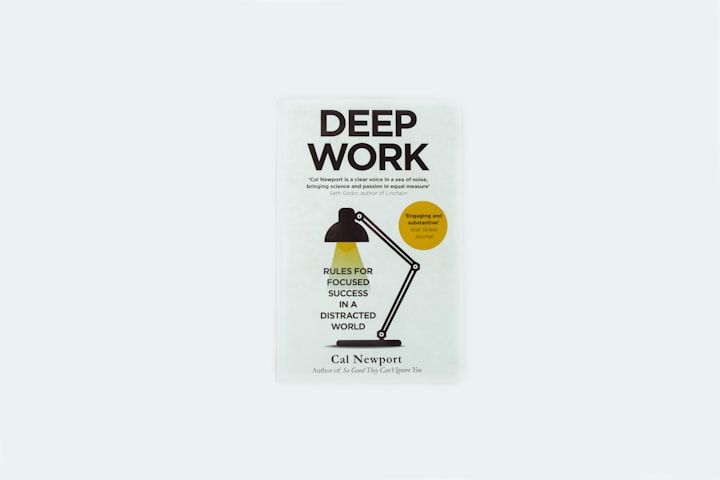
Introduction: In the fast-paced and digitally connected world we live in, distractions abound, making it increasingly challenging to focus on deep, meaningful work. In his book "Deep Work: Rules for Focused Success in a Distracted World," Cal Newport explores the concept of deep work and provides a roadmap for achieving higher productivity and concentration. In this book review, we delve into Newport's key ideas, examine the strategies he proposes, and evaluate the effectiveness of his recommendations.
By fasla3 years ago in Motivation
“A Poor Man Helped a Stranger… The Next Day His Life Changed Forever”
In a small dusty village surrounded by dry fields and broken roads, there lived a poor man named Rahim. Rahim owned nothing but a tiny mud house, a worn-out bicycle, and a heart full of kindness.
By Maavia tahirabout 16 hours ago in Motivation
The Last Voice Message
It was a quiet Sunday evening when Daniel’s phone vibrated on the kitchen table. He had just returned home after a long day at work, the kind of day that left your mind empty and your body tired. Outside, the sky was fading into deep shades of blue, and the city lights were slowly flickering on. Daniel poured himself a cup of coffee and glanced at his phone. 1 New Voice Message. The notification made him pause. He frowned slightly when he saw the sender's name. Lucas. Daniel’s heart skipped. Lucas had been his best friend since childhood. They had grown up together, shared secrets, dreams, and countless late-night conversations. But Lucas had died three days ago. A car accident on a rainy highway. The kind of sudden tragedy that leaves people staring at the floor during funerals, unsure what words could possibly make sense. Daniel had stood there at the funeral home, staring at the closed casket, trying to convince himself it wasn’t real. And now… A voice message from Lucas. Daniel stared at the screen, his coffee forgotten. Maybe it was an old message delayed by the network. Maybe Lucas had sent it earlier and it only just arrived. That had to be it. Still, his hands felt strangely cold as he pressed play. For a moment, there was only static. Then a familiar voice spoke. “Hey, Daniel… if you're hearing this, something probably went wrong.” Daniel froze. Lucas’s voice sounded calm, but there was something unusual in it. A strange heaviness. “I’m recording this because… well, I have a feeling something bad might happen tonight.” Daniel felt his chest tighten. Lucas continued. “You know how I always trust my gut. And right now it’s screaming at me.” A quiet laugh followed. “But you’ll probably call me dramatic.” Daniel remembered saying exactly that many times. Lucas had always been the intuitive one. The message continued. “I’m driving back from the lake house right now. It’s raining pretty hard, and the roads are terrible.” Daniel’s grip on the phone tightened. The accident had happened on that same road. Lucas paused for a few seconds before speaking again. “I didn’t want to call because I’d probably just sound paranoid. But there are things I’ve been meaning to say for a long time.” The rain could be heard faintly in the background of the recording. “First… thank you.” Daniel blinked, confused. “For sticking by me all these years. You’re more than a friend, man. You’re family.” Daniel swallowed hard. Lucas’s voice softened. “I know I don’t say stuff like this often, but you deserve to hear it.” Daniel suddenly felt a deep ache in his chest. The kind of ache that only comes from words that arrive too late. Lucas continued. “And there’s something else…” The sound of a windshield wiper swept across the background. “If anything ever happens to me… don’t let Mom stay alone in that house. She pretends she’s strong, but she’s not as tough as she acts.” Daniel closed his eyes. Lucas always worried about his mother. “Visit her sometimes. Even if she says she’s fine.” The message went quiet for a moment. Then Lucas spoke again, slower this time. “And Daniel… there’s one more thing.” A faint rumble of thunder echoed through the recording. “You keep putting your life on pause.” Daniel frowned slightly. “You always say you’ll chase your dreams later. Later when you have more money. Later when things are safer.” Lucas sighed. “Stop waiting.” The rain in the recording grew louder. “You wanted to write stories. You wanted to travel. You wanted to start that podcast we talked about.” Daniel’s throat tightened. “Life doesn’t wait for the perfect moment.” Lucas chuckled softly. “And clearly… neither does fate.” Daniel felt a chill run down his spine. “I guess what I’m trying to say is… don’t waste time the way I did.” The car engine could be heard revving slightly. “If you’re hearing this, it probably means I never made it home.” Daniel’s eyes filled with tears. There was a long pause in the recording. Then Lucas spoke one last time. “But I’m not scared.” Daniel leaned closer to the phone. “I’ve had a good life.” The rain softened slightly in the background. “And I had a great friend.” Daniel wiped his eyes. “Take care of yourself, okay?” A faint smile crept into Lucas’s voice. “And hey… if there’s Wi-Fi in the afterlife, maybe I’ll send you another message someday.” Then the recording ended. Silence filled the kitchen. Daniel sat there, staring at the screen long after the message had finished. Outside, the wind rustled softly through the trees. For the first time since the funeral, Daniel let the tears fall freely. But mixed within the sadness was something unexpected. Clarity. Lucas had known something might happen, and instead of fear, he had chosen to leave behind words that mattered. Daniel slowly stood up and looked out the window at the city lights stretching into the distance. For years he had postponed his dreams. Waiting. Delaying. Convincing himself there would always be more time. But Lucas’s final message echoed in his mind. Life doesn’t wait for the perfect moment. Daniel picked up his phone again. Not to replay the message. But to open a blank document. At the top of the page, he typed the title of his first story. “The Last Voice Message.” And for the first time in a long while, Daniel began to write.
By Sahir E Shafqat7 days ago in Motivation


Comments
There are no comments for this story
Be the first to respond and start the conversation.