
The Power of Us: Why Community is Our Greatest Strength
Exploring the Role of Togetherness in Building Resilient Lives and Meaningful Connections

Sometimes, life takes you in unexpected directions, and you don’t realize how important a place—or the people in it—really are until years later. That’s what happened to me with a small company village in southwestern Wyoming. It wasn’t just a job or a home; it became one of the most important chapters of my life. But before I tell you about that, let me be honest about something.
A few years ago, I started writing a series about the communities that shaped me. I wrote two parts and then… stopped. Not because I didn’t care, but because I got lost digging through memories, trying to remember the details just right. I got stuck. Life moved on, and the stories sat on a shelf. Now, it’s time to dust them off and finally share the third part—because this one truly changed everything for me.
A Young Dad’s New Beginning
Let’s rewind to Amarillo, Texas, 1974. I didn’t finish high school. I didn’t drop out in the traditional sense—I just never went back for my senior year. The reason? I was about to become a father. I knew I had to take care of my family, so I started working right away—whatever job I could find that would help pay the bills and keep a roof over our heads. Later, I did earn my GED, which turned out to be a big help down the line.
In 1978, I landed a good job with Colorado Interstate Gas (CIG). I joined a pipeline survey crew and traveled around Texas, Oklahoma, Kansas, and Colorado. The company covered our meals and motels, and we drove company Suburbans. We made decent money, and for a young dad, it was a pretty good life.
But then came the opportunity that would change everything.
Welcome to Table Rock
CIG was building a gas processing plant in southwestern Wyoming, and along with it, a small village for workers and their families. They were offering more money, free housing, paid utilities, and even covered the moving costs. I jumped at the chance and became a Plant Operator.
My new home was a beautiful four-bedroom, split-level house with a two-car garage. My old survey crew buddy lived just behind us. The village itself had everything—a big recreation center with a gym and racquetball court, a kitchen for parties, and a social club that threw events all year long. There were dances, company picnics, softball games, and even fireworks on the Fourth of July. It felt like a dream.
I started volunteering as a writer for the company magazine and got to see my articles and photos in print. One Christmas, I wrote a funny poem parodying ’Twas the Night Before Christmas, and they gave it a full two-page spread. I was hooked. That little taste of seeing my writing in print lit a fire in me.
Hard Work, Big Lessons
Our jobs were dangerous—we worked with toxic gases, high-voltage systems, and high-temperature steam. Every new employee went through two weeks of training. But the company took care of us. We lived far from town—about 45 miles from the nearest grocery store—so they did everything they could to make life easier and more enjoyable.
The land around us was public, so we hunted, rode motorcycles and ATVs, and explored every corner of the area. We learned how to process our own game meat, and our freezers were always full.
After a while, I was promoted to a new role as a General Technician. That meant I got to work across all departments and take any training that applied. I took full advantage, collecting certifications in around 30 areas, including electrical and electronics from DeVry University. I also had CPR and emergency care training from the Bureau of Mines.
We had good pay, nice vehicles, and all the "toys" we wanted, thanks to a friendly company credit union. Life seemed perfect.
The Hidden Cost
But there was a downside no one talked about much. The village was small—just 50 families. Everyone worked and played together, which was great… until it wasn’t. While we were on shift, our spouses had time on their hands, and sometimes, things happened. Affairs and broken trust weren’t uncommon. It was a hard, painful lesson, and it’s what finally made me leave after nearly a decade.
I left Table Rock with a broken marriage, kids growing up too fast, and not much saved up. But I also left with an education, new skills, and a love for writing. Most importantly, I took with me lasting friendships that still mean the world to me, even 35 years later.
Why It Still Matters
This little village in the middle of nowhere did more than just give me a job. It gave me purpose, maturity, and the first real taste of who I could become. It showed me the power of community, support, and connection—and those are things I’ll never forget.
So, to the Table Rock village and everyone who was part of it—thank you. You helped shape the man, the father, and the writer I am today.
About the Creator
Keep reading
More stories from ibrahim khan and writers in Motivation and other communities.
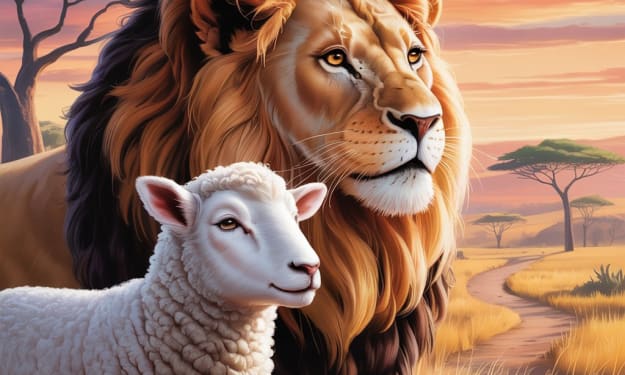
"The Lion and the Lamb"
In the heart of the great savannah, where the grass whispered ancient songs and the winds told tales older than the stars, there lived a lion named Baruti. His mane was thick like thunderclouds, and his roar echoed across the plains like distant storms. All animals knew his name—not out of love, but fear.
By ibrahim khan10 months ago in Motivation


Comments
There are no comments for this story
Be the first to respond and start the conversation.