


Human history is shaped not merely by those who acted, but by those who dared to dream beyond the limits of what seemed possible. These are individuals who saw the invisible, believed in the improbable, and pursued the impossible. The person who dreamed beyond is not just a historical figure; they are a timeless archetype — the visionary, the rebel, the seeker. From Galileo to Elon Musk, from Harriet Tubman to Malala Yousafzai, the story of humanity is also the story of dreamers who imagined a reality that did not yet exist and then, often at great personal cost, walked toward it.
But what does it mean to “dream beyond”?
To dream beyond is to envision a world that transcends current limitations — physical, societal, psychological, or spiritual. It is to look at the stars and see not just points of light, but destinations. It is to look at injustice and see not just oppression, but a call for liberation. Dreaming beyond is never passive. It is a form of courage, of rebellion, of radical hope.
### The Seed of Vision: Imagination as the Root of Change
At the heart of dreaming beyond lies imagination. While animals adapt to environments, humans imagine new ones. This capacity for vision is what separates innovators and leaders from those who follow. Imagination is often dismissed as fanciful, but it is in fact the blueprint of all progress.
Consider the Wright brothers, who in the early 20th century were ridiculed for their belief that humans could fly. At a time when heavier-than-air flight was considered impossible, Orville and Wilbur Wright imagined it as not only possible but inevitable. Their dreams gave us the modern aviation industry, shrinking the world and connecting humanity in ways previously inconceivable.
Their success was not luck or genius alone — it was a refusal to accept current limits as permanent. They were people who dreamed beyond.
### Beyond Fear: The Cost of Vision
Dreaming beyond is not safe. It disrupts the status quo, threatens established powers, and exposes the dreamer to criticism, isolation, and sometimes violence. The world resists change — not because it lacks problems, but because it fears the solutions.
Take Martin Luther King Jr., whose dream of racial equality in America remains one of the most quoted and revered in modern history. King did not just dream of a world without segregation — he dreamed beyond the confines of what many thought politically realistic at the time. His vision was not just about civil rights, but about a radical reimagining of American values. He was jailed, threatened, and ultimately assassinated. Yet his dream lived on. It continues to ripple through generations, inspiring movements far beyond his own country or cause.
To dream beyond, then, is often to pay a price. But the value of that dream, and the lives it touches, can echo through history.
### The Quiet Dreamers
Not all dreamers are famous. Not all change happens on grand stages. The single mother who dreams of sending her children to college despite poverty is dreaming beyond her circumstances. The teacher who believes in a child's potential when no one else does is planting seeds of transformation. The scientist in a quiet lab, who imagines curing a disease that has plagued humanity for centuries, is dreaming beyond suffering.
These quiet dreamers often go unrecognized, but their impact is no less real. Dreaming beyond is not about scale — it’s about vision, hope, and the will to act on both.

### Dreaming Beyond in Science and Technology
In the realm of science, dreaming beyond has led humanity from darkness to light — literally and metaphorically.
Galileo Galilei looked at the night sky and challenged the geocentric worldview, laying the foundation for modern astronomy. Marie Curie imagined a world where radiation could be understood and used for healing, despite immense personal sacrifice. Alan Turing envisioned machines that could think — giving rise to modern computing. Today, scientists like Jennifer Doudna dream beyond genetics, using CRISPR technology to edit DNA and potentially cure inherited diseases.
In each case, these individuals saw not just what was, but what could be. They faced skepticism, hostility, and the limits of their time — but pressed forward. They were scientists, yes, but also dreamers.

### Beyond the Stars: The Dream of Space
No exploration of dreaming beyond is complete without looking to the stars.
The idea of space travel once belonged to science fiction. Then came dreamers like Konstantin Tsiolkovsky, Wernher von Braun, and Carl Sagan. They saw the cosmos not as unreachable, but as humanity’s next frontier. Their dreams fueled the space race, culminating in Neil Armstrong’s moon landing — an event that fulfilled President Kennedy’s daring dream to “choose to go to the Moon.”
Today, private innovators like Elon Musk and public agencies like NASA continue to dream beyond Earth. Colonizing Mars, mining asteroids, establishing lunar bases — these ideas are no longer just fantasy, but emerging blueprints. Whether or not these dreams come true within our lifetimes, the act of dreaming them already expands what’s possible for the species.
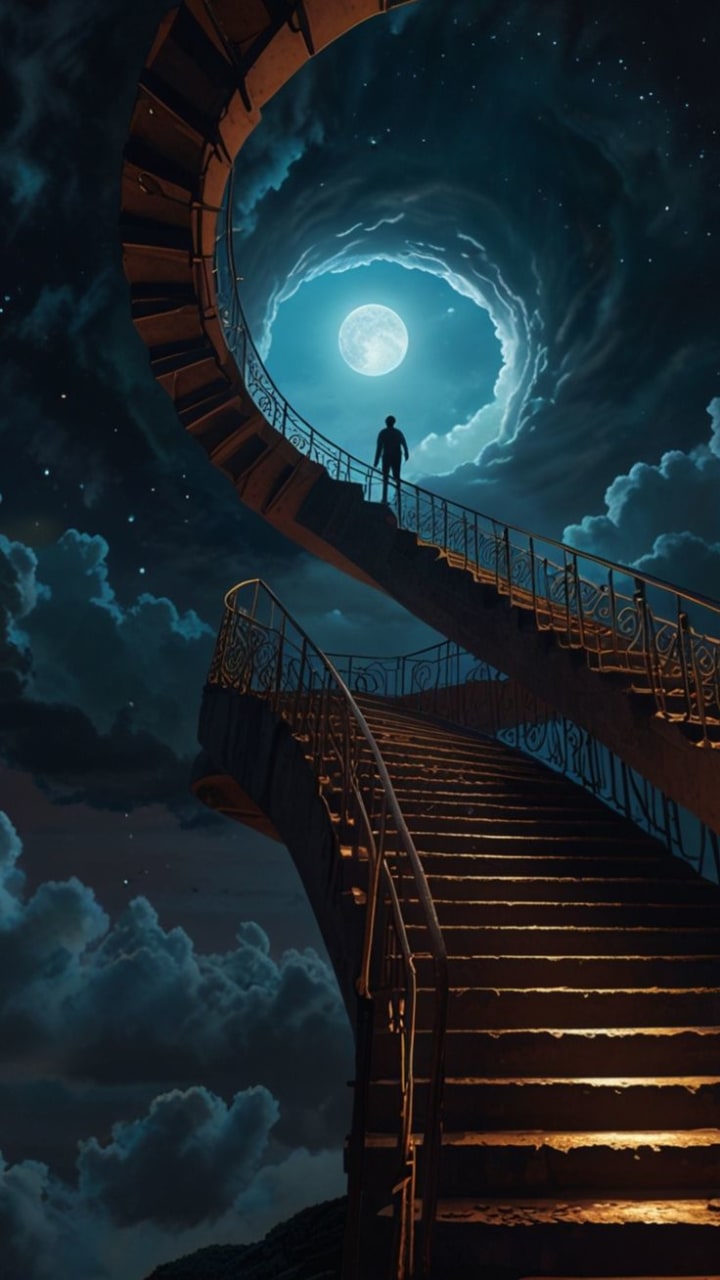
### Dreaming Beyond Oppression: Social Change and Human Rights
Beyond science and technology, some of the most powerful dreams are those rooted in justice and human dignity.
Harriet Tubman, born into slavery, dreamed not only of freedom for herself but for others. She became a “conductor” of the Underground Railroad, guiding enslaved people to freedom despite the threat of death. Her dream was larger than her life — and it helped shift the moral compass of a nation.
In South Africa, Nelson Mandela spent 27 years in prison, but never abandoned his dream of a multiracial democracy. When apartheid fell, and he became president, his vision of reconciliation over revenge inspired the world.
These are examples of dreaming beyond not just personal hardship, but systemic injustice. Such dreams are often met with resistance, but they shine lights on paths to a more humane world.
### The Inner Dreamer: A Psychological Journey
To dream beyond is not only an external act; it is also deeply internal. It requires one to question inherited beliefs, challenge self-doubt, and move beyond fear.
Psychologist Carl Jung spoke of the “individuation” process — a journey toward wholeness in which the individual must confront both the shadow and the potential within. Dreaming beyond involves this same journey. One must move past the boundaries set by family, culture, or trauma and imagine a self not yet fully formed.
In this way, dreaming beyond becomes a kind of spiritual courage — a willingness to face the unknown, not just in the world but within.
### Children as Natural Dreamers
Children are perhaps the purest examples of this dreaming. They see the world not as fixed, but as fluid. A stick becomes a sword, a box becomes a spaceship. They imagine freely, without the constraints of practicality or precedent.
The tragedy is that, too often, society educates children out of this capacity. Schools, careers, and social expectations can suppress the very thing that makes innovation and joy possible. But some manage to retain their childlike wonder — and it is these people who become artists, inventors, healers, and leaders.
### The Person in All of Us
Ultimately, the person who dreamed beyond is not just someone in history. They are within each of us. Every time we imagine a better life, a better society, a better version of ourselves — we are dreaming beyond.
Whether we act on those dreams is the next question. Dreaming is not a substitute for doing, but it is the seed from which action grows. To dream is to begin. To dare is to continue. To persevere is to create.
### Conclusion: The Ongoing Legacy of Visionaries
The person who dreamed beyond leaves behind more than achievements. They leave a changed imagination — in others, in culture, in the future.
The true legacy of dreamers is not in what they built, but in what they allowed others to believe. Every time someone says “What if?” or “Why not?”, they carry forward the spirit of those who dreamed before them.
And so, in a world often constrained by fear, conformity, and cynicism, the dreamer who looks beyond is a necessary light. They remind us not just of what we are, but of what we could become.

About the Creator
Amias yours
👑Our greatest weekness lies in giving up👑
The most certain way to succeed is always to
🔥try just one more time🔥
Keep reading
More stories from Amias yours and writers in Motivation and other communities.
A DREAM WITH IN A DREAM
# A Dream Within a Dream The room was silent, save for the rhythmic ticking of the antique clock on the shelf. Its hands pointed to 3:17 a.m. when I woke up—suddenly, breathlessly—as if I had fallen from a great height. My sheets were tangled around my legs, sweat dampening the pillow beneath my head. I sat up and blinked, trying to steady my breath and reorient my mind.
By Amias yours8 months ago in Humans
Beyond the Profile: How Influential Women Are Redefining Leadership on Their Own Terms?
Beyond the Profile: How Influential Women Are Redefining Leadership on Their Own Terms The definition of influence is changing. It’s no longer just about a title, a corner office, or a mention in a traditional power list. Today, Influential Women are shaping industries, redefining success, and building communities on their own terms. They are founders, executives, and thought leaders who understand that true leadership isn’t about being covered—it’s about having the authority to share their own narrative.
By influentialwomenmagazine2 days ago in Motivation
The Sound of Walking Alone
No one warns you about this: the path to your dreams gets quieter the further you go. At first, it’s all noise. Opinions. Advice. Encouragement. Even skepticism feels loud. Everyone has something to say—how you should start, when you should stop, who you should listen to.
By Habib Rehmanabout 10 hours ago in Motivation
TUS NUA - ch 53
TUS NUA – ch 53 New Beginnings – Mia and Midnight (*)(*)(*) Finola knew Ali’s brother-in-law needed to put his mind at rest. She fed her arm through his and led him outside. “We’ll sit here. If you like, I can put a block around us so our conversation will be private.”
By Margaret Brennan6 days ago in Fiction




Comments
There are no comments for this story
Be the first to respond and start the conversation.