
The Novel That Taught Me How to Breathe
How one forgotten paperback became my guide through grief
The Novel That Taught Me How to Breathe
How one forgotten paperback became my guide through grief
Grief has a way of folding time in half. Days become weeks, and weeks turn into months without my noticing. When my father passed away, I felt as if someone had pressed the pause button on life, yet the world outside continued to play on fast-forward. People spoke in muffled tones. Sunlight seemed harsher. Even the air I tried to breathe felt heavy, as though lungs alone were not enough to carry me through the weight pressing on my chest.
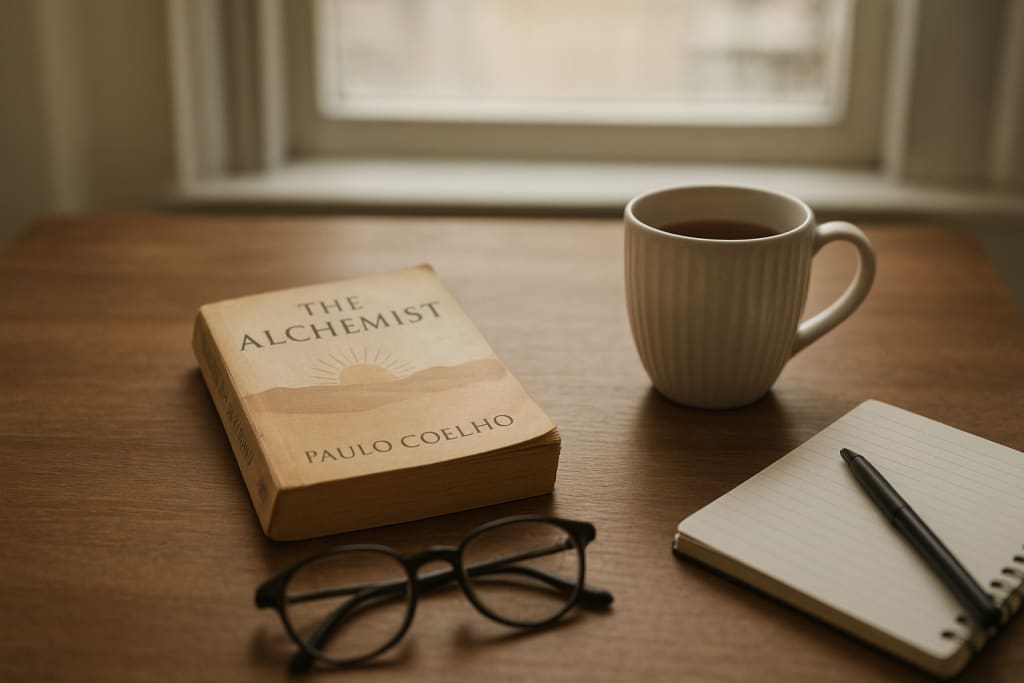
In those early weeks, I lived inside a haze. My nights blurred into shallow sleep, and my mornings arrived without purpose. I remember sitting in my living room one evening, surrounded by half-finished cups of tea, when my hand reached for a paperback book buried beneath a pile of mail. It had been there for months, purchased during a charity shop run I had long forgotten. Its cover was faded, the spine cracked, and the pages smelled faintly of dust and age.
The book was The Alchemist by Paulo Coelho.
I had heard of it before—friends spoke of it as a life-changing tale, though I had never taken those claims seriously. At that moment, though, I wasn’t seeking transformation. I wasn’t seeking anything at all. I simply needed distraction from my own suffocating thoughts. So I opened to the first page and began to read.
At first, the words felt like simple fables. A shepherd boy, a dream of treasure, a journey across deserts and cities. Yet with each chapter, I realized I was reading something much more profound than a story. I was reading a reflection of my own loss, my own longing, my own paralyzed state of being.
The boy sought purpose beyond his ordinary life, and in doing so he faced obstacles, loneliness, and despair. He stumbled, but he kept moving. And slowly, as I turned those yellowing pages, I found myself inhaling just a little more deeply.
It wasn’t that the book erased my grief. Nothing could. But it whispered that grief was part of a larger journey, not a permanent prison. Coelho’s words reminded me that what feels like an ending can, in time, become a beginning.
I started to carry the book everywhere. On the bus, in the kitchen, even to bed. Some nights I would wake at 3 a.m. with my heart pounding, unable to bear the silence, and I’d read a single page. Somehow, the sentences grounded me. They told me to listen, to trust, to keep going even when the path felt meaningless.
One line struck me like lightning: “When you want something, all the universe conspires in helping you to achieve it.”
I wept when I read that line. Not because I suddenly knew what I wanted, but because it reminded me I still had permission to want anything at all. Grief had made me forget that I was still alive, that I still had a future waiting to be shaped.
Slowly, the book nudged me back into living. I began taking walks again, listening to birds, noticing the wind on my face. I started writing small journal entries—not about my father’s death, but about the textures of the day: the way the sky shifted from grey to gold, the sound of laughter from a neighbor’s window, the taste of fresh bread. Little things that reminded me life still existed.
I also began talking to people again. Sharing tea with a friend felt less like a burden and more like a gift. I even laughed once, startling myself with the sound. Each of these small steps was like taking a deeper breath after being underwater too long.
And through it all, that battered paperback stayed with me. It wasn’t just a story anymore. It was a teacher, a guide, a reminder that I could still move forward even if I didn’t know where I was going.
Months later, when I finally returned to the charity shop, I slipped the book back onto the shelf. It had given me what I needed, and I hoped some other wandering soul would stumble across it the way I had. I knew the story by heart now. More importantly, I knew the lesson: life will break you, yes, but it also gives you unexpected tools to mend.
Today, when I think of my father, the ache still rises in my chest, but I no longer feel suffocated. I breathe. And every time I do, I remember the novel that taught me how.
About the Creator
Keep reading
More stories from Aariz ullah and writers in Motivation and other communities.
Jealousy: The Secret Teacher We Ignore
Most of us don’t like to admit it, but jealousy is one of the most universal human emotions. You feel it when a friend buys a new car while you’re still saving for yours. You feel it when a co-worker gets praised for the very idea you had but never spoke up about. You feel it when scrolling through social media, staring at filtered lives that look shinier than your own.
By Aariz ullah6 months ago in Motivation
How to Build an Environment That Supercharges Motivation and Drives Lasting Success
Motivation is often seen as an internal force, something that comes from within. Yet the environment in which people live, work, and interact plays a crucial role in sustaining energy, focus, and effort over time. Creating surroundings that naturally support motivation can dramatically improve consistency, productivity, and the ability to reach ambitious goals. Understanding how to design such an environment is key to turning intentions into tangible results.
By Lukáš Hrdličkaabout 15 hours ago in Motivation




Comments
There are no comments for this story
Be the first to respond and start the conversation.