
The Majestic Wolf: Guardian of the Wild
Symbol of Strength, Loyalty, and Survival

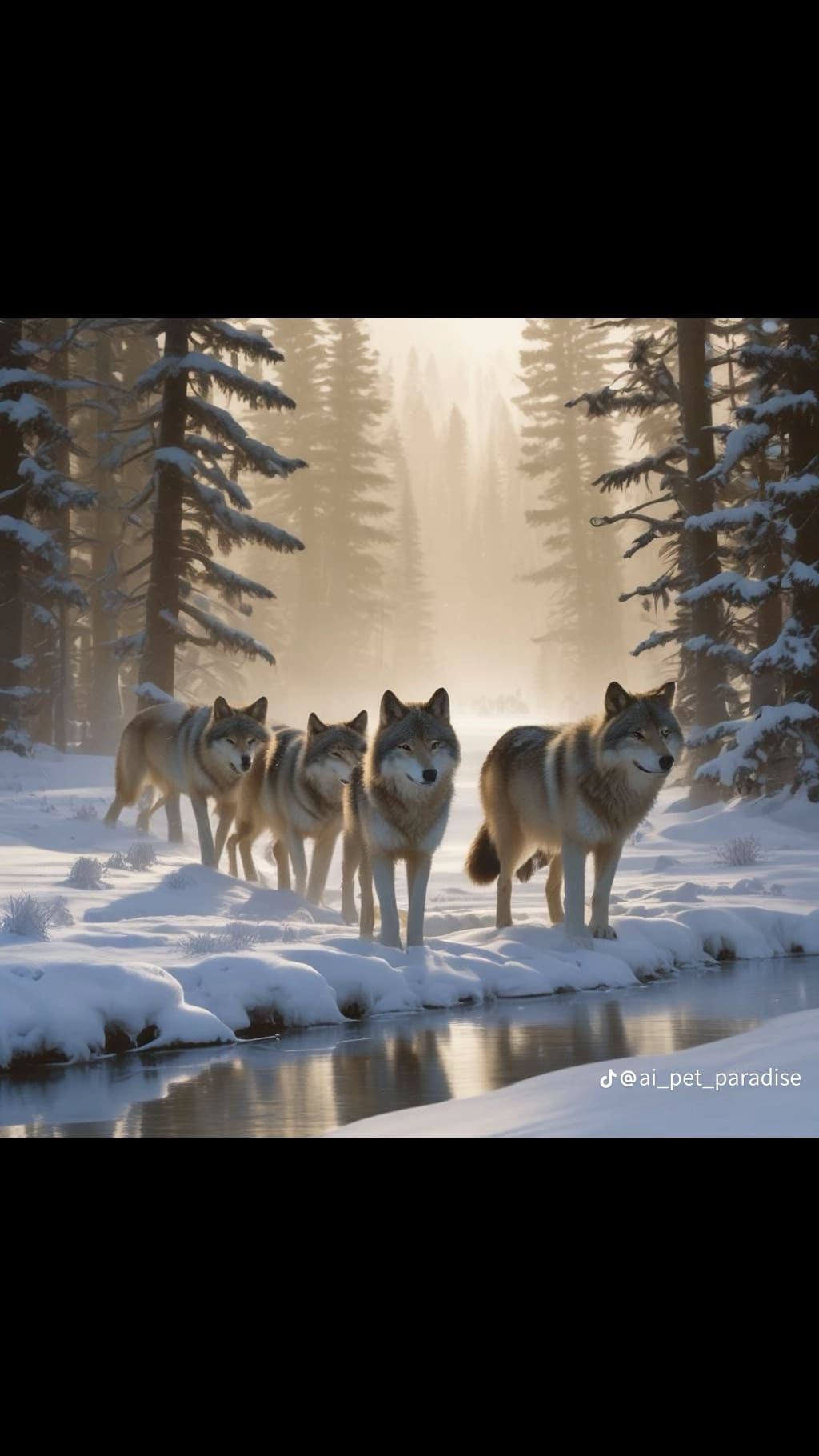
Few creatures stir the human imagination like the wolf. With its sharp eyes, haunting howl, and unwavering loyalty to its pack, the wolf has long stood as a symbol of wilderness and mystery. Across the icy tundras of the North, the dense forests of Europe, and the deserts of Arabia, wolves have adapted and survived for thousands of years. Their story is one of resilience, teamwork, and misunderstood beauty.
---
A Life Built on Teamwork and Family
The wolf’s life revolves around one of nature’s most fascinating social structures — the pack. A wolf pack is not a random group of animals but a family unit led by an alpha pair — the mother and father of the group. Together, they raise their pups, teach them how to hunt, and defend their territory from rivals.
Wolves rely heavily on communication. They use a range of signals — from facial expressions and tail positions to growls, barks, and howls. Their famous howling isn’t just a haunting song of the wilderness; it’s a way to mark territory, locate other pack members, and strengthen their bonds. Each pack has a unique “howl language,” a melody that only its members truly recognize.
This deep sense of unity reflects values often admired by humans: loyalty, discipline, and cooperation. The wolf shows that strength doesn’t come from isolation but from working together for a common goal.
---
Hunters and Keepers of Ecological Balance
Wolves are apex predators — they sit at the top of the food chain. Their hunting skills are legendary, but they rarely hunt alone. Instead, wolves use intelligent strategies and teamwork to track and take down prey much larger than themselves, such as deer, moose, or elk. Every member of the pack plays a role during the hunt, proving that coordination is more powerful than brute force.
But their hunting does more than feed their families — it keeps the ecosystem healthy. By controlling herbivore populations, wolves prevent overgrazing and allow forests and grasslands to regenerate. When wolves were reintroduced into Yellowstone National Park in the United States, scientists observed something miraculous: rivers changed course, trees and plants returned, and bird and beaver populations grew again. This powerful example shows how one species can restore balance to an entire environment.
---
The Misunderstood Predator
For centuries, wolves have been both feared and demonized. Stories like “Little Red Riding Hood” and “The Three Little Pigs” painted them as dangerous beasts — heartless, bloodthirsty, and evil. In many parts of the world, farmers saw wolves as threats to their livestock, leading to widespread hunting and near extinction in some regions.
But modern science has rewritten that narrative. Wolves are naturally shy and prefer to avoid humans. Attacks on people are extremely rare. Their so-called “ferocity” is simply a survival instinct, no different from any other predator protecting its family or food. The real villain has often been misunderstanding.
As humans expand into wild areas, wolves lose their habitat and natural prey, forcing them into conflict with livestock. Yet, when managed with respect and understanding — through non-lethal deterrents and conservation zones — humans and wolves can coexist peacefully.
---
Cultural and Spiritual Significance
Across ancient civilizations, the wolf has been a powerful spiritual symbol.
In Native American cultures, the wolf is a teacher and guide — representing loyalty, courage, and intuition. Tribes like the Pawnee and Apache believed the wolf’s spirit helped warriors stay brave and families stay united.
In Norse mythology, the giant wolf Fenrir symbolized power and destiny, while the twin wolves Geri and Freki were loyal companions to Odin, the god of wisdom and war.
Even in Islamic culture, the wolf appears in historical tales and poetry as a figure of strength, independence, and intelligence.
To some, the wolf is a lone wanderer — a symbol of freedom and individuality. To others, it embodies unity and leadership. This duality — strength in solitude and loyalty in family — is what makes the wolf’s symbolism so timeless.
---
Conservation: A Struggle for Survival
Despite their resilience, wolves face modern challenges. Habitat loss, illegal hunting, and human fear still threaten many wolf populations. While conservation programs have brought wolves back to some regions, others remain critically endangered.
In Saudi Arabia and parts of the Middle East, the Arabian wolf, a smaller subspecies, faces unique threats due to urban expansion and hunting. Yet, efforts by conservationists are helping protect these incredible animals through sanctuaries and education programs.
In the U.S. and Europe, laws now protect wolves under wildlife conservation acts, allowing populations to slowly recover.
Protecting wolves is not only about saving a single species — it’s about maintaining the health of entire ecosystems. Every howl in the night is a reminder that the wild still breathes, and that nature thrives when balance is restored.
---
Lessons from the Wolf
The wolf teaches us more than just survival — it shows us the importance of connection.
It reminds us that family, loyalty, and teamwork are the pillars of strength.
It shows that leadership is earned through respect, not fear.
And it whispers a lesson to humankind: that even the most misunderstood beings have their purpose in the grand design of life.
The wolf’s story is a reflection of our own struggle — to find harmony between independence and belonging, freedom and responsibility, power and compassion.
---
Conclusion
The wolf stands as a living symbol of wilderness, resilience, and unity. Its song echoes through forests and mountains, carrying the ancient rhythm of the earth. To protect the wolf is to protect the heart of the wild — a reminder that humans are not separate from nature, but a part of it.
As we move deeper into an age of urban life and technology, may we still pause to listen to the distant howl of the wolf — a call to remember where we came from, and what we must protect.
About the Creator
Ghalib Khan
my name is Ghalib Khan I'm Pakistani.I lived Saudi Arabia and I'm a BA pass student
Keep reading
More stories from Ghalib Khan and writers in Motivation and other communities.
The Clever Story of Akbar and Birbal
The Mughal court of Emperor Akbar was one of the grandest in history, filled with ministers, scholars, poets, and wise men. Among them, one name stood out—Birbal. He was not only Akbar’s trusted advisor but also his dearest friend. Known for his intelligence, quick wit, and ability to solve even the trickiest problems, Birbal’s tales have been passed down for generations as lessons in wisdom and humor.
By Ghalib Khan5 months ago in Motivation




Comments
There are no comments for this story
Be the first to respond and start the conversation.