
The Lone Lion
Survival, Strength, and Solitude in the Wild
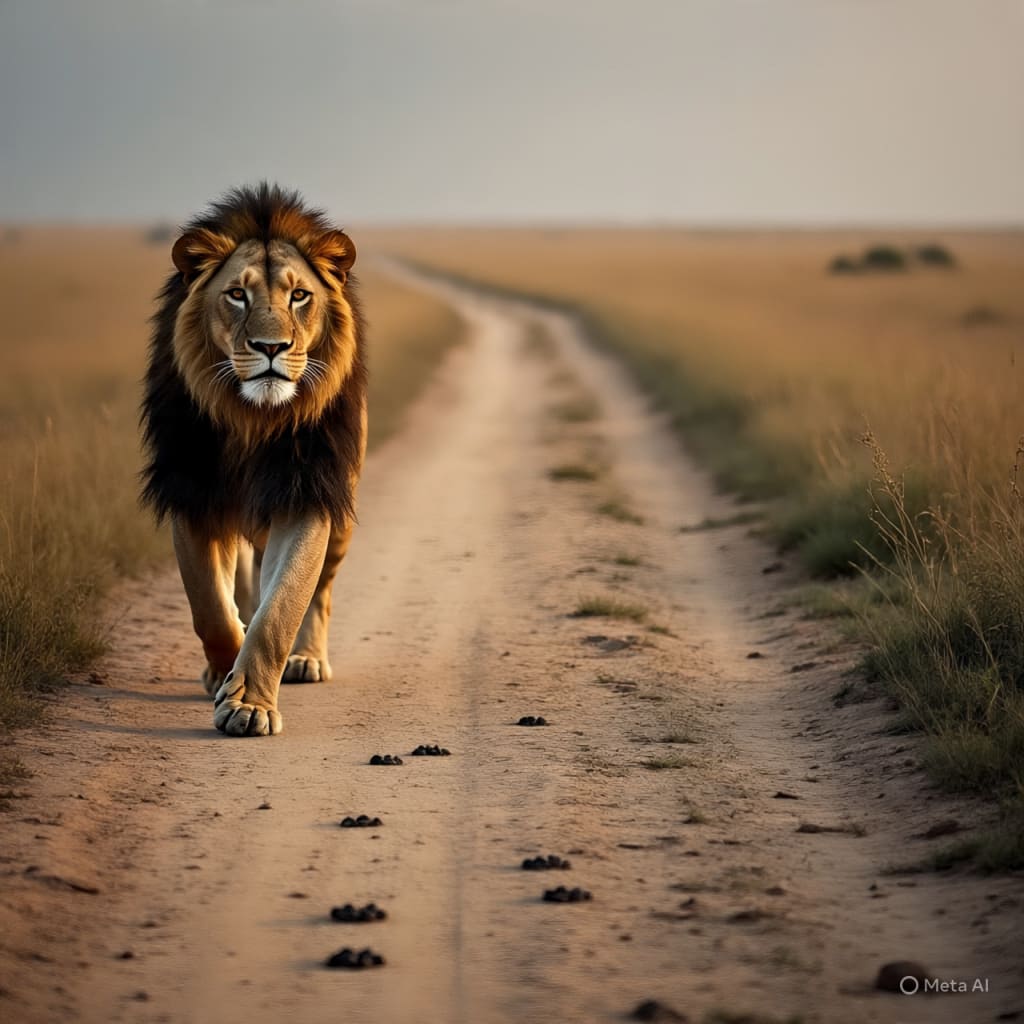
King of the Savannah: The Silent Roar at the Heart of the Pride
In the golden hush of dawn, when the first rays of sun spill across the endless plains, a figure rises above the tall grass — a silhouette crowned with a mane that shimmers like fire. To see a lion at this hour is to witness a living symbol of power, but behind this image lies a world more complex than raw strength alone.
The lion — Panthera leo — has long been called the King of the Savannah, yet this title masks a story far more nuanced. His roar shakes the night and declares dominion, but beneath that thunder is a silent struggle for survival that few truly understand. This is the paradox at the core of the world’s most iconic predator: feared, revered, yet quietly vulnerable.
A lion’s roar can carry for five miles across the open plains. It warns rivals, gathers the pride, and asserts presence. Yet not every roar is heard — some lions live and die with only a whisper of their story reaching human ears. The Silent Roar is the untold side of the lion’s legend — the endless fight against starvation, poachers, rival coalitions, and an ever-shrinking habitat. For every lion that stands on a rocky outcrop, mane flowing in the sunset, many more slip away unseen, their bones claimed by the dust.
What keeps this king alive is not just muscle or fang but something far softer: family. Heart of the Pride — this is where true strength lies. In the pride, lionesses form lifelong bonds. They hunt together, raise cubs together, and guard each other fiercely. It is the females who do most of the work, weaving a matriarchal net of survival. The males come and go — kings one season, outcasts the next — but the pride endures through the sisters and mothers who hold its heart together.
Yet not all lions are blessed with the safety of numbers. Some become wanderers — The Lone Lion — banished by stronger rivals or forced to leave to find new territory. These nomads face brutal odds alone. A solitary lion must fight for every scrap of food, every drop of water, every inch of ground. Some succeed and become kings in new lands. Others vanish without a trace, ghosts haunting the edge of human memory.
Still, even the lone lion is bound to the Legends of the African Plains — the Roar of Majesty that echoes through folktales and campfire stories. Across cultures, the lion is a symbol of courage, a spirit guide, an emblem of royalty. In ancient times, warriors painted lions on shields and banners. In modern times, the lion’s face appears on flags, coins, and sports teams, an ever-present reminder of strength. But the reality behind the myth is far more fragile than the legends suggest.
Today, Africa’s lions face a peril greater than rival males or hyenas at the kill: humankind. Encroaching settlements push them into shrinking pockets of wilderness. Trophy hunting and illegal poaching chip away at their numbers. Climate change shifts the rains and with them, the prey herds lions depend on. Some researchers warn that within decades, the roar that once thundered across the savannah could fall silent forever.
Yet all is not lost. Conservationists, scientists, and communities are fighting to keep this king on his throne. Reserves and national parks protect critical habitats. Anti-poaching patrols guard the prides at night. Innovative programs help local people coexist with lions rather than kill them in retaliation for lost livestock. Each small success adds up, keeping hope alive that the roar will not fade into silence.
To stand in the presence of a lion is to feel something primal stir inside us. It reminds us that wildness still exists beyond our cities and screens. It whispers of ancient connections — predator and prey, hunter and hunted, ruler and subject. The lion is not just an animal; it is a living story. Its mane holds the wind of a thousand storms, its eyes reflect the sunlit plains and the shadows of the night.
So the next time you hear the phrase King of the Savannah, remember that behind the crown is a creature whose life is both magnificent and precarious. Remember The Silent Roar of those whose stories we may never hear. Remember The Lone Lion who walks miles alone under the burning sun. Remember The Heart of the Pride, the lionesses who teach us that true power often lies in quiet cooperation. And remember the Roar of Majesty that, for now, still rolls across the African plains — a reminder that some legends are worth fighting for.
About the Creator
Keep reading
More stories from SYED NUMAN and writers in Motivation and other communities.
The 8-8-8 Rule: Balance Your Day, Balance Your Life
The 8-8-8 Rule: Balance Your Day, Balance Your Life Mastering the Art of 8 Hours Work, 8 Hours Rest, 8 Hours Play In today’s world, where the line between work and life keeps blurring, achieving balance has become more important than ever. Many people feel overwhelmed by long working hours, endless notifications, and the constant pressure to “do more.” But what if the secret to a healthy, happy, and productive life is surprisingly simple? That’s where the 8-8-8 Rule comes in — an old yet timeless principle that encourages us to divide each day into three equal parts: 8 hours for work, 8 hours for rest, and 8 hours for what makes us feel alive.
By SYED NUMAN8 months ago in Motivation
The Habit That Gave Me Back My Confidence
For a long time, I felt invisible. Not the kind of invisible where people literally can’t see you, but the kind where you slowly begin to believe that your voice doesn’t matter. In conversations, I spoke less. In meetings, I stayed quiet. Even when I had ideas, I kept them to myself because I thought someone else probably had a better one.
By Dadullah Danish4 days ago in Motivation
Entrepreneur Terry Croteau -Begins New Chapter in Landscaping and Outdoor Living
Ontario, Canada — Entrepreneur Terry Croteau is beginning a new phase in his professional life, focusing on landscaping, outdoor living spaces, and a lifestyle that values both nature and personal well-being. The shift reflects a practical step forward for Croteau, combining hands-on outdoor work with a growing interest in wellness and community connection.
By Variety Pressa day ago in Motivation
📢 Raise Your Voice Thread: 03/05/2026
Our “Raise Your Voice Threads” are hosted most alternating Thursdays at 12PM ET to offer creators more avenues to uncover exceptional stories on Vocal. As we are continuously searching for fresh creators and inspiring stories, this thread provides an opportunity to exchange and discuss the stories that have moved and motivated us on Vocal.
By Raise Your Voice by Vocal7 days ago in Resources




Comments
There are no comments for this story
Be the first to respond and start the conversation.