
The Forgotten hands
A journey of silent hands loud sacrifices

The man whom I called "father" had completed seventy-two long, tireless years of life.
The scent of dust, dirt, and cement had long ago settled into his breath. His hands, once strong and calloused from endless labor, were now full of wrinkles, his bones frail, yet his resolve remained unbroken — as if time had never slowed him down.
Each crack in his skin told the story of decades spent under the unforgiving sun, of winters endured without warm clothing, of countless days when his own needs were buried under the weight of his responsibilities.
He spent his entire life laboring.
Day and night, drenched in sweat, hands cracked and bleeding, he moved like a man possessed — driven by one dream alone: to see his children stand on their own feet. Even when he burned with fever through the nights, he would rise with the morning sun, fastening his worn-out shoes and picking up his tools again — just for a few meager coins.
Without any expectations. Without any applause. Without any complaints.
He had three sons.
Yes, sons — the pride of his youth, the treasures he had poured his life into.
For them, he had sacrificed countless dreams, countless comforts.
For them, he endured sleepless nights, half-empty stomachs, and aching limbs.
He had once dreamed that his old age would be adorned with their care, that his worn-out hands would finally find rest in the strong, loving hands of his sons.
But fate had played a cruel, heart-wrenching game.
The very sons he once took pride in, today were his deepest, bleeding wound.
The eldest son never worked a day in his life.
An ocean of excuses, a desert of effort — he lived expecting others to provide, his pride untouched by shame.
The youngest son drowned himself in the poison of intoxication, wasting not only his own life but also scattering disgrace upon his father’s worn shoulders.
And the third son — sharp-tongued, stone-hearted — could offer nothing but rebukes, rolling his eyes at the very sight of his parents’ needs.
When father returned home, exhausted from a long day's labor, he longed for even one of his sons to stand up and say, "Father, sit down. Let me earn for you today. You have done enough."
But he was only met with cold glances, walls of indifference, and a silence that screamed louder than words.
No one held his trembling hands; no one offered to share the heavy burden crushing his aging shoulders.
Every scar on his body screamed silently, telling tales of sacrifices that had long been forgotten.
Yet the sons, immersed in their own luxuries, their own small worlds, remained blind and deaf to the silent cries of the man who had given them everything.
And the daughters?
Ah, those daughters — always considered second-class citizens, always treated as burdens by a society too blind to see their worth —
they were the ones who stood at the forefront of every sacrifice.
Whenever father fell ill, it was the daughters who stayed awake through the long, fearful nights, sacrificing their sleep, their peace, their comforts.
When he needed medicine and money was short, it was they who removed their bangles, sold their jewelry — the very ornaments given to them for their marriages — without hesitation or complaint.
When his heart ached, it was their arms that gave him strength, their laps that offered him the peace he never found elsewhere.
Their eyes held a love so pure, so selfless, that words could never capture it.
Married and managing their own households — managing their own children, their own struggles — yet these daughters still cared for their father's home with unmatched devotion.
Every festival, every celebration, every sorrow — it was they who thought of him first, who returned again and again, as if his home was still the center of their world.
Sometimes they would send food prepared by their own hands.
Sometimes they would rush in with medicines, ignoring the distance and the hardship.
Sometimes, leaving their own sick children behind, they would spend countless nights by his side, wiping his forehead, whispering words of hope and prayer into his fading ears.
And the sons?
It seemed they had lost even the slightest awareness of their father’s suffering.
To them, he was just another burden — an inconvenience, a fading relic of obligations they no longer wanted to carry.
Father watched with his own broken heart —
The same hands that once taught his sons to walk, to stand, to dream —
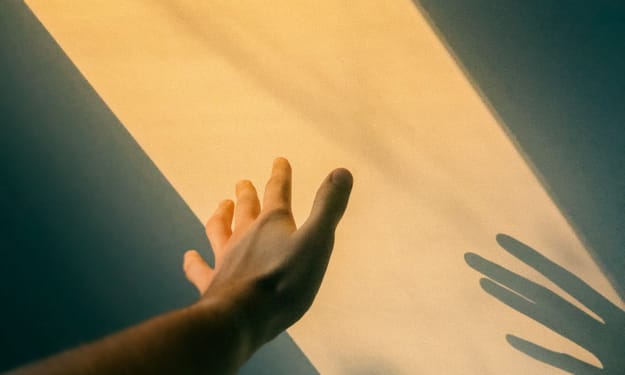
those hands now trembled in the air, searching for an anchor that would never come.
The daughters, once dismissed as weak, had become the iron pillars holding up his final days.
One day, father fell seriously ill.
Burning with fever, unable to move, he lay helpless like a fallen tree.
His sons sat nearby, absorbed in their glowing phone screens, giggling at jokes, checking scores, posting meaningless updates.
And the daughters?
They rushed from far and near, placing wet cloths on his forehead, changing his clothes, whispering prayers of comfort into his ears that could barely hear anymore.
Tears rolled down father's cheeks —
Tears not just of fever and physical pain — but of a lifetime of heartbreak, betrayal, and shattered dreams.
In his final days, when even standing up became impossible, he still mumbled:
"I must go to work... my children are hungry..."
A thought so deeply rooted in sacrifice that even death could not erase it.
Hearing this, the daughters wept silently, biting their lips to suppress the cries that would have shattered the fragile peace.
"Father, you rest now. We are here. We will take care of everything," they pleaded.
But the sons?
Not a trace of shame. Not a flicker of regret.
On his deathbed, father finally saw the truth with painful clarity —
The daughters weeping at his side, clutching his hands, refusing to let him slip away alone.
The sons nowhere to be found — their seats empty, their hearts closed.
And then, he closed his tired eyes for the last time.
A man who had sacrificed everything for others died with only the love of his daughters lighting his path to the next world.
Even at his funeral, it was the daughters’ tears that soaked the earth over his grave.
It was their trembling hands that offered prayers of forgiveness.
And the sons?
Perhaps they returned to their distractions, their phones, their petty entertainments — unmoved and unchanged.
---
Moral
True love and sacrifice are not bound by whether one is a son or daughter.
Serving and honoring parents is not just a tradition — it is a sacred duty, a divine trust.
Giving parents respect, love, and support while they are alive is the true inheritance — otherwise, only mountains of regret will remain.
Because when you are blessed with your parents' presence, you should carry their weight not as a burden, but as a blessing.
A blessing that once lost, no wealth, no success, no tears can ever replace.
About the Creator
Keep reading
More stories from Rahat naz and writers in Motivation and other communities.
Heroes begin at home
Hamid was a successful businessman. Wealth, fame, social status — he had it all. People looked at him with envy. His name was celebrated in gatherings, his quotes were shared widely on social media, and young men saw him as their role model.
By Rahat naz10 months ago in Motivation
Pearl
1980 something. we all hung out at Pearl and you and i were nothing special, or so i thought. i mean we all danced, drenched in our own sweat, our own saline solution of fear, too many beers, shots, laughter, tears, fucks in the bathroom and i don't know when we began to be afraid. do you?
By ROCK aka Andrea Polla (Simmons)4 days ago in Fiction



Comments (1)
Great