
The Day I Stopped Saying Yes to Everything
a personal essay about setting boundaries.
The Day I Stopped Saying Yes to Everything
My therapist called it "people-pleasing." She said it was a learned behavior, a coping mechanism I'd developed to avoid conflict and earn approval. I'd always been a yes-person. A perpetual nodding head, a willing participant in anyone's whirlwind. I'd say yes to extra shifts at work, yes to weekend camping trips with a group I barely knew, yes to volunteering for committees, yes to helping friends move furniture – even when my own apartment was a disaster zone. I was a walking, talking embodiment of the phrase "I'm happy to help." But underneath the surface, a quiet rebellion was brewing. I was exhausted. Overwhelmed. And frankly, resentful.
It started subtly. A slight tremor in my voice when a friend asked for yet another favor. A nagging feeling of emptiness after another evening spent fulfilling someone else's needs. I started noticing the subtle shifts in my own energy, the way my shoulders would slump, the way my eyes would glaze over when faced with another request. I was physically and emotionally depleting myself.
The turning point, ironically, came during a particularly hectic week. My friend Sarah, ever the whirlwind, had a spontaneous weekend getaway planned with a group of friends. She asked me if I wanted to join. It was a weekend I’d been looking forward to, a chance to finally catch up on some much-needed reading. But the thought of missing out on the fun intimidated me. I felt a familiar pang of guilt, a fear of being the odd one out. So, I said yes.
That weekend was a disaster. The group was loud, the conversations were superficial, and I felt utterly out of place. The weekend was supposed to be fun, but it felt more like a chore. I spent most of the time feeling disconnected, longing for the quiet solitude of my apartment. When I got home, I was physically and emotionally drained. The exhaustion lingered, a heavy cloak draped over me.
That night, I cried. Not in anger or frustration, but in a quiet, sorrowful release. I cried for myself, for the person I was neglecting. I cried for the countless hours I’d sacrificed, the countless opportunities I’d missed. I cried for the life I was failing to build for myself.
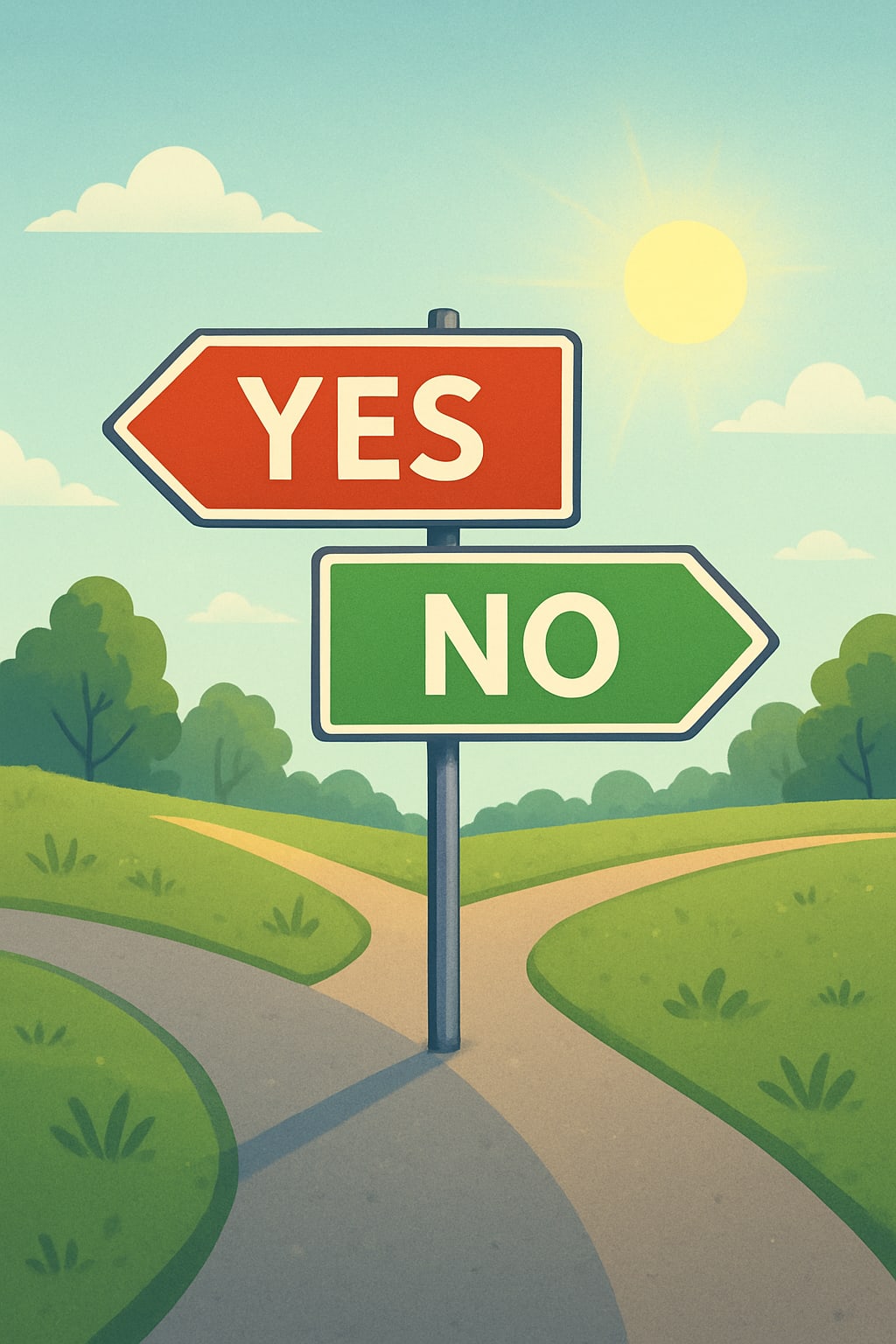
The next day, I made a decision. I was done. Done with saying yes to everything. Done with sacrificing my own needs and desires. It wasn't about being selfish, it was about being self-aware. It was about recognizing my own limits and respecting them.
It wasn't easy. There were moments of hesitation, moments of doubt. There were friends who were hurt when I politely declined their requests. There were times when I felt guilty for prioritizing my own well-being. But I persevered. I started saying no. Not with aggression, but with kindness and clarity. I explained my reasons, I offered alternatives, and I learned to set boundaries.
The first few "no's" felt like a physical act of rebellion. But with each one, a sense of freedom washed over me. I felt more in control of my time, my energy, and my life. I started prioritizing my own needs, not just my own desires but also my own health. I made time for hobbies I’d neglected, like reading, writing, and painting. I started saying no to commitments that didn't align with my values or my energy levels.
I still had my moments of vulnerability and doubt, but I was learning to recognize and respect my own boundaries. I was learning to prioritize my own well-being, to say no without feeling guilty. I was learning to love myself, not just as a yes-person, but as a whole person.
The day I stopped saying yes to everything wasn't a single moment, but a gradual shift in perspective. It wasn't a dramatic act of defiance, but a quiet revolution within myself. It was a day I finally started to understand that my well-being was just as important as everyone else's. And that, in itself, was a profound act of self-love.
About the Creator
Keep reading
More stories from Aariz ullah and writers in Motivation and other communities.
Humility in the Age of Social Media
Introduction: The Scroll That Shapes Us Because the new norm is everyone wanting a starring role on social media. From the moment we open up our devices, we are greeted with carefully curated highlights—dream vacations, six-figure businesses, picture-perfect relationships, and inspirational captions that incite an inner monologue trying to ask, "Am I doing enough with my life?"
By Aariz ullah6 months ago in Motivation
Becca
"Everything is so... flat." Denille said stupidly as she looked around her new neighborhood. She looked around at the muted desert where even the smallest sign of life seemed to have given up. The plant life was shrubs that were half cooked by the heat and where there should have been a lawn, a mess of white rocks laid glistening in the sun. Even the sky looked stretched thin, like the sun had ironed it smooth. She’d moved from Riverside, where at least there were hills, but here in Barstow, everything felt baked and brittle.
By Sara Wilson7 days ago in Fiction



Comments
There are no comments for this story
Be the first to respond and start the conversation.