
The Business Build-Up
A strategic guide to turning bold ideas into thriving enterprises
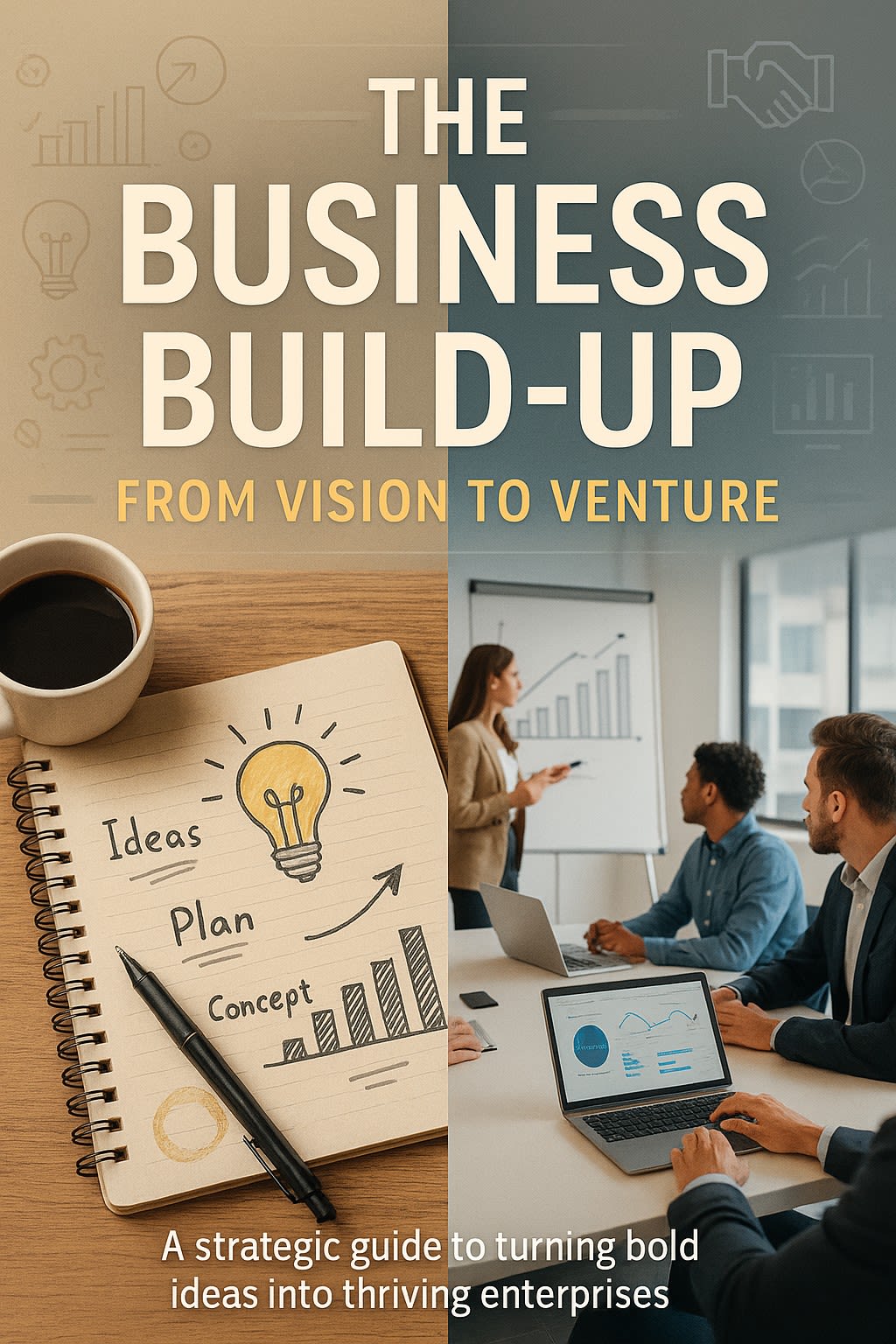
The Business Build-Up: From Vision to Venture
Starting a business is more than launching a product or service; it's the careful construction of an ecosystem built on vision, strategy, and perseverance. The business build-up is a journey—one that transforms ideas into enterprises capable of impact and income. Whether it’s a tech startup, a local shop, or a service-based company, every business begins with a spark and evolves through deliberate planning and relentless execution.
1. The Spark of Vision
Every business begins with an idea, but not every idea becomes a business. The key difference lies in clarity and commitment. A strong business vision provides direction—it defines what the business aims to solve, who it serves, and how it differentiates itself from the competition. Entrepreneurs who succeed in the build-up phase often have a deep understanding of their industry, their audience, and their unique value proposition.
Vision without action, however, remains a dream. The business build-up demands that entrepreneurs take this vision and begin shaping it into something concrete. This often starts with research—market analysis, competitor evaluations, and customer discovery. Knowing what the market wants, what’s missing, and where trends are heading forms the groundwork for a solid business plan.
2. Strategic Planning
Once the vision is validated, the next step is planning. A business plan is not just a formal document; it is a roadmap. It outlines the structure, strategy, financial model, marketing plan, and operational flow of the business. During the build-up phase, entrepreneurs must think long-term but act in the short-term.
This planning also involves resource assessment. What will it take in terms of time, money, technology, and talent to launch and sustain the business? Many new ventures fail not because of a bad idea but because of poor planning or underestimating the resources required. Creating realistic projections, setting milestones, and building contingency plans are critical components of a successful build-up.
3. Building the Foundation
Execution begins with establishing the core structure. This includes legal registration, choosing the appropriate business model, opening business accounts, setting up accounting systems, and acquiring necessary permits. These seemingly mundane tasks form the backbone of a legitimate and operational business.
Equally important is assembling the right team. Early-stage teams are often small, but they must be versatile, committed, and aligned with the business’s vision. Culture matters just as much as capability. A strong founding team can compensate for a lack of resources with innovation, collaboration, and determination.
4. Branding and Marketing
During the build-up, brand identity becomes a powerful tool. A business is more than what it sells—it's how it is perceived. From logo and website to messaging and customer interaction, branding plays a pivotal role in gaining attention and building trust.
Marketing strategy in this phase should focus on building awareness and early traction. Social media, content marketing, partnerships, and customer referrals are cost-effective tools to create visibility. The key is consistency and authenticity—early adopters respond to brands that are real, responsive, and relatable.
5. Iteration and Adaptation
No business gets everything right the first time. During the build-up, flexibility is crucial. Feedback loops from customers, market changes, and internal learning should all inform improvements. Iteration isn’t a sign of failure—it’s a necessary part of growth.
Founders must be willing to pivot if necessary—whether it’s adjusting pricing, changing target markets, or refining the product. Being too rigid can kill momentum; being too loose can erode focus. The most resilient businesses are those that evolve without losing their core purpose.
6. Scaling Forward
The final stage of the build-up transitions into growth. This involves expanding the customer base, increasing revenue, and potentially seeking investment. Scalability should be built into the business model from the beginning, but timing the scale is critical. Scale too soon, and you risk overextending; scale too late, and you miss opportunities.
The business build-up is not a one-size-fits-all process. But for every entrepreneur, it’s a test of clarity, discipline, and courage. Turning an idea into a business requires more than passion—it demands strategy, action, and relentless focus. With the right foundation, the build-up doesn’t just lead to a business—it builds a legacy.
About the Creator
Keep reading
More stories from Saadkhan and writers in Motivation and other communities.
Memories of School Life
Memories of School Life School life is one of the most cherished phases of a person's journey. It is a time filled with innocence, curiosity, learning, and friendships. As we grow older, the memories of school life often bring a sense of nostalgia, reminding us of simpler times, meaningful lessons, and the people who helped shape our personalities.
By Saadkhan10 months ago in Motivation



Comments
There are no comments for this story
Be the first to respond and start the conversation.