
The Bold Gamble That Made Rocky: How a Small Studio Let Stallone Bet on Himself
The untold story of how Sylvester Stallone turned down fortune, risked everything, and convinced two producers to let him become Rocky Balboa.

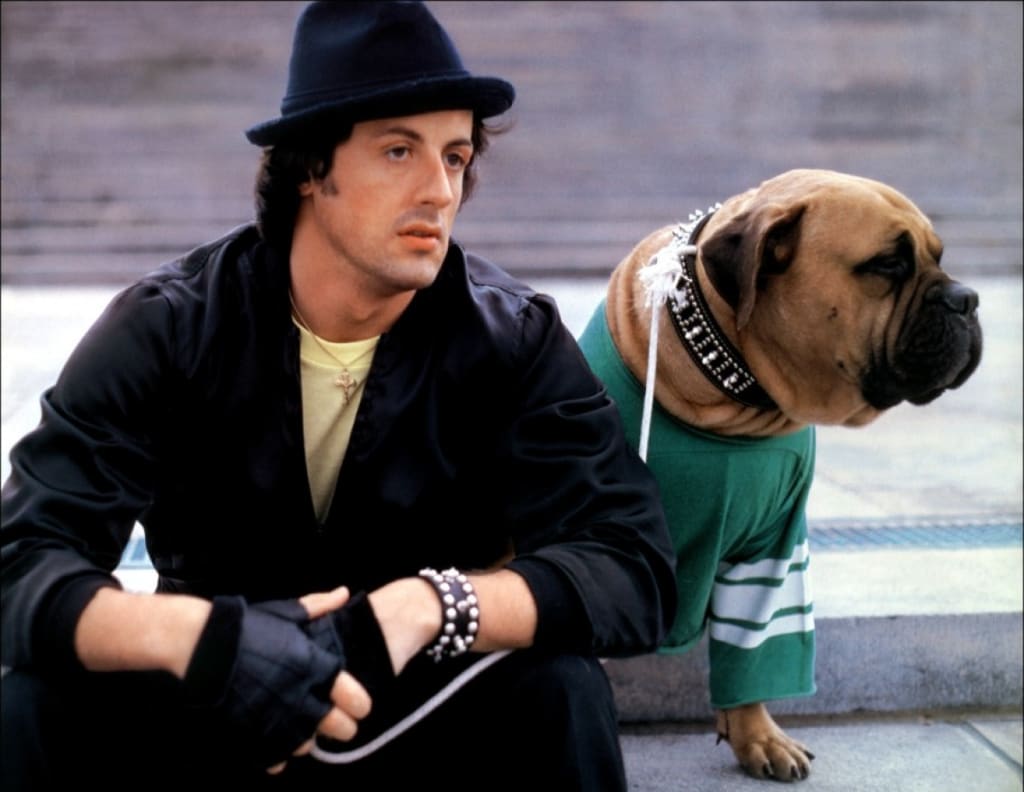
When Sylvester Stallone sat with his handwritten script for Rocky, Hollywood wasn’t waiting with open arms. He was a struggling actor, broke and largely unknown, clinging to a dream that most people would have abandoned. Studios liked his story about an underdog boxer, but they didn’t want Stallone in the starring role. They wanted someone with star power, a proven name who could guarantee ticket sales. Stallone’s insistence on both writing and playing Rocky Balboa was almost career suicide. Yet what happened next became one of the boldest gambles in film history.
After circulating the script, Stallone was offered large sums — at one point, over $300,000 — if he would just step aside and let a “real star” headline the movie.
“I had about $106 in the bank. They offered me a fortune for the script — but I said, ‘No, I have to play him.’ It was madness, but it was the only way.”
For someone who couldn’t even afford rent, turning down that kind of money seemed reckless. But Stallone believed Rocky wasn’t just a story — it was his story. He dug in because,
“I knew if I sold the script, they’d cast someone else as Rocky. And then every time I’d see that movie, I’d hate myself. I couldn’t live with that.”
telling every executive that he would not sell unless he played the lead. Most producers walked away. Stallone’s script sat in limbo, praised but unwanted.
Then came a fateful twist. United Artists showed interest but only under conditions: they wanted a major actor. That deal collapsed when Stallone refused. But a pair of producers, Irwin Winkler and Robert Chartoff, saw something in both the script and Stallone himself. They believed in the authenticity he brought, that his underdog struggle mirrored Rocky’s climb. They fought to give him the chance. United Artists finally relented, but on one condition — the budget would be slashed to under $1 million, forcing the production to be bare-bones. That meant using handheld cameras, minimal takes, real Philadelphia streets instead of expensive sets, and even friends and family as extras.
The gamble was risky. If Stallone failed, Winkler and Chartoff would be remembered for betting on a stubborn unknown.
“The studio thought we were crazy. They wanted a name. But we saw Stallone’s eyes when he read those lines — it was Rocky. No one else could be him.”
But their faith paid off. Stallone’s raw performance and stripped-down realism created a boxing film unlike anything before. Rocky premiered in 1976 to unexpected acclaim, climbing from humble beginnings to win three Academy Awards, including Best Picture, and grossing over $225 million worldwide.
The story of who gave Stallone his shot is as much about belief in authenticity as it is about the film itself. Hollywood at the time leaned on safe formulas and bankable stars, but Winkler and Chartoff saw the potential of letting a writer-actor embody his creation. That gamble mirrored the very essence of Rocky Balboa — an unknown given one chance to prove himself in the ring.
For fans today, it’s easy to take Rocky’s success for granted. But without that decision to back Stallone, the film likely would have become just another boxing story with a forgotten star. Instead, Rocky became a cultural touchstone and launched Stallone into cinematic history. The underdog story didn’t just happen on screen — it happened behind the scenes, when a pair of producers took a chance on a struggling actor who refused to let go of his dream.
This pivotal moment connects directly to Stallone’s determination in writing Rocky. He wrote not only with a pen but with the conviction that only he could tell this story. By holding out, by risking everything on himself, Stallone created one of the most inspiring Hollywood journeys ever. To fully understand the depth of that struggle — and the unlikely path from script to screen — exploring the full story of how Stallone wrote Rocky reveals the grit and sacrifice behind the legend.
Full link -> Sylvester Stallone Writing Rocky
FAQs
Who financed Rocky?
United Artists distributed the film, but producers Irwin Winkler and Robert Chartoff took the financial gamble on Sylvester Stallone’s script and role.
How much was Stallone offered to sell Rocky without acting in it?
He was offered over $300,000, a massive sum at the time, but he refused because he insisted on playing Rocky.
Why did United Artists lower the budget?
They didn’t believe an unknown like Stallone could carry a big-budget film, so they capped the budget under $1 million.
Did Stallone’s family really appear in the film?
Yes. His father, Frank Stallone Sr., played the bell-ringer, and his brother Frank Jr. appeared as a street singer.
What awards did Rocky win?
It won three Academy Awards, including Best Picture, Best Director, and Best Film Editing in 1977.
References
Baxter, J. (1976). Anatomy of a film: Rocky’s rise. New York: Film Press.
Champlin, C. (1976, December 4). Rocky packs a punch with realism. Los Angeles Times.
Ebert, R. (1976, December 3). Rocky movie review. Chicago Sun-Times.
Kael, P. (1976). Rocky: The ultimate underdog. The New Yorker.
King, S. (2005). Hollywood underdogs: The making of Rocky. Boston: Beacon Press.
Phillips, M. (2016). Behind the gloves: How Rocky was filmed. Variety.
Scott, A. O. (2016, November 20). ‘Rocky’ at 40: Still the champ. The New York Times.
Stallone, S. (2019). Sylvester Stallone: Interviews. University Press of Mississippi.
Winkler, I. (2019). A life in movies: Stories from 50 years in Hollywood. Abrams Press.
Young, C. (2016). Rocky: The legacy of an American classic. Philadelphia: Temple University Press.
About the Creator
Flip The Movie Script
Writer at FlipTheMovieScript.com. I uncover hidden Hollywood facts, behind-the-scenes stories, and surprising history that sparks curiosity and conversation.
Keep reading
More stories from Flip The Movie Script and writers in Motivation and other communities.
Mark Ruffalo’s Brain Tumor Dream: A Story Too Wild to Believe
I’m not going to lie, when I first stumbled across this story, I thought it had to be some sort of internet myth. You know the kind: “Celebrity has prophetic dream, it comes true, and their life changes forever.” It sounds like something out of a B-movie, not real life. But the deeper I looked, the crazier it got.
By Flip The Movie Script7 months ago in FYI
Alfa Ambir Bagwan: Leading Teams with Technical Expertise and Strategic Vision
In today’s fast-paced professional world, leadership requires a combination of technical understanding, strategic thinking, and the ability to inspire teams to achieve collective goals. Alfa Ambir Bagwan exemplifies this balance, building a career that blends technical expertise with marketing knowledge and strong team leadership.
By Thetribunemedia7 days ago in Motivation
Beyond the Profile: How Influential Women Are Redefining Leadership on Their Own Terms?
Beyond the Profile: How Influential Women Are Redefining Leadership on Their Own Terms The definition of influence is changing. It’s no longer just about a title, a corner office, or a mention in a traditional power list. Today, Influential Women are shaping industries, redefining success, and building communities on their own terms. They are founders, executives, and thought leaders who understand that true leadership isn’t about being covered—it’s about having the authority to share their own narrative.
By influentialwomenmagazine3 days ago in Motivation


Comments
There are no comments for this story
Be the first to respond and start the conversation.