
Taylor Swift: The Human Story Behind the Global Superstar
Inspirational Story Of Taylor Swift

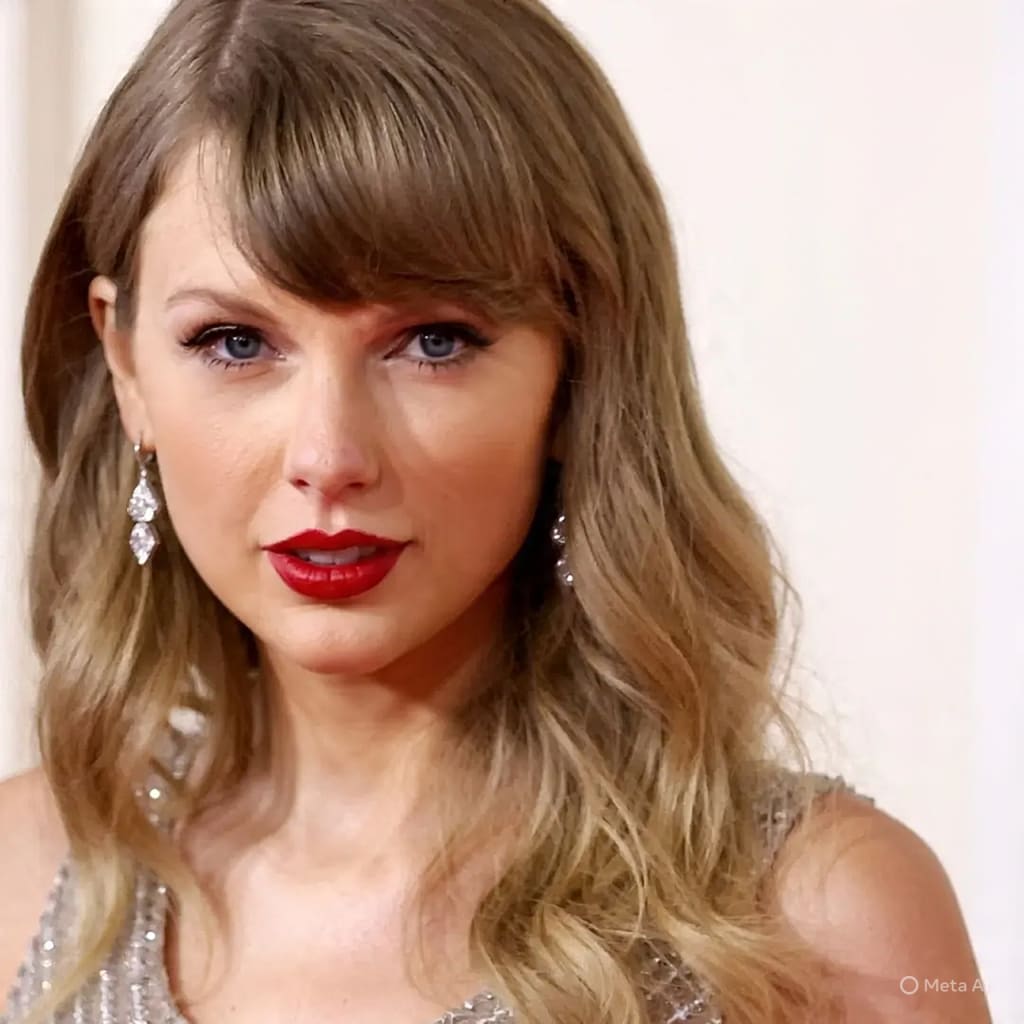
Taylor Alison Swift isn’t just a pop star. She’s a cultural phenomenon, a songwriter whose lyrics have become generational anthems, and an artist who has repeatedly redefined herself while staying true to her core. But what often gets overshadowed by her stadium-filling tours and chart-topping records is the very real human journey: her early rejections, her relentless drive, her public humiliations, her battle for ownership of her work, her struggle with image and mental health, and her unwavering resilience in the face of criticism.
This is the story of Taylor Swift — not just the celebrity, but the girl who grew up on a Christmas tree farm, moved to Nashville chasing a dream, fought for her art, and ended up rewriting the rules of the music industry.
Growing Up on a Christmas Tree Farm
Taylor was born on December 13, 1989, in Reading, Pennsylvania. Her parents, Scott and Andrea Swift, lived a comfortable middle-class life, and Taylor spent much of her childhood on the family’s Christmas tree farm. The imagery of that farm — snowy mornings, pine needles brushing her sleeves, hours of daydreaming while watching the world pass by — would later seep into her songwriting.
Unlike many children, Taylor didn’t just consume music; she studied it. At age 10, she performed at local fairs and festivals, singing covers but also beginning to experiment with her own lyrics. By 11, she was writing full songs and sending demo tapes to record labels. Every rejection letter became both a wound and a spark. She remembers feeling like an outsider — too young, too country, too different.
But Taylor wasn’t built to quit.
The Big Move: Nashville Dreams
In 2002, Taylor’s family made a bold choice: they moved to Hendersonville, Tennessee, just outside Nashville. It was a decision that would change everything. Nashville wasn’t forgiving — it was crowded with hopeful musicians, many older, more polished, and more experienced. Taylor was just a teenager with a notebook and a guitar.
She began performing in tiny venues, sometimes in front of a few dozen people. She’d stand on dimly lit stages, her voice trembling but her determination unshakable. The Nashville scene could be brutal; many dismissed her as just another blonde with a guitar.
But she kept writing. Unlike others chasing fame, Taylor leaned into storytelling. Her songs weren’t vague pop hooks — they were specific, confessional, detailed. She wrote about crushes, fears, insecurities, and small-town observations. What some saw as too personal, others found revolutionary.
First Breakthrough: A Teenage Songwriter
Taylor’s persistence paid off when she landed a development deal with RCA Records. Yet even here, she faced obstacles. RCA wanted her to sing other people’s songs, to mold her into a commercial product. Taylor refused. At 15, she walked away from a deal most teenagers would kill for, determined to sing her own words.
That bold decision caught the attention of Scott Borchetta, who was forming a new label: Big Machine Records. Taylor became his first signing. In 2006, her debut single Tim McGraw introduced her to the world. The song wasn’t just catchy — it was heartfelt, written by a teenage girl about longing, nostalgia, and young love.
Her self-titled debut album Taylor Swift became a quiet storm in country music. By 2008, her follow-up Fearless would make her a superstar.
Fearless Success & Young Fame
Fearless wasn’t just an album; it was a phenomenon. Songs like Love Story and You Belong With Me spoke directly to teenagers who felt misunderstood. The lyrics were diary entries set to music, and they resonated deeply. Taylor wasn’t just singing to her fans; she was singing for them.
But fame came with a cost. She was still a teenager navigating high school-like drama in the most public way possible. Critics questioned her voice, her looks, her relationships. Every crush became a headline, every breakup became a punchline.
In 2009, during the MTV Video Music Awards, Kanye West stormed the stage during her acceptance speech, declaring that Beyoncé deserved the award. The world saw Taylor’s stunned face. That moment became one of the most defining — and humiliating — moments of her early career. For a teenager, it could have been career-ending. For Taylor, it became fuel.
Reinvention: From Country to Pop
By the time Speak Now and Red were released, Taylor had already proven herself as a songwriter. But she wanted more. She didn’t want to be boxed into country music forever. Many warned her against going pop. The risk of alienating her core audience was real.
But Taylor knew evolution was survival. With 1989 (2014), she fully embraced pop. Songs like Shake It Off and Blank Space became cultural landmarks. She proved she wasn’t just a country girl — she was one of the best pop storytellers of her generation.
The transition wasn’t smooth. Some country fans accused her of “selling out.” Pop critics doubted her staying power. But Taylor’s 1989 went on to win Album of the Year at the Grammys, silencing the doubters.
The Dark Era: Reputation & Public Backlash
Success never shielded Taylor from criticism. In fact, the more famous she became, the harsher the spotlight grew.
By 2016, her feud with Kanye West reignited after his song Famous claimed he made her career. The internet turned against her. The hashtag “#TaylorSwiftIsOverParty” trended worldwide. For the first time, Taylor felt silenced. She disappeared from the public eye for nearly a year, something unheard of in modern celebrity culture.
When she returned, it was with Reputation (2017). Dark, vengeful, unapologetic, the album flipped her “good girl” image upside down. It wasn’t universally loved, but it showed her resilience. Taylor wouldn’t crumble under hate — she’d turn it into art.
Fighting for Ownership: The Masters Battle
Perhaps the biggest struggle of Taylor’s career came in 2019. Her first six albums’ masters were sold to Scooter Braun, a manager she accused of bullying and manipulation. For Taylor, it was more than business; it was betrayal. Her life’s work, the songs that held her soul, were now controlled by someone she didn’t trust.
Instead of giving up, Taylor made a radical move: she would re-record her entire catalog. Critics laughed. Fans rallied. And when Fearless (Taylor’s Version) and Red (Taylor’s Version) were released, they shattered streaming records. She turned an industry setback into an empowerment movement, redefining what it meant for artists to own their art.
Personal Struggles: Mental Health & Body Image
Taylor also began to open up about her personal battles. In the Netflix documentary Miss Americana, she revealed her struggles with body image, restrictive eating habits, and the psychological weight of constant scrutiny. Fame had made her cautious, sometimes broken, often exhausted.
Yet, in sharing these vulnerabilities, she became even more relatable. Fans who had long admired her strength now admired her honesty. She wasn’t just an untouchable superstar — she was a human being fighting to stay grounded in an industry designed to tear people apart.
The Eras Tour: A Legacy in Motion
By the time she launched The Eras Tour in 2023, Taylor Swift was no longer just a musician. She was a cultural architect. The tour became the highest-grossing in history, selling out stadiums worldwide. Each performance wasn’t just a concert; it was a time capsule, celebrating every version of herself — from the country teenager with a guitar to the global pop phenomenon reclaiming her music.
The Eras Tour cemented what fans had always known: Taylor’s journey wasn’t about reinvention alone. It was about survival, resilience, and constant evolution.
Why Taylor Swift’s Story Resonates
For American audiences, Taylor’s story feels uniquely theirs. She’s a girl from Pennsylvania who made it big in Nashville, battled Wall Street-like contracts, faced sexism, endured humiliation, and came back stronger every time. Her story is a mirror of the American dream — flawed, complicated, but inspiring.
More importantly, Taylor Swift represents ownership. Ownership of voice, art, identity, and destiny. Her struggles weren’t just music industry problems; they were universal. Who hasn’t felt underestimated? Who hasn’t fought to be heard? Who hasn’t wanted to reclaim their own story?
Conclusion: More Than a Pop Star
Taylor Swift’s story is far from over. At 34, she has already lived multiple lives in music, each with its own lessons. She has been a prodigy, a country darling, a pop princess, a villain, a survivor, and now, a legend in the making.
Her journey reminds us that greatness isn’t about avoiding failure or criticism — it’s about using both as fuel. Taylor turned rejection into opportunity, humiliation into strength, and betrayal into empowerment.
And that is why, decades from now, when people remember this era of music, Taylor Swift won’t just be seen as a chart-topping star. She will be remembered as the woman who rewrote the rules of the industry while baring her soul in songs that will outlive us all.
About the Creator
Frank Massey
Tech, AI, and social media writer with a passion for storytelling. I turn complex trends into engaging, relatable content. Exploring the future, one story at a time
Keep reading
More stories from Frank Massey and writers in Motivation and other communities.
Shakira: The Voice of Resilience, Rhythm, and Reinvention
When the world hears the name Shakira, they dpon’t just think of a singer. They think of an entire cultural movement — a woman whose voice, dance, and charisma transcended borders. From a small Colombian town to the grandest stages of the world, Shakira Isabel Mebarak Ripoll rose to become one of the most influential artists of her generation. Yet behind the rhythm, success, and global fame lies a story of rejection, resilience, heartbreak, and reinvention. Her life is proof that dreams demand patience, struggles shape destiny, and talent thrives when fueled by persistence.
By Frank Massey 6 months ago in Motivation
Small Decisions, Big Growth: Navigating Adulthood at the Supermarket
Whenever I step into the supermarket, I’m instantly drawn to the produce aisle. The air is cool, infused with a gentle citrus aroma that drifts around the vibrant displays of fruit. I pause, listening to the soft clink of baskets as shoppers weave past. Apples have always been my favourite snack—the ritual of choosing a few is one I rarely skip. As I reach out, the skin of an apple is slick with condensation and promises a satisfying crunch.
By Sarah Xenos4 days ago in Motivation


Comments
There are no comments for this story
Be the first to respond and start the conversation.