
Swachh Bharat: 10-Year Journey of Change
Swachh Bharat Mission, India

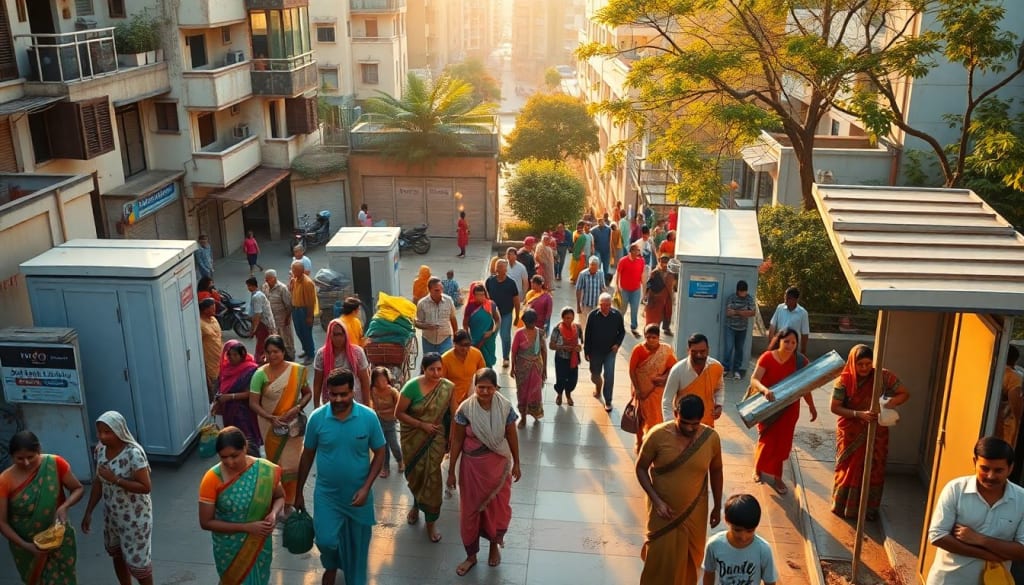
Swachh Bharat Mission: A Decade of Cleanliness and Progress in India
The sanitation crisis in India before 2014 was staggering, with over 600 million people practicing open defecation. This glaring issue sparked the launch of the Swachh Bharat Mission (SBM), aiming to transform India’s sanitation landscape dramatically. Initiated in October 2014, the mission set out to make India clean and sanitary by tackling a massive social challenge. As we explore this decade-long journey, we uncover the mission’s profound impact on public health, economic development, and community engagement across the nation.
Phase 1: Laying the Foundation (2014-2019)
Initial Challenges and Strategies
Before the SBM's launch, the sanitation scenario was disheartening. According to the 2011 Census, only 32% of households had access to toilets. The SBM aimed to put an end to open defecation within five years. Initial strategies included:
- Promoting toilet construction in rural areas
- Community awareness campaigns to change attitudes towards sanitation
- Involving local governments and NGOs in implementation
Key Achievements
From 2014 to 2019, significant milestones were reached:
- Over 100 million toilets built
- More than 500,000 villages declared Open Defecation Free (ODF)
According to the Ministry of Jal Shakti reports, by October 2019, India achieved its ODF goal, showcasing the collective effort of individuals, communities, and governments.
Case Study: ODF Village Transformation
A notable success story is the village of Sukhpur in Uttar Pradesh. Residents collectively built toilets with government support and transformed their sanitation habits. Community participation was key, with local leaders advocating for the initiative. The pride and ownership of cleanliness seen in Sukhpur serve as a powerful model for other villages.
Phase 2: Consolidation and Expansion (2019-2024)
Scaling Up the Mission
Following the ODF achievement, SBM focused on solid waste management and overall sanitation. Efforts expanded to include:
- Waste segregation at source
- Recycling initiatives
- Improved drainage systems
Technological Innovations
Innovative technologies have played a vital role. Mobile apps for reporting sanitation issues and smart waste management solutions have emerged. These advancements ensure timely action and enhanced clean-up processes.
Addressing Challenges
Despite progress, challenges persist. Key issues include:
- Ensuring sustainability of sanitation facilities
- Providing equitable access to all, especially marginalized communities
Addressing these ongoing concerns is essential for a fully successful sanitation program.
ODF Plus: Elevating Sanitation Standards
Defining ODF Plus
The ODF Plus initiative broadens the scope of sanitation standards. It focuses on:
- Solid waste management
- Liquid waste management
- Effective greywater management
- Community engagement in maintaining sanitation
Progress and Achievements
Several states are making strides towards ODF Plus status. Reports indicate that in states like Kerala and Tamil Nadu, significant progress has been achieved, boasting high rankings in sanitation standards.
Best Practices
Innovative practices have emerged across India:
- In Maharashtra, the focus on waste-to-energy programs has reduced landfill burden.
- Rajasthan introduced community-led initiatives focusing on greywater reuse.
These examples highlight unique approaches that others can emulate.
Sustainability and Long-Term Impact
Financial Sustainability
To ensure ongoing success, financial models are being explored. These include:
- Public-private partnerships
- Local fundraising initiatives
- Innovative financing models for future projects
Community Ownership
Engaging community members is vital. When people feel they own the sanitation initiatives, they are more likely to sustain and protect them. Education and empowerment are crucial components of this process.
Future Goals
As India aims for ODF Plus by 2024-25, the vision extends beyond toilets. The mission seeks a comprehensive approach to health, hygiene, and sanitation.
Conclusion: A Legacy of Cleanliness
The Swachh Bharat Mission's 10-year journey has been marked by impressive achievements and continuing challenges. Cleanliness has a lasting impact on public health and economic development. The transformation seen in communities showcases the power of collective effort. The journey continues, emphasizing the need for commitment to sanitation and hygiene. It's our responsibility to ensure a cleaner, healthier future for India. Let's join hands to maintain this momentum and work toward a sanitary nation, paving the way for a brighter tomorrow.
About the Creator
S Rajesh Kumar
Hey! I'm a freelance writer and UFO (Divine Craft) summoner and researcher, passionate about unraveling mysteries. I dive into Sci-Fi, Mystery, Thriller, and Suspense to craft intriguing stories, useful articles. Follow me and Stay tuned!
Keep reading
More stories from S Rajesh Kumar and writers in Motivation and other communities.
Family Values and Respecting Our Elders
As a young man, I was driven by ambition and the desire for success. I worked long hours and sacrificed my personal life in pursuit of my goals, convinced that success would bring me happiness and fulfilment. I was so focused on my career that I barely had time for anything else, including my own family.
By S Rajesh Kumar3 years ago in Motivation
Change Your Day, Not Your Life
We often wake up with the heavy feeling that something in our life needs to change. We think we need a new job, a new city, new people, or a completely new life. But what if the real transformation doesn’t require such dramatic shifts? What if the secret to a better life is simply changing one ordinary day?
By Zakir Ullahabout 5 hours ago in Motivation




Comments
There are no comments for this story
Be the first to respond and start the conversation.